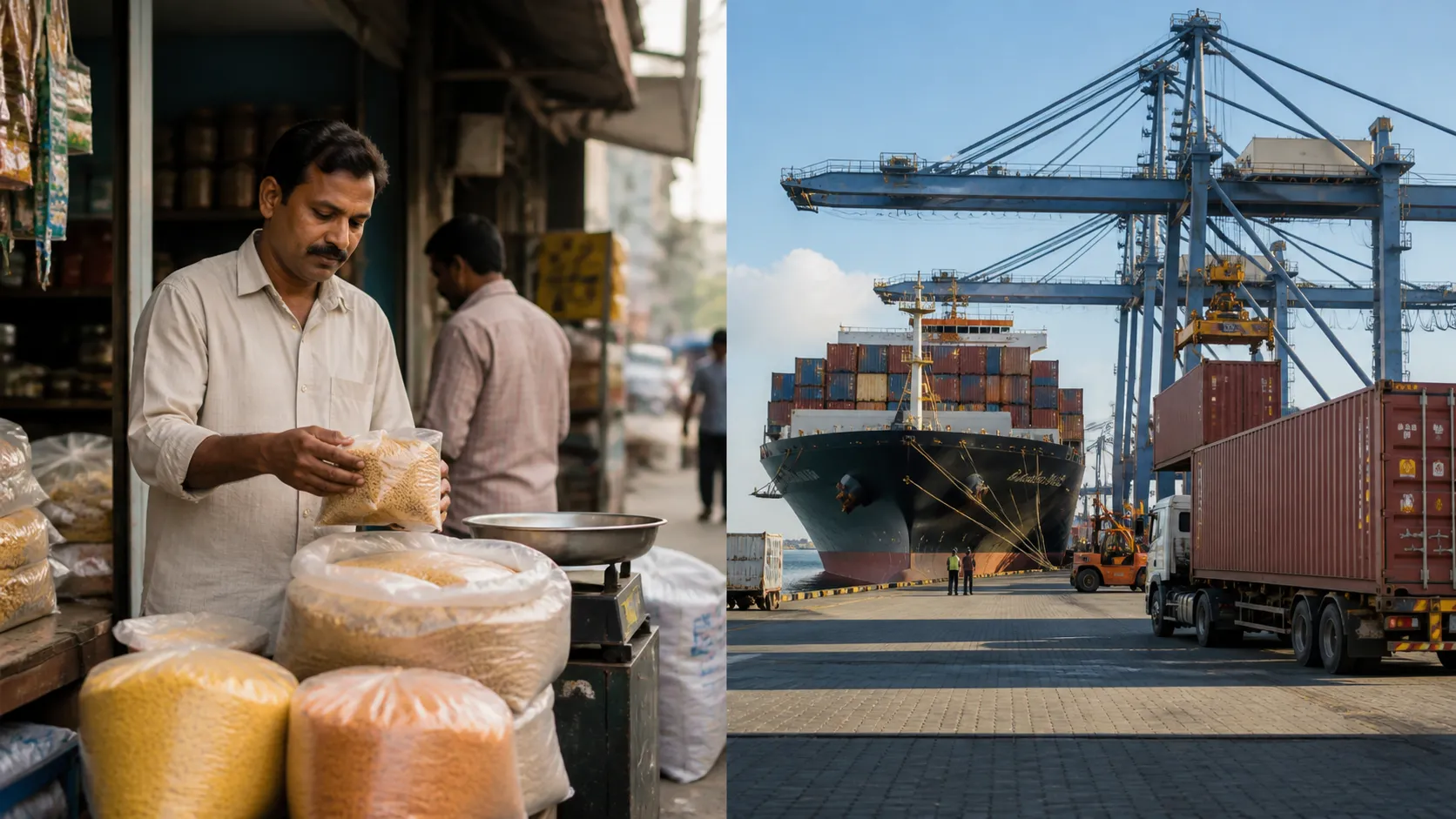

Every experienced Indian exporter has a story. The shipment stuck at customs because of a wrong HS Code. The buyer who disappeared after receiving goods. The LC that expired because documents weren't submitted on time. These stories are told with laughter now — but when they happened, they were expensive, stressful, and sometimes business-threatening. Here's the good news: almost every mistake first-time Indian exporters make is predictable. And predictable mistakes are preventable. This is your mistake-prevention guide.
Mistake #1 — Not Verifying the Foreign Buyer Before Shipping
What Happens
A new exporter gets an inquiry from a "buyer" in Nigeria, China, or even the USA. The email is polished. The PO looks real. Excited and eager to close their first deal, the exporter ships the goods — sometimes without taking advance payment. The goods arrive. The buyer takes delivery. And then — silence. No payment. No response. The exporter has lost their goods, their production cost, their freight cost, and their confidence — all at once. This is export fraud. And it is shockingly common.
How to Avoid It
- Google the buyer thoroughly — search company name + "scam" or "fraud." Check if their website is real — a domain registered 3 months ago is a red flag. Verify the contact person on LinkedIn.
- Verify their business registration — UK companies: Companies House. US companies: state-level business registries. EU companies: national trade registries. No registration record = red flag.
- Use ECGC Buyer Credit Reports — ECGC offers buyer credit reports on foreign companies for a small fee. The report covers creditworthiness, payment history, and risk rating. Worth every rupee for orders above ₹5,00,000.
- Request a video call — legitimate buyers are happy to have a Zoom call. Fraudsters avoid it. Ten minutes of video verification reduces risk dramatically.
- Start with small test orders — for a new buyer, regardless of how credible they seem, start smaller. Once they pay correctly for the first order, increase volumes gradually.
- Never ship on Open Account to a new buyer — 100% advance or irrevocable LC for first orders. No exceptions.
Mistake #2 — Getting the HS Code Wrong
What Happens
An exporter uses a close-but-not-correct HS Code on the Shipping Bill. At the destination country's customs — the import duty under that code is higher than expected. The buyer is furious. Or the product is on a restricted import list under that code and gets seized. Back in India — the RoDTEP benefit rate for the wrong HS Code is lower than the correct one. Thousands in incentives lost.
How to Avoid It
- Use the DGFT ITC-HS search tool — go to dgft.gov.in → Trade → ITC HS Classification. Enter keywords and find the most accurate match for your specific product.
- Consult your CHA — your Customs House Agent classifies goods professionally. Show them a physical sample and ask them to confirm the correct ITC-HS Code. This is part of what you pay them for.
- Cross-verify with your Export Promotion Council — EPCs deal with specific product categories every day and know the correct HS Codes for their sector.
- Check the destination country's tariff database — verify what import duty the buyer's country charges under your HS Code. Prevents surprises for your buyer.
- Never guess or copy from another exporter without verification — similar products can have different HS Codes depending on material, processing, or end use.
Mistake #3 — Accepting Unrealistic Delivery Deadlines
What Happens
A buyer wants 2,000 pieces in 30 days. The exporter — afraid of losing the order — says yes. Reality: raw material sourcing takes 10 days, production 20 days, packaging 5 days, port procedures 5 days. That's 40 days minimum. Result: late shipment, LC expiry, buyer cancellation, and penalty clauses triggered. Or — in desperation to meet the deadline — quality is rushed and goods are rejected. Either way, disaster.
How to Avoid It
- Always work backwards from the shipment date — map every step before agreeing to any deadline: raw material procurement + production + quality check + packaging + CHA documentation (3–5 days) + port procedures and vessel booking (5–7 days) + buffer for unexpected delays (5–7 days). If the buyer's deadline is less than this total — negotiate for more time.
- It is better to lose an order than to ruin a relationship — a buyer who receives a late, poor-quality shipment never orders again. A buyer who receives an honest realistic timeline and a perfect delivery orders repeatedly for years.
- Add 20–30% buffer to your estimated production time — things always take longer than planned. Raw materials get delayed. Workers fall sick. Build buffer before committing.
- Communicate proactively if delays occur — inform your buyer immediately, not the day before the deadline. Early communication shows professionalism. Last-minute surprises destroy trust.
Mistake #4 — Poor Export Packaging
What Happens
An exporter packs goods in the same thin domestic packaging used for local sales — minimal cushioning, no moisture protection. After 25 days by sea to Europe, the buyer opens the container to find damaged, crushed, moisture-damaged goods. Or — labelling doesn't comply with EU or US requirements. Customs detains the shipment. Relabelling at the buyer's expense, considerable delays, and a seriously damaged relationship.
How to Avoid It
- Use proper export-grade packaging — minimum 5-ply corrugated master cartons, appropriate inner protective packaging (bubble wrap, foam, tissue), moisture barriers (silica gel sachets for moisture-sensitive products), palletisation and strapping for container shipments.
- Do a drop test — literally drop your packed carton from waist height. If the product breaks or the carton collapses — your packaging is inadequate for export.
- Read the buyer's packaging specifications carefully and follow them exactly — the buyer knows their logistics environment and consumer expectations better than you.
- Research destination market labelling requirements before you produce — EU: CE marking, REACH compliance, language requirements. USA: FDA labelling, FTC requirements, English mandatory. Gulf: Arabic labelling, Halal certification. Relabelling after production is expensive.
- Fumigate all wooden packaging — wooden pallets and crates must be heat treated or fumigated and carry an ISPM-15 stamp. Almost every country requires this. Untreated wood packaging = immediate seizure at destination.
Mistake #5 — Ignoring the Letter of Credit Terms
What Happens
A buyer opens an LC worth $50,000. The exporter ships, submits documents to the bank — and the bank finds three discrepancies. The Commercial Invoice says "Cotton Bed Sheets" but the LC says "100% Cotton Woven Bed Sheets." The BL date is one day after the latest shipment date in the LC. The Certificate of Origin is missing a required endorsement. Bank refuses to pay. A $50,000 guaranteed payment has become a problem — and an excuse for the buyer to renegotiate price.
How to Avoid It
- Read the LC immediately and completely when you receive it — check: does the product description match exactly? Is the latest shipment date achievable? Is the LC expiry date achievable (allowing time for document preparation and submission)? Are all required documents listed and can you produce them all? Is your company name spelled exactly right?
- Request LC amendments BEFORE starting production — if you spot any problem, request amendment immediately. LC amendments take 7–14 days. Don't wait until shipment day.
- Involve your bank from day one — show the LC to your bank's trade finance department as soon as you receive it. They do this every day and will spot discrepancy risks you might miss.
- Prepare documents with obsessive attention to detail — every word in your Commercial Invoice must match the LC description exactly. Every required certificate must be included.
- Submit documents early — most LCs require document presentation within 21 days of shipment. Submit as soon as possible after shipment.
Mistake #6 — Underpricing Your Export Products
What Happens
An Indian exporter — desperate for their first international order — quotes a price so low it barely covers production costs. They win the order. Execute it perfectly. And make almost no profit — or a loss after accounting for export costs they forgot to include. Worse — they've set a price expectation with the buyer. When they try to increase the price on the next order, the buyer is shocked and goes elsewhere.
How to Avoid It
- Research international market prices before quoting — search on Amazon.com and Amazon.co.uk for retail prices, check Alibaba for competitor supplier prices, talk to your Export Promotion Council about benchmark prices.
- Build a complete cost sheet for every export order — include raw material, production, quality control, export packaging, inland transport to port, CHA charges, freight, marine insurance, bank charges, certifications — then subtract RoDTEP and Duty Drawback benefits which reduce your effective cost. Add minimum 15–20% net profit margin.
- Never quote based on domestic price logic alone — international buyers from USA, EU, and Australia pay significantly more for quality Indian products than your domestic buyers. Don't sell yourself short.
- Factor in a 3–5% exchange rate buffer — if the rupee strengthens after you quote, your margin disappears without this buffer.
- Know your walk-away price — before any negotiation, know the minimum price below which you simply will not accept the order. A loss-making order is worse than no order.
Mistake #7 — Neglecting Destination Country Compliance Requirements
What Happens
An Indian food exporter sends pickles and snacks to the USA. FDA inspection finds food additives permitted in India but banned in the USA. The entire container is destroyed. A textile exporter sends garments to Germany — EU customs detects dyes containing azo compounds restricted under EU REACH regulations. Shipment seized. Buyer faces regulatory action. Exporter loses the buyer forever.
How to Avoid It
- Research destination country regulations BEFORE producing — food products: FDA (USA), EFSA (EU). Textiles: EU REACH, OEKO-TEX, California Proposition 65. Electronics: CE marking (EU), FCC (USA), RoHS compliance. Cosmetics: EU Cosmetics Regulation, FDA. Toys: CE + EN71 (EU), ASTM F963 (USA).
- Ask your buyer what certifications they need — the buyer knows their country's requirements. Ask explicitly: "What certifications, test reports, or compliance documents do you need for this product in your country?"
- Use FIEO and EPC resources — FIEO and your relevant Export Promotion Council provide market-specific regulatory guidance and many have country desks with detailed regulatory information.
- Hire a compliance consultant for new markets — when entering a major market (USA, EU, Australia, Japan) for the first time, ₹20,000–₹50,000 on a compliance specialist is cheap insurance against a multi-lakh regulatory disaster.
Mistake #8 — Not Having a Written Agreement or Contract
What Happens
Exporter and buyer have a wonderful relationship — lots of emails, WhatsApp messages, good chemistry. They agree on an order informally. No formal contract. Midway through production, the buyer changes specifications. The exporter has already bought raw materials per original specs. Dispute — no contract means no clear reference. Or the buyer claims late delivery and the exporter insists it was on time. Different interpretations of what "delivery" means — no document to resolve it.
How to Avoid It
- Always have a written export contract for orders above $5,000 — covering: parties' full legal names and addresses, product description with technical specifications, quantity and unit price, Incoterms and port, payment terms, delivery deadline, packaging specifications, quality standards, dispute resolution mechanism, force majeure clause.
- Treat your Proforma Invoice as a mini-contract — a well-detailed PI with all specifications clearly stated, plus a matching PO that you formally accept, together constitute a commercial contract in most jurisdictions.
- Put everything in writing — even WhatsApp counts — any verbal agreement should be followed by a written confirmation email: "As discussed, confirming that delivery date is 15 March and payment terms are 30% advance and 70% against BL copy."
- Get your contract reviewed by a legal professional for large orders — for orders above $50,000 with a new counterparty, ₹10,000–₹30,000 for an export-specialised lawyer is insurance against multi-lakh disputes.
Mistake #9 — Poor Working Capital Management
What Happens
An exporter gets a $30,000 order. 30% advance received (≈₹7,50,000). Production cost: ₹18,00,000. The exporter doesn't have the remaining ₹10,50,000. They scramble — borrow from family, use personal savings. Production delayed. Deadline missed. Relationship damaged. Or — they ship successfully but wait 60 days for balance payment with no capital to accept the next order. Export business stalls.
How to Avoid It
- Apply for Packing Credit from your bank immediately — as soon as you have a confirmed export order (PO or LC in hand), approach your bank for Packing Credit. This pre-shipment loan is specifically for exporters to fund production. Subsidised interest rates of 7–9% per annum. Apply early — the first-time process takes 1–2 weeks.
- Negotiate for higher advance payments — push buyers for 40–50% advance instead of 30%. Every 10% more advance significantly reduces working capital burden. Buyers often agree when framed as standard policy.
- Get ECGC cover — it unlocks bank credit — ECGC cover reduces the bank's risk. They lend more, sometimes without additional collateral.
- Start smaller than you think you should — accept order sizes that are comfortably within your working capital capacity. Scale up as your financial capacity grows.
- Maintain a rolling 90-day cash flow projection — track when money goes out (production, logistics) and when money comes in (advance, final payment). Visibility allows you to plan borrowing and manage gaps proactively.
Mistake #10 — Treating Export as a One-Time Transaction Instead of a Long-Term Business
What Happens
An exporter fulfils one good order and then — nothing. They don't follow up with the buyer. They don't send new product samples. They wait for the phone to ring. It doesn't. Months later, they conclude "export business is difficult" and go back to domestic focus. Meanwhile — the buyer found a more proactive supplier and places regular orders with them.
How to Avoid It
- Treat every export buyer as a long-term relationship — after every successful shipment, follow up. Send a thank you email. Share new product samples. Ask for feedback. Inquire about upcoming requirements. The cost of retaining an existing buyer is a fraction of finding a new one. An international buyer who orders 4 times a year for 5 years is worth 20× their first order.
- Build a systematic buyer pipeline — always — even when busy fulfilling current orders, keep marketing. Always be adding new buyer contacts. Export business has cycles — a current buyer can stop ordering for reasons outside your control. You need a pipeline to replace them.
- Invest in your export brand continuously — update your product catalogue, refresh your B2B platform listings, attend one trade fair per year. Export marketing is not a one-time activity.
- Learn from every shipment — good and bad — after every transaction: what went well? What went wrong? What did the buyer comment on? What did you learn about the destination market? Continuous learning separates exporters who build great international businesses from those who give up after one or two shipments.
- Set annual export goals — how many buyers do you want by end of year? What FOB value do you want to export? Which new countries do you want to enter? Goals create direction. Without direction, export remains a happy accident rather than a deliberate business.
Quick Reference: The 10 Mistakes and Their Fixes
| # | Mistake | Key Fix |
|---|---|---|
| 1 | Not verifying buyer | ECGC credit report + advance payment + video call |
| 2 | Wrong HS Code | CHA verification + DGFT ITC-HS tool |
| 3 | Unrealistic deadlines | Work backwards from shipment date + buffer time |
| 4 | Poor packaging | Export-grade packaging + destination labelling research |
| 5 | Ignoring LC terms | Read LC immediately + involve bank + obsessive document accuracy |
| 6 | Underpricing | Complete cost sheet + international market research + walk-away price |
| 7 | Ignoring destination regulations | Research before producing + ask buyer + compliance consultant |
| 8 | No written contract | Detailed PI + formal PO acceptance + written confirmation of verbal agreements |
| 9 | Poor working capital | Packing Credit + higher advance + ECGC cover + start small |
| 10 | One-transaction mindset | Follow up buyers + maintain pipeline + continuous learning + annual goals |
Bonus Mistake: Going It Completely Alone
There's an 11th mistake worth mentioning — trying to learn and do everything yourself, without building a support team. Export is a team sport. The most successful Indian exporters have:
- A reliable CHA who knows their product and port
- A good freight forwarder with competitive rates and reliable service
- A CA or tax consultant familiar with export taxation — GST refund, RoDTEP, Duty Drawback
- A bank relationship manager who understands export finance
- A mentor or peer group — other exporters in your industry willing to share knowledge and contacts
FIEO, your relevant Export Promotion Council, and local Chambers of Commerce all have networks of experienced exporters who are willing to mentor new entrants. Use these resources. The export community in India is surprisingly generous with knowledge.
Final Thoughts: You Are More Ready Than You Think
Almost every mistake a first-time exporter makes is predictable. And predictable mistakes are preventable. You now have the awareness to avoid the errors that derail most beginners — before you even make your first shipment.
Here's the truth about exporting — it is learnable. It is doable. And it is absolutely worth it. India has something the world wants. Your handicraft. Your spice. Your textile. Your engineering part. Your software. Your creativity. Your craftsmanship.
The world is not waiting for a perfect exporter. It's waiting for an honest one — who delivers quality, communicates clearly, meets deadlines, and treats international buyers with respect.
Start with one IEC code. One buyer. One shipment. One successful transaction. And then do it again.
Not sure where to begin? Start from the beginning — what exporting actually is — and work your way through each step of the journey.