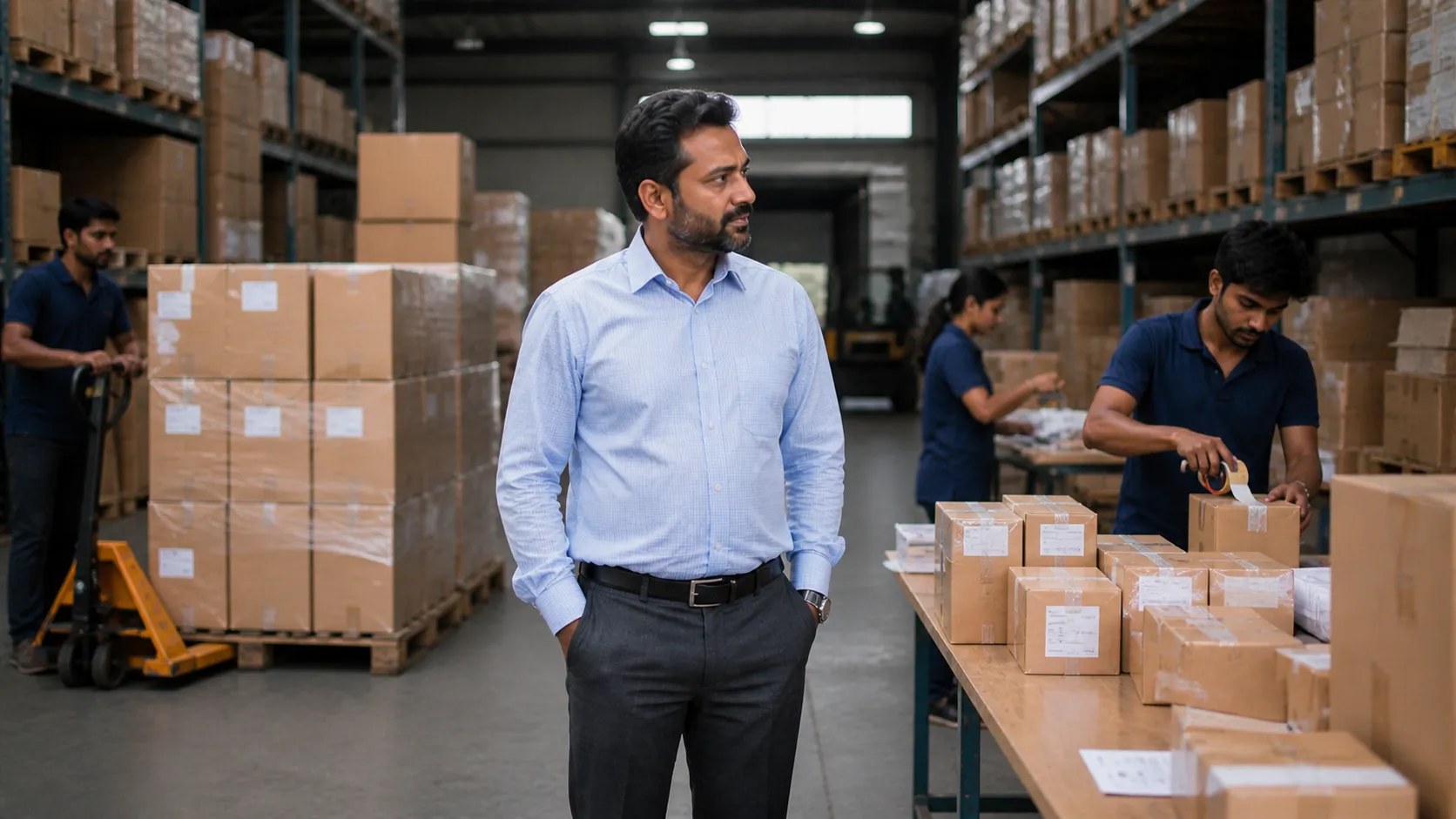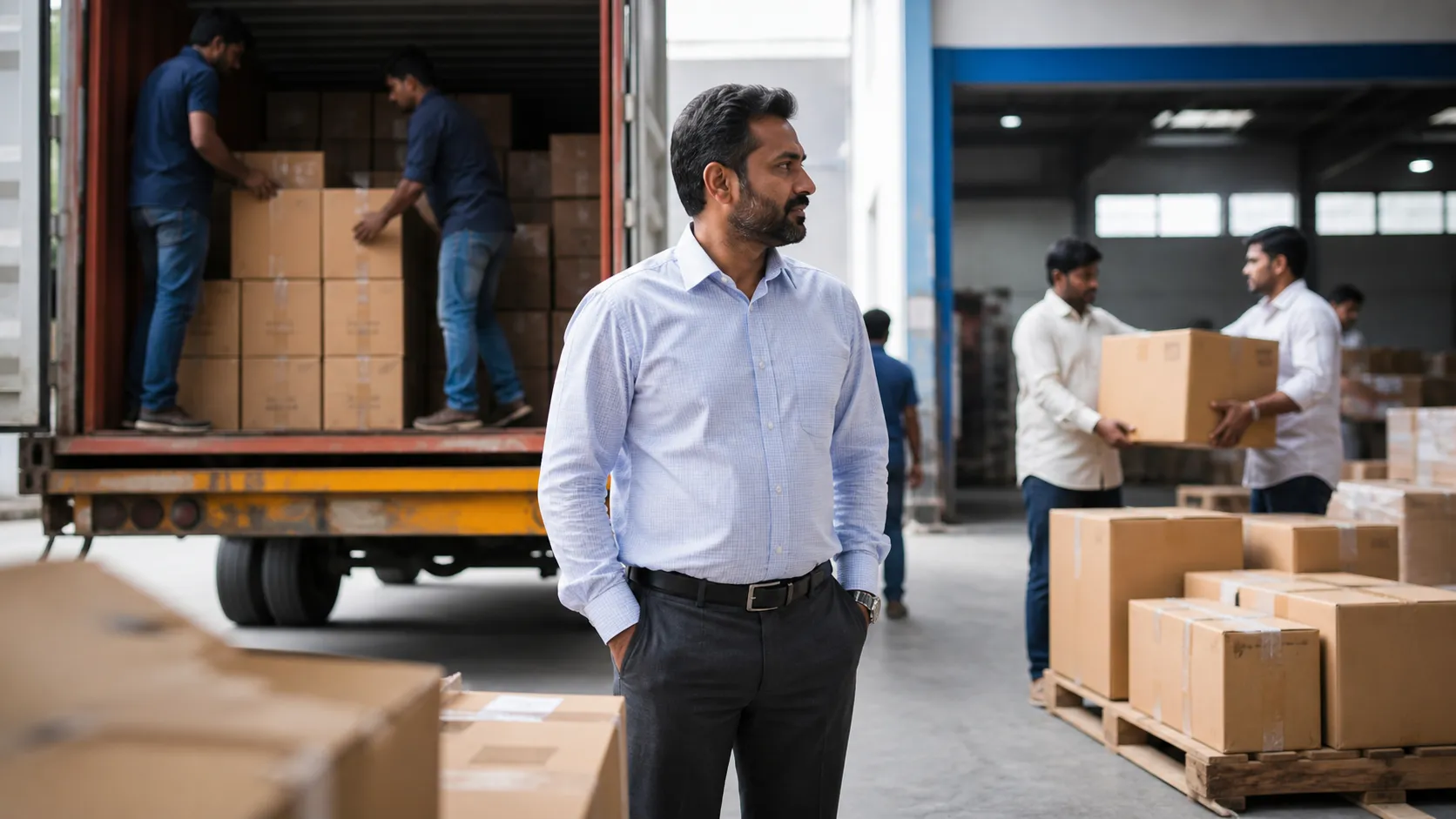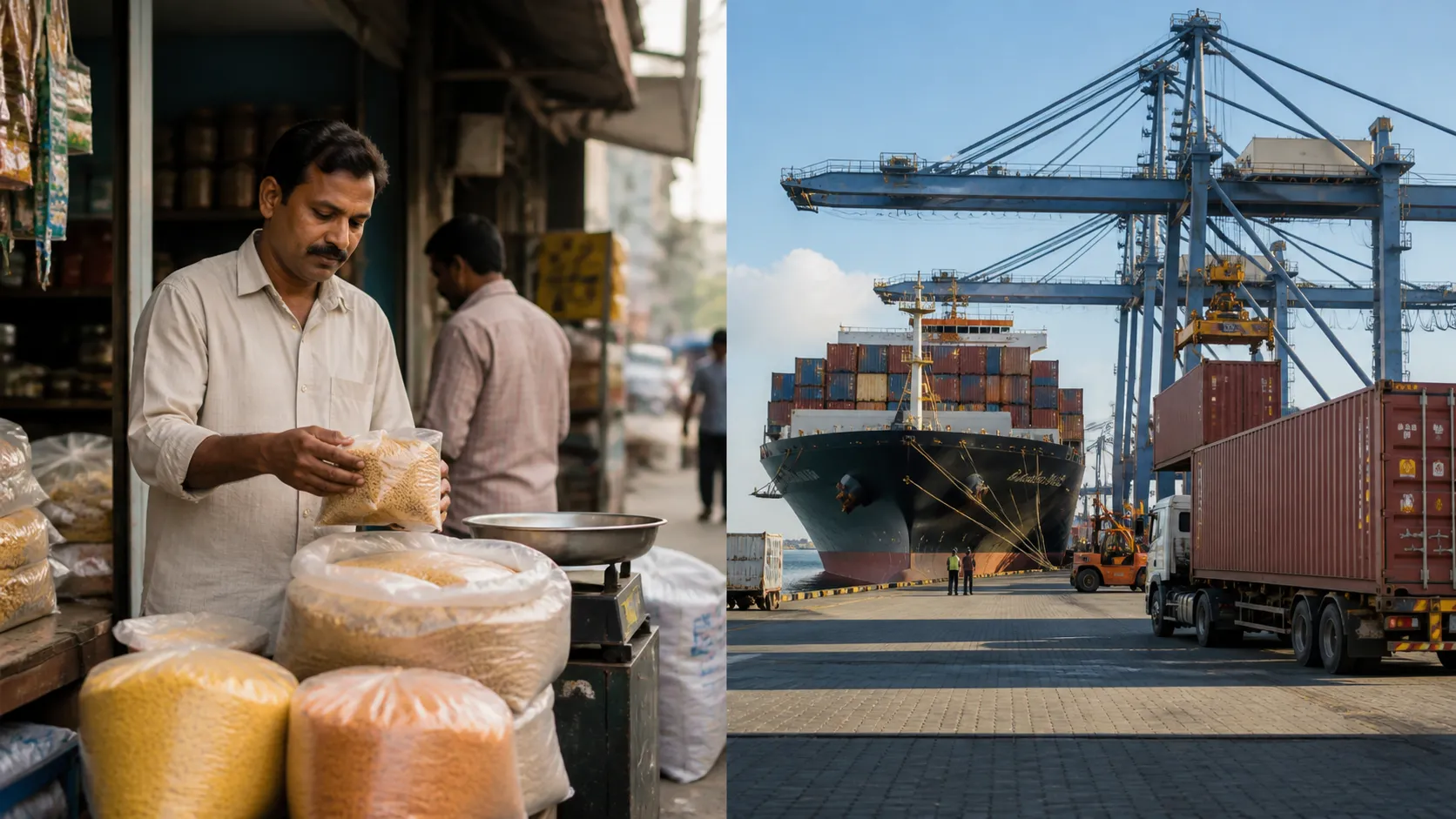
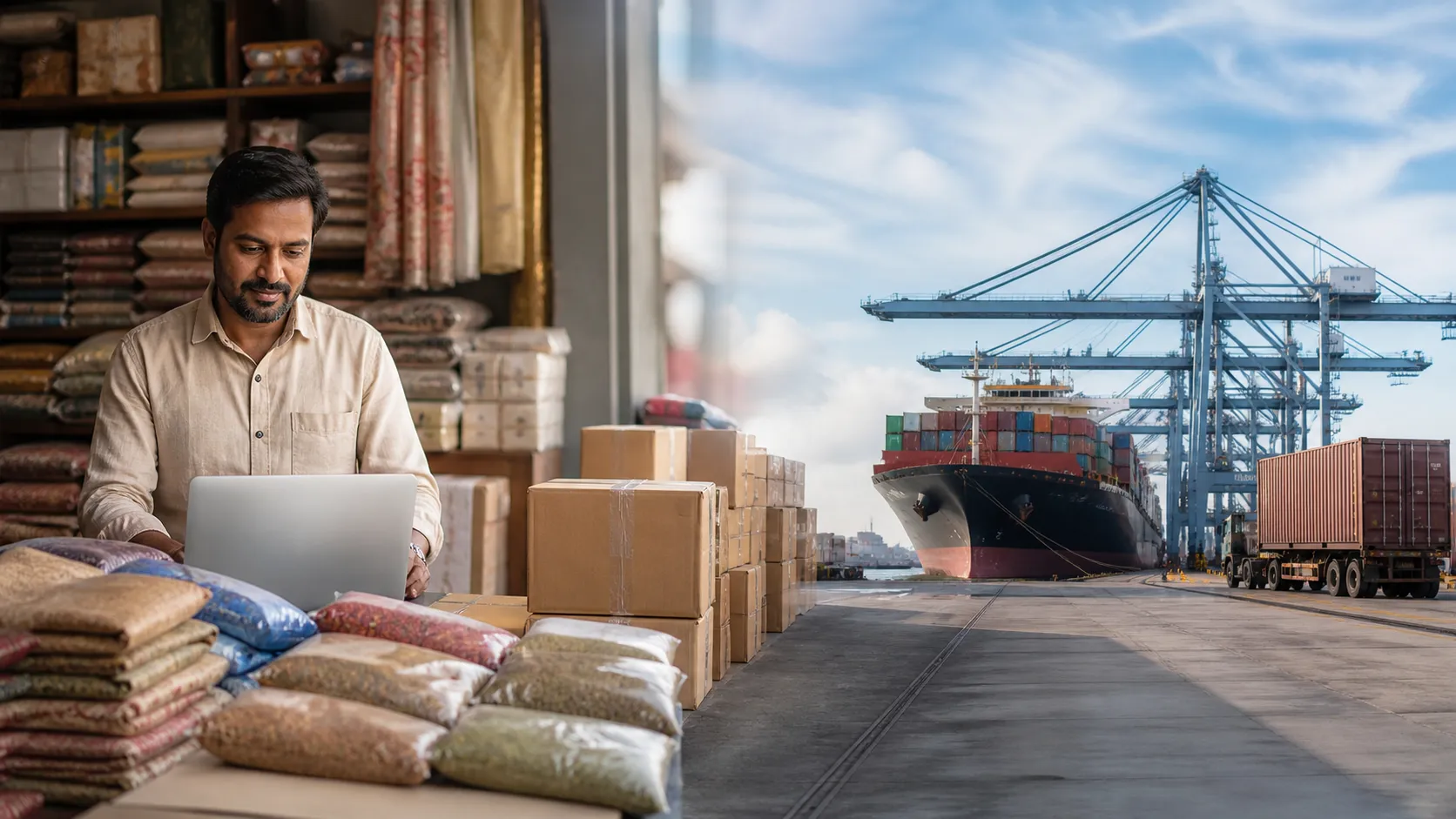
Most people assume exporting is for large corporations with complex supply chains. The reality is different — today a saree manufacturer in Surat, a spice trader in Kerala, or a software freelancer in Pune can export. This guide explains exactly what exporting is, who can do it, and how a single transaction works from start to finish.
What Is Exporting? The Simple Definition
Exporting means selling your goods or services to buyers in another country.
When an Indian company sells basmati rice to a supermarket in the UK, that's exporting. When a Bangalore-based software firm delivers a project to a US client, that's exporting too. When a Chennai leather goods maker ships wallets to a boutique in Italy — exporting again.
The seller is in India. The buyer is outside India. Money comes into India. That transaction = export.
In official terms, the Government of India and the World Trade Organization (WTO) define exports as goods or services produced in one country and sold to residents of another country.
Why Is Exporting Such a Big Deal?
India is one of the world's largest exporters. In FY 2023–24, India's total merchandise exports crossed $437 billion. Add services exports (IT, consulting, healthcare, education) and the number goes even higher.
But more importantly — why should you care?
1. You Earn in Foreign Currency
When you export, payment arrives in US Dollars, Euros, British Pounds, or other foreign currencies. Because of the exchange rate, even a small order gives you significantly more in Indian Rupees than a domestic sale of the same value.
Sell a product for $1,000 to a US buyer and you receive approximately ₹83,000–₹84,000 at current rates. The same product sold domestically might fetch ₹50,000–₹60,000. Same product. More money. Just because the buyer is abroad.
2. Your Market Becomes 8 Billion People
India has 1.4 billion people. The world has 8 billion. When you export, you stop limiting yourself to one market and open your doors to the entire planet. Your customer could be in Dubai, London, New York, Singapore, or Sydney.
3. Less Dependence on One Market
If your domestic market slows down — due to recession, seasonal drops, or local competition — export orders can keep your business running. Exporters have a natural hedge against local market volatility.
4. Government Benefits and Incentives
The Indian government rewards exporters because exports bring foreign exchange into India, which strengthens the economy. Key benefits include:
- RoDTEP — remission of duties and taxes on exported products
- Duty Drawback — refund of taxes paid on inputs used in exported goods
- EPCG Scheme — import capital goods at zero customs duty against export obligation
- Advance Authorisation — duty-free import of inputs used in export production
- GST zero-rating — exports are zero-rated, meaning no GST liability on exported goods
- Export credit — priority lending from banks at lower interest rates
These benefits can significantly improve your profit margins on every shipment.
5. Brand Value Goes Up
Being an exporter gives your business instant credibility. "Export quality" is a phrase Indians trust. Once you export, your brand perception — even in the domestic market — improves dramatically.
Types of Exports: What Can Be Exported?
Exports are broadly divided into two categories:
A. Merchandise Exports (Physical Goods)
Tangible products physically shipped from India to another country. Examples:
- Agricultural products — rice, spices, tea, coffee, fruits
- Textiles and garments
- Leather goods — shoes, bags, wallets
- Handicrafts and handloom products
- Chemicals and pharmaceuticals
- Engineering goods — machinery, auto parts
- Gems and jewellery
- Seafood and marine products
- Plastics and rubber products
India is one of the top global exporters in many of these categories.
B. Services Exports (Invisible Exports)
No physical product is shipped, but value crosses the border. Examples:
- IT and software services — India's single largest services export
- Business Process Outsourcing (BPO / KPO)
- Consulting and professional services
- Healthcare tourism
- Education services
- Freelancing — design, content, marketing, development
If you're a freelancer on Upwork or Fiverr earning from foreign clients — congratulations, you're already an exporter of services.
Who Can Export from India?
This is where most beginners get surprised — almost anyone can export from India.
You don't need to be a large corporation. You don't need to be in a specific industry. Here's who can export:
- Individual entrepreneurs and sole proprietors
- Partnership firms
- Private Limited and Public Limited companies
- LLPs (Limited Liability Partnerships)
- Manufacturers
- Traders — you don't even need to manufacture; you can buy and export
- Farmers and Farmer Producer Organisations (FPOs)
- Artisans and craftspeople
- Freelancers and service providers
The basic requirement is a legal business entity registered in India and an IEC code — a 10-digit number issued by DGFT (Directorate General of Foreign Trade). Getting an IEC is simple, entirely online, costs ₹500, and takes 2–3 working days.
How Is Exporting Different from Selling Domestically?
At the core, selling is selling — you have a product, someone wants it, money changes hands. But exporting has some unique elements:
| Aspect | Domestic Selling | Exporting |
|---|---|---|
| Currency | Indian Rupees | Foreign currency (USD, EUR, etc.) |
| Tax | GST applicable | Zero-rated — no GST on exports |
| Logistics | Local transport | International shipping (sea / air / courier) |
| Documentation | Invoice, basic docs | Shipping Bill, Bill of Lading, Certificate of Origin, etc. |
| Payment risk | Lower | Higher but manageable with LC and advance payment |
| Regulation | Domestic laws | FEMA, Customs Act, DGFT policies |
| Market size | India only | Entire world |
The learning curve is slightly steeper, but the rewards are proportionally bigger.
The Export Ecosystem: Key Players You'll Deal With
When you export, you won't be working alone. Here's who's involved in every shipment:
- You — The Exporter: The seller. You produce or source the goods and initiate the export.
- The Importer / Buyer: Your customer abroad — could be a retailer, wholesaler, distributor, or end consumer.
- Customs Authority (India): Checks and clears your goods before they leave India. You file a Shipping Bill through them.
- Customs Broker / CHA (Customs House Agent): A licensed professional who handles customs paperwork on your behalf — especially helpful for beginners.
- Freight Forwarder: Arranges transportation — books cargo space on ships or aircraft, coordinates logistics.
- Bank: Processes international payments, handles Letters of Credit, and helps you receive foreign currency.
- DGFT: The government body that issues IEC, manages export-import policy, and administers schemes.
- Export Promotion Councils (EPCs): Industry-specific bodies like APEDA (agriculture), FIEO, GJEPC (gems & jewellery). They help with market information, buyer connections, and government schemes.
A Simple Example: How One Export Transaction Works
Say you make leather wallets in Kanpur. Here's how a basic export looks from first contact to final payment:
- A buyer in Germany contacts you through IndiaMART or a trade fair
- You negotiate price, quantity, quality, and delivery terms
- You receive a Purchase Order (PO) from the buyer
- You agree on payment method — say, 30% advance, 70% after shipment
- You manufacture and pack the wallets as per buyer specifications
- You hire a CHA to file your Shipping Bill with Indian Customs
- Customs inspects and clears the goods for export
- Your freight forwarder ships the wallets via sea cargo from JNPT or Mumbai port
- You share shipping documents — Bill of Lading, Invoice, Packing List — with the buyer
- Buyer receives the wallets, inspects, and releases final payment
- You receive USD in your bank account. Bank converts to INR at prevailing rate.
- You file for Duty Drawback or RoDTEP benefits from the government
That's a complete export cycle. Learnable, step by step.
Common Myths About Exporting — Busted
Myth 1: "Exporting is only for big companies."
False. Thousands of MSMEs export successfully every year. India's MSME sector accounts for nearly 45–50% of total merchandise exports.
Myth 2: "I need a lot of money to start."
Not necessarily. Many exporters start by fulfilling small sample orders. The capital required depends heavily on your product and payment terms.
Myth 3: "The paperwork is too complicated."
Yes, there's documentation — but it's learnable. And you can hire a CHA to handle it. Most first-time exporters outsource the paperwork initially and learn as they go.
Myth 4: "I need to travel abroad to find buyers."
Not anymore. B2B platforms like IndiaMART, TradeIndia, Alibaba, and Amazon Global Selling connect you to global buyers without leaving your city. Government portals like IBEF also help.
Myth 5: "Exports are risky — what if the buyer doesn't pay?"
Payment risk exists but is very manageable. Tools like Letter of Credit, advance payment, and export credit insurance from ECGC protect Indian exporters against buyer default.
Is Exporting Right for You?
Ask yourself these questions:
- Do you have a product or service that buyers outside India might want?
- Are you willing to invest time in learning the process?
- Can you maintain consistent quality and delivery timelines?
- Are you comfortable communicating in English with foreign buyers?
- Do you have — or can you arrange — working capital for production before payment arrives?
If you answered yes to most of these, exporting could be one of the best decisions you make for your business.
Conclusion
Exporting is not a privilege reserved for big players. It's an opportunity available to every Indian entrepreneur, manufacturer, trader, farmer, and service provider willing to look beyond borders.
The world is your market. India has products, skills, and talent that buyers across the globe are actively looking for. All you need is the right knowledge, the right paperwork, and the right mindset.
Ready to go deeper? Start with understanding how to get your IEC code — it's the first step every exporter must take. Then explore our complete export documents checklist to understand the paperwork involved.