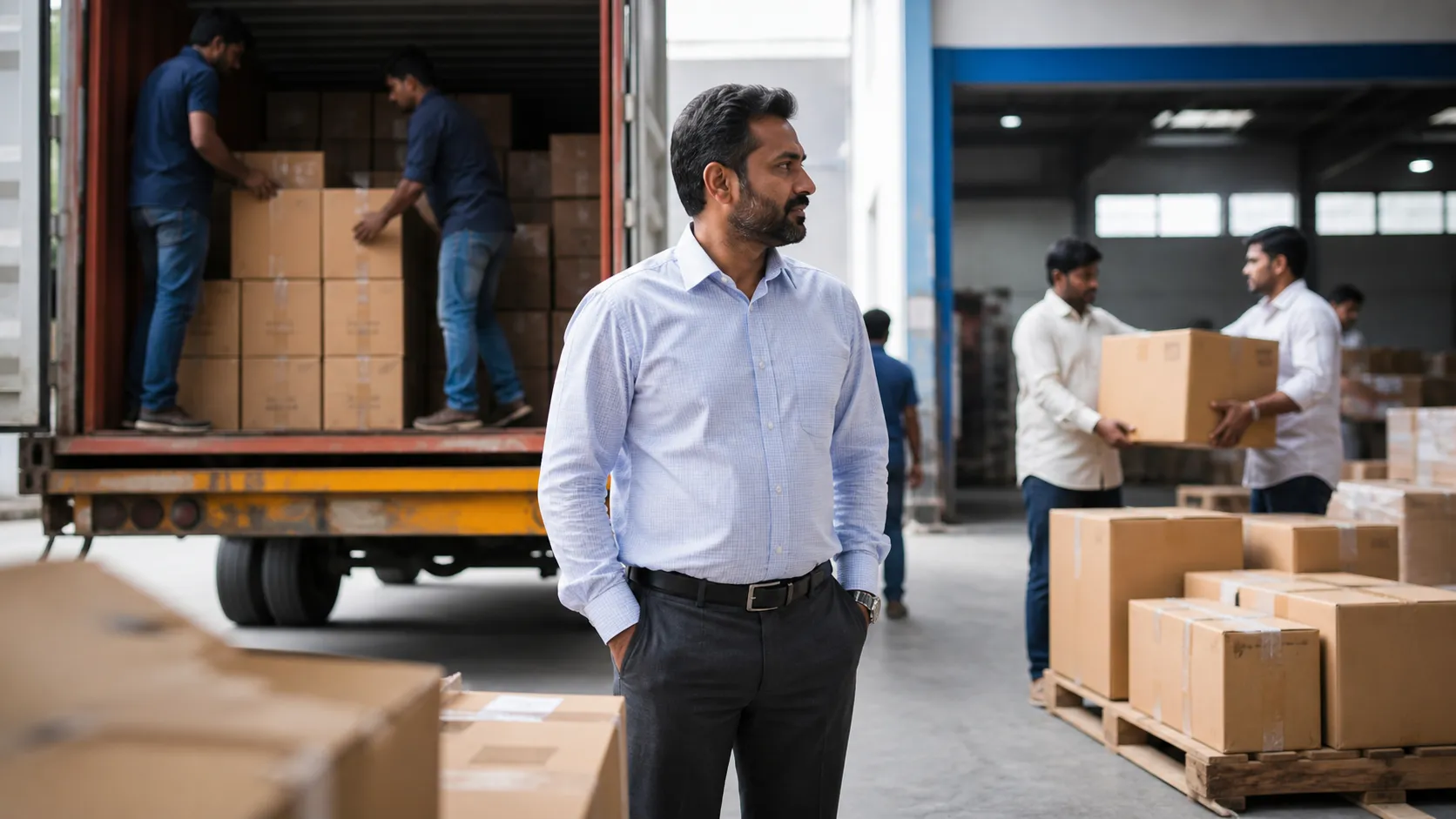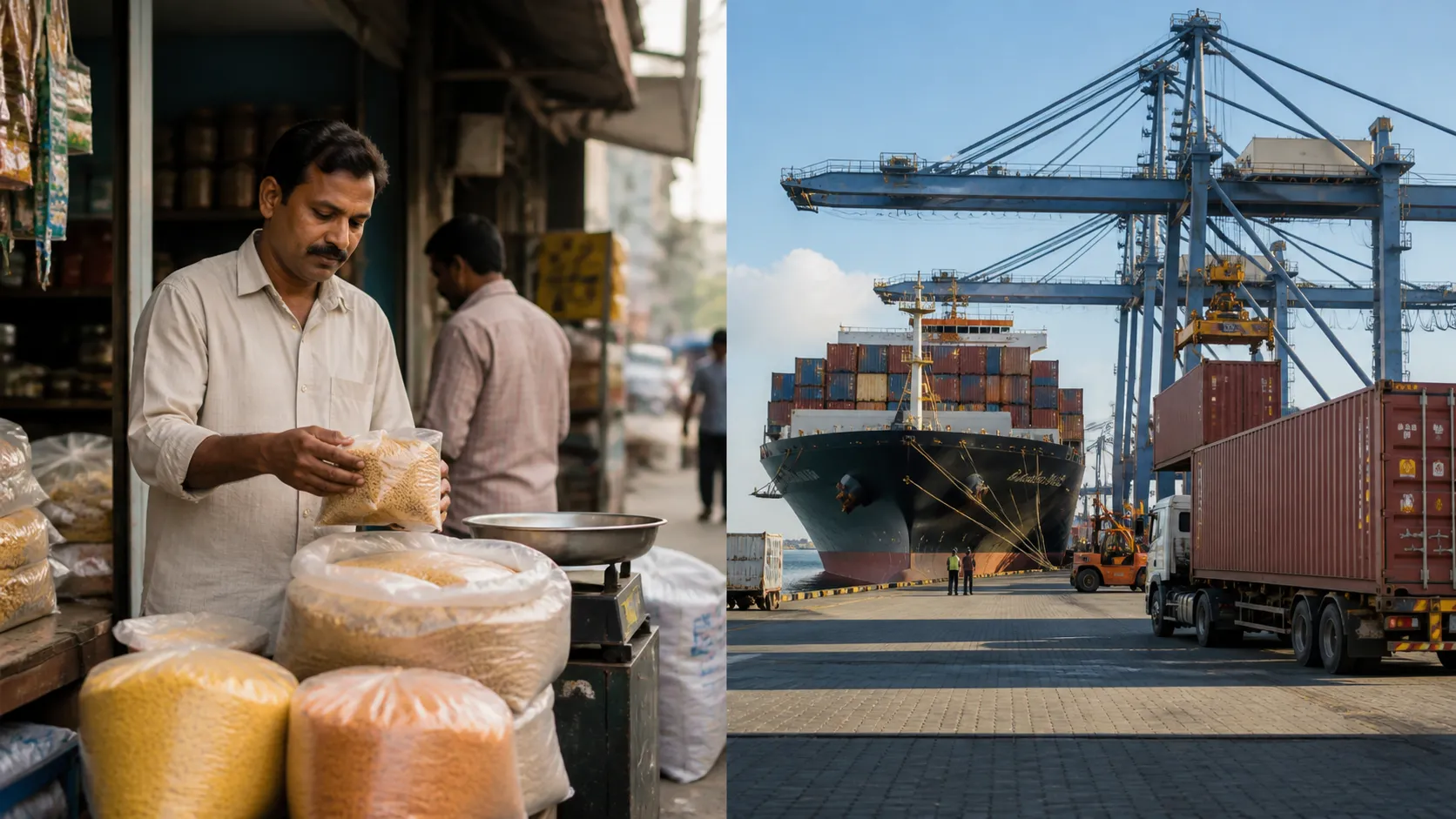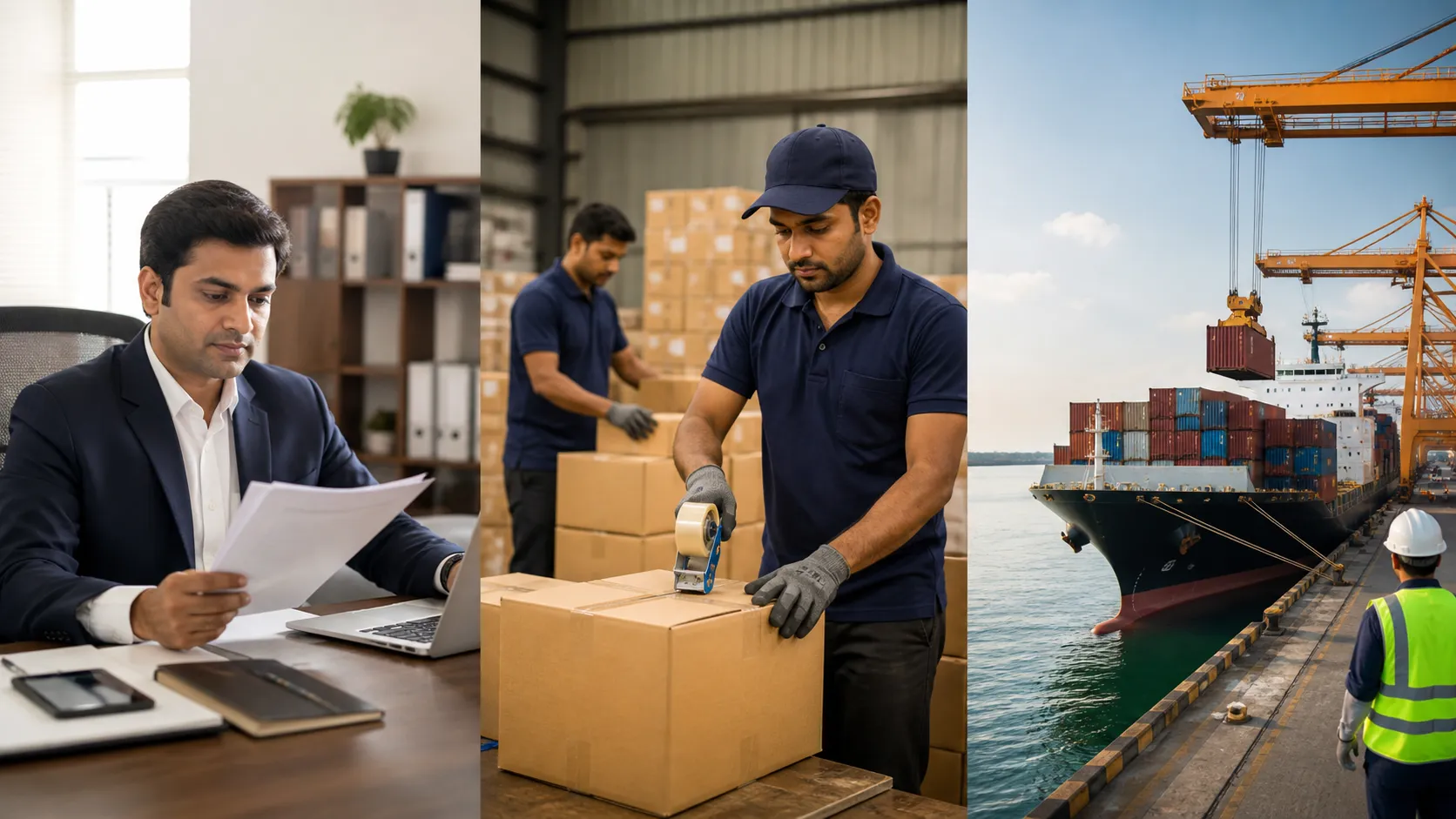
Imagine you make hand-painted ceramic mugs in Khurja. Scenario A: a homeware wholesaler in the Netherlands orders 5,000 mugs — one buyer, one shipment, one invoice, payment via LC, done. Scenario B: 200 individual customers from the USA, UK, Canada, and Germany each order 2–3 mugs on Etsy — 200 shipments, 200 courier bookings, 200 customer conversations. Same mug. Same maker. Completely different export experience. This is the B2B vs B2C choice — and it's one of the most important strategic decisions an Indian exporter makes.
Understanding B2B Export: The Traditional Route
B2B export is the classic model of international trade — an Indian company sells to a foreign company. Goods move in bulk. Payment happens in large amounts. Relationships are long-term.
Who Are Your B2B Buyers?
- Importers and Distributors — import your goods and distribute to retailers or wholesalers in their country. They handle local customs, warehousing, and distribution. You deal with one company; they deal with hundreds of end customers.
- Wholesale Buyers — buy in large quantities, store in their warehouse, and sell to retailers.
- Retail Chains — large supermarket chains, department stores, and specialty retailers who source directly from Indian exporters. Examples: Carrefour, Walmart, IKEA, Marks & Spencer. Large volumes and long-term contracts, but demanding on quality and compliance.
- Industrial Buyers — companies that buy your product as a raw material or component for their own manufacturing.
- Hospitality and Institutional Buyers — hotels, restaurants, hospitals, airlines buying Indian products for their operations.
- Government and Institutional Procurement — foreign governments or international organisations purchasing Indian goods through tenders.
How B2B Export Works
The B2B export process follows the classic sequence — inquiry, Proforma Invoice, negotiation, Purchase Order, production, shipment, documents, payment. Key characteristics:
- Large order quantities — typically hundreds of pieces to container loads
- Formal documentation — Commercial Invoice, BL, LC, COO — the full works
- Long payment cycles — 30 to 90 days from shipment in many cases
- Relationship-driven — long-term buyer-seller relationships are the norm
- Price-sensitive — buyers negotiate hard because they're buying to resell at a margin
- Quality and compliance focused — buyers have their own standards and destination country requirements
Understanding B2C Export: The New-Age Route
B2C export — selling directly to foreign individual consumers — has been transformed by e-commerce. What was once impossible for small Indian exporters (reaching individual buyers in 50 countries simultaneously) is now a reality.
B2C Export Channels for Indian Exporters
Amazon Global Selling — Amazon operates marketplaces in the USA, UK, Germany, France, Italy, Spain, Japan, Australia, UAE, and more. Indian sellers can list products and sell directly to consumers worldwide via two models:
- FBA (Fulfillment by Amazon) — you ship inventory to Amazon's overseas warehouse; Amazon stores, packs, and ships individual orders. You pay storage and fulfillment fees.
- FBM (Fulfillment by Merchant) — you ship each order from India when it comes in. More control, less Amazon fee, but you manage international shipping for every order.
Etsy — the global marketplace for handmade, vintage, and unique products. Perfect for Indian artisans, handicraft makers, jewellery designers, and textile artists. Etsy has 90+ million active buyers globally, predominantly from USA, UK, Canada, Australia, and Germany. A well-optimised Etsy shop with great photography and SEO can generate consistent B2C orders without marketing spend.
Your Own Website (D2C Export) — direct-to-consumer export through your own branded website built on Shopify or WooCommerce. International orders shipped via DHL/FedEx. The most brand-building option — also the hardest to scale without marketing investment.
Social Commerce — Instagram Shopping, Pinterest, and Facebook Marketplace. Indian artisans increasingly get international orders directly through social media. A viral reel or post can generate hundreds of orders overnight.
Niche International Marketplaces — Houzz (home décor), ASOS Marketplace (independent fashion), Not on the High Street (UK gifts and lifestyle), Wayfair (home goods). Match your platform to your product category.
How B2C Export Works
Individual consumer places an order → you receive notification → you pack and ship via international courier (DHL, FedEx, Aramex, India Post) → tracking shared with customer → customer receives product → payment settled by platform every 7–14 days.
Key characteristics: small order quantities (1–10 pieces), high volume of individual transactions, fast platform payments with no LC complexity, direct consumer feedback through reviews, returns and complaints management, and individual packaging and courier booking for every order.
B2B vs B2C: The Detailed Comparison
1. Order Size and Volume
B2B: Large orders. MOQ of hundreds to thousands of units. One order = significant revenue. One buyer.
B2C: Tiny orders — 1 to 10 units typically. To match a B2B order's revenue you need hundreds of B2C orders.
Winner for simplicity: B2B. Winner for flexibility: B2C (no MOQ barrier for buyers).
2. Pricing and Margins
B2B: Lower unit price — buyers negotiate hard because they need margin to resell. High total revenue through volume.
B2C: Higher unit price — consumer pays closer to retail. Your $8 mug sells for $25–$30 directly to a consumer on Etsy or Amazon. You capture the entire retail margin.
The math: 5,000 mugs at $8 to a B2B buyer = $40,000 revenue. 5,000 mugs at $25 on Etsy = $1,25,000 revenue. Same product. Same quantity. 3× more revenue through B2C — but selling 5,000 mugs individually is a completely different operational challenge.
Winner for unit margin: B2C. Winner for volume revenue: B2B.
3. Payment
B2B: Complex payment terms — LC, TT, DP, DA. Payment cycles of 30–90 days after shipment. Requires working capital. Payment risk exists.
B2C: Platform collects consumer payment immediately and remits to you every 7–14 days. No LC, no payment risk, no chasing buyers for payment.
Winner: B2C — dramatically simpler, faster, and no bad-debt risk.
4. Documentation and Compliance
B2B: Full export documentation — Shipping Bill, BL, Commercial Invoice, Packing List, COO, LC documents. Requires a CHA. Complex but manageable with the right team.
B2C: Much simpler for individual shipments — international couriers handle customs paperwork for small parcels. At scale, however, managing hundreds of individual courier shipments creates its own operational complexity.
Winner for single transaction simplicity: B2C. Winner for scalable systems: B2B.
5. Finding Customers
B2B: You must actively find buyers — B2B platforms (Alibaba, IndiaMART), trade fairs, buyer databases, cold outreach, Export Promotion Councils. Takes time, effort, and sometimes money.
B2C: The platform brings buyers to you — if your listing is optimised and your product is good, customers find you through Amazon or Etsy search. Passive discovery is possible.
Winner for buyer discovery: B2C platforms, especially for beginners.
6. Relationship and Loyalty
B2B: Long-term relationships. A good B2B buyer orders repeatedly for years. One great relationship can sustain your export business. High lifetime value per buyer.
B2C: Mostly transactional. Individual consumers rarely reorder. You constantly need new customers. Building loyal B2C customer base internationally takes years and significant brand investment.
Winner for relationship value: B2B.
7. Operations and Complexity
B2B: One order = one production run = one shipment = one set of documents = one payment. Operationally clean and scalable.
B2C: 100 orders = 100 individual packing operations = 100 courier bookings = 100 tracking numbers = 100 customer communication threads = 100 potential complaints.
Winner for operational simplicity: B2B.
8. Brand Building
B2B: Your brand may not reach the end consumer — the wholesaler or retailer often sells under their own brand or private label. Your brand is known to the trade, not the consumer.
B2C: Every consumer sees your brand. Positive reviews build brand equity. International brand building happens naturally through B2C.
Winner for brand building: B2C.
9. Returns and Customer Service
B2B: Disputes are formal and managed through commercial contracts, inspection certificates, and trade law. Relatively rare for quality-controlled shipments.
B2C: Consumer returns are common — wrong size, changed mind, damaged in transit. Negative reviews hurt your platform ranking. Managing international consumer complaints takes time and empathy.
Winner: B2B — far less customer service complexity.
10. Scalability
B2B: One buyer can take your entire production. One new large buyer = exponential revenue jump. Scalable with proper systems.
B2C: Scalable but requires investment in systems — inventory management, order management software, customer service team, logistics partnerships.
Winner for ease of scaling: B2B.
The Numbers: A Real Comparison
Handloom scarves. Cost of production: ₹400 per scarf.
| Parameter | B2B (Wholesale to USA Importer) | B2C (Direct on Etsy to USA Consumers) |
|---|---|---|
| Selling price | $12 per scarf (FOB) = ₹1,000 | $35 per scarf = ₹2,940 |
| Platform/commission fee | None | 6.5% Etsy fee = ₹191 |
| Shipping per unit | Sea freight ₹50/scarf (bulk) | Courier ₹600/scarf (individual) |
| Packaging per unit | ₹30 (bulk export packaging) | ₹80 (individual gift packaging) |
| Net profit per scarf | ₹520 | ₹1,669 |
| Order quantity | 2,000 scarves | 2,000 scarves (over time) |
| Total profit | ₹10,40,000 | ₹33,38,000 |
| Time to fulfil | 1 shipment, 3 weeks | 200–500 orders over 6 months |
| Operational effort | Low | Very High |
The B2C margin is 3× higher. The operational effort is 20× higher. This is the fundamental trade-off.
Product Fit: Which Route Works Best for Which Products?
Products That Work Better for B2B Export
- Industrial and engineering goods — auto parts, machinery, chemicals, steel. Individual consumers don't buy these.
- Bulk agricultural commodities — rice, spices, oilseeds. Individual consumers don't buy in export quantities.
- Pharmaceuticals — sold through institutional channels, not direct to international consumers.
- Textiles and garments — bulk supply to international brands and retailers is the primary channel.
- Large or heavy items — furniture, sanitary ware. International courier costs make B2C impractical.
- Products requiring local regulatory approval — importers handle destination country food and safety regulations.
Products That Work Better for B2C Export
- Handmade and artisan products — handcrafted jewellery, pottery, leather goods, woodcraft. Etsy is ideal.
- Unique fashion and accessories — Indian ethnic wear, handblock print clothing, silver jewellery.
- Home décor — hand-painted items, textile furnishings, artisanal candles, incense.
- Yoga and wellness products — yoga mats, meditation cushions, Ayurvedic products.
- Small, lightweight, high-value items — easy to ship individually via courier without excessive freight cost.
Products That Work Well for Both
- Spices and specialty food — B2B to importers AND B2C on Amazon
- Apparel — B2B to wholesale buyers AND B2C on Amazon or your own website
- Handicrafts — B2B to interior designers and gift importers AND B2C on Etsy
- Ayurvedic and herbal products — B2B to health distributors AND B2C on Amazon
The Hybrid Model: B2B + B2C Together
Here's the secret most successful Indian exporters eventually discover — you don't have to choose just one. The smartest strategy is a hybrid model — using B2B for volume and stability, B2C for margin and brand building simultaneously.
- Sell 70% of your production to B2B buyers — wholesalers and distributors. This gives you predictable revenue, large orders, and manageable operations.
- Sell 30% directly to consumers via Amazon, Etsy, or your own website. This gives you higher margins, brand visibility, and real market intelligence about what consumers actually want and pay.
Your B2C channel also gives you powerful negotiating leverage with B2B buyers — because you now know what your product sells for at retail. And your B2C reviews become social proof that attracts better B2B buyers.
Real example: A Jaipur silver jewellery exporter supplies to wholesale buyers in USA and UK through IndiaMART leads (B2B). She simultaneously runs an Etsy shop with 4,000 sales and a 5-star rating. The Etsy success gives her credibility when approaching new wholesale buyers — they see real consumer demand. Her B2B unit price has increased 40% since she started B2C, because buyers can see her retail price point on Etsy and accept that her wholesale price is fair.
Which Route Should YOU Choose First?
Choose B2B First If:
- You're a manufacturer with production capacity of 500+ units per order
- You want predictable revenue and simple operations
- Your product is industrial, agricultural, or bulk in nature
- You don't have the bandwidth to manage hundreds of individual consumer orders
- You want to learn the traditional export process thoroughly
Choose B2C First If:
- You make handmade, unique, or artisan products
- Your production is small-batch and flexible
- You want to test international market response without committing to bulk orders
- You have good product photography and storytelling ability
- You want to start earning export revenue quickly without first finding wholesale buyers
Choose Hybrid From Day One If:
- Your product works in both channels
- You have the operational capacity to manage both
- You want maximum market coverage and risk diversification
Practical First Steps for Each Route
B2B First Steps
- Create a professional export catalogue with products, specifications, MOQ, and pricing
- Register on IndiaMART Global and Alibaba (free listing to start)
- Get your RCMC from the relevant Export Promotion Council
- Attend one domestic trade fair in your product category
- Respond to every inquiry within 24 hours — speed signals professionalism to foreign buyers
B2C First Steps
- Open an Etsy seller account or register for Amazon Global Selling
- Invest in professional product photography — non-negotiable for B2C success
- Write keyword-optimised product listings — title, description, tags
- Set up international shipping via DHL or FedEx Express account
- Price at international retail level — don't under-price out of fear
Hybrid First Steps
- Start B2C on Etsy or Amazon to validate product-market fit and gather reviews
- Use B2C data (what sells, what customers say) to refine your product and pitch
- Approach B2B wholesale buyers with your B2C track record as social proof
- Build systems — order management software, packaging supplies, shipping partnerships
Final Thoughts
B2B and B2C are not competitors — they are complementary strategies for building a complete, resilient export business. B2B gives you volume, stability, and operational simplicity. B2C gives you margin, brand equity, and direct market connection.
The best Indian exporters don't choose between them — they use both intelligently, letting each channel strengthen the other.
If you're just starting — pick the route that fits your product, your capacity, and your personality. A handicraft maker with beautiful products and great photography should start on Etsy today. A manufacturer with production capacity should chase wholesale buyers on Alibaba. There's no wrong answer. There's only the answer that fits your situation right now.
Start. Learn. Adapt. Add the second channel when you're ready. To understand how export payments work across both models, read our guide on Letter of Credit for Indian exporters. And if you're still deciding between selling through an agent vs directly, explore direct vs indirect export.