Introduction
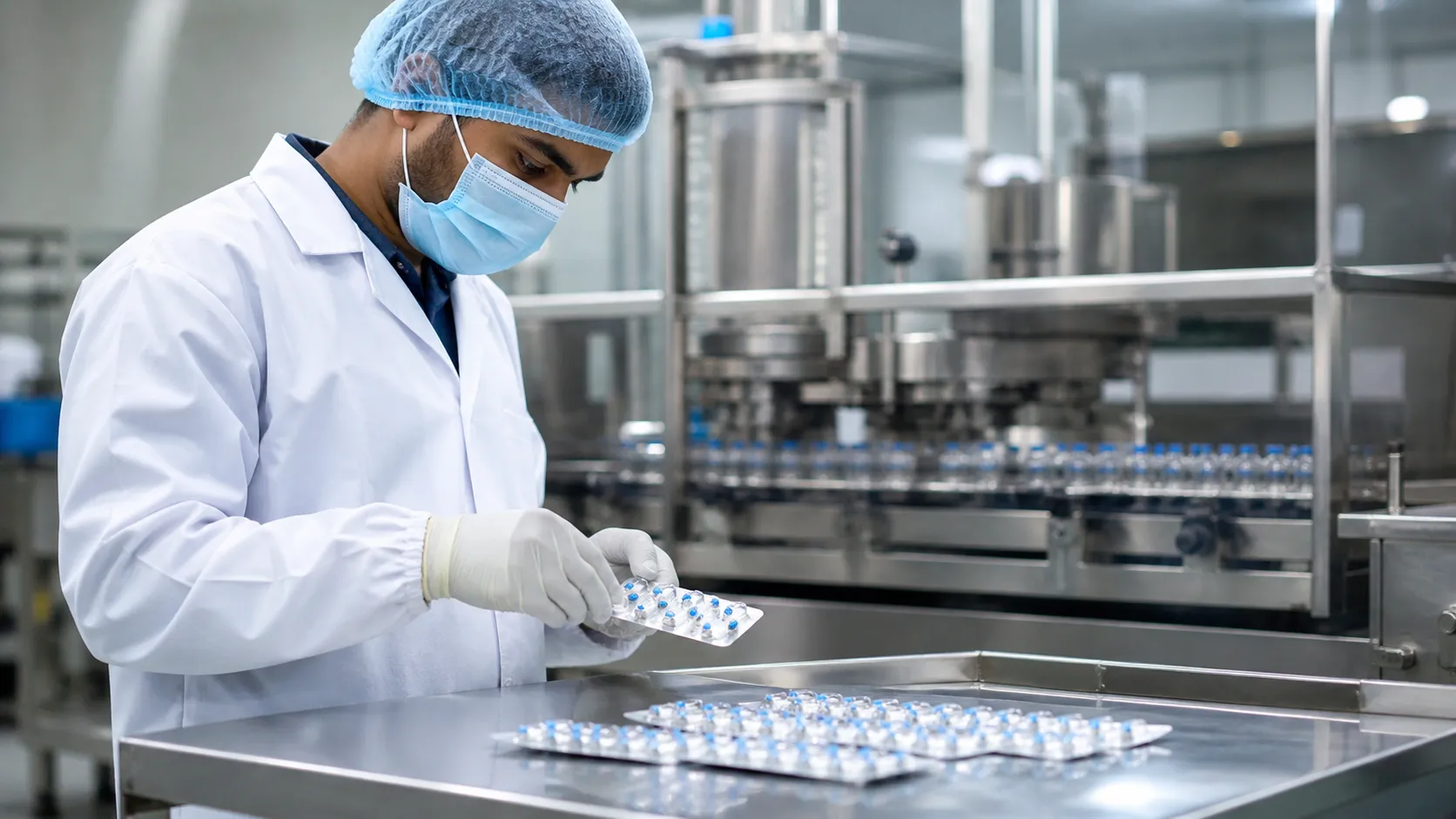
India's pharmaceutical export story is one of the most remarkable in global trade. From a position of near-total import dependence in the 1970s, India has become the world's largest supplier of generic medicines by volume — supplying over 40% of US generic prescriptions, 25% of the UK's generic medicine needs, and serving as the primary medicine supplier for billions of people in Africa, Asia, and beyond. India's pharma exports crossed USD 27 billion in FY2024-25 and are tracking toward USD 30+ billion as biosimilars, complex generics, and specialty pharmaceuticals add new export streams alongside the established generics base.
But pharmaceutical exporting is categorically different from exporting most other products. The regulatory barrier to entry is not paperwork — it is a genuine, multi-year capability investment. The approval processes in regulated markets (USA, EU, Japan, Australia, Canada) require clinical data, manufacturing facility inspections by foreign regulatory authorities, and demonstrated production quality systems at a level that takes years to build and millions to invest. For smaller Indian pharma manufacturers and merchant exporters, understanding which markets are accessible without this deep regulatory investment — and which require it — is the most important strategic question.
This guide is structured around that stratification: the regulatory requirements across different market tiers, the documentation and compliance requirements specific to pharma exports, how to position in each market type, and what the path looks like to progressively enter more regulated markets over time.
India's Pharmaceutical Export Advantage: Why It Is Durable
Before the regulatory framework, understand why India's pharma export position is structurally durable — not just a cost advantage that can be eroded by competitors.
The Generics Pipeline
Global pharmaceutical patents expire continuously — and every patent expiry is an opportunity for Indian generic manufacturers. The US market alone has USD 10–15 billion in branded drug patents expiring each year, each creating an ANDA (Abbreviated New Drug Application) opportunity for Indian generics. India's 50+ US-FDA approved manufacturing facilities are positioned to file ANDAs and benefit from every major patent expiry.
API Production Depth
India is the world's third-largest API (Active Pharmaceutical Ingredient) producer. The clusters in Hyderabad (API hub), Ahmedabad, Mumbai, Aurangabad, and Vizag represent decades of investment in synthesis chemistry, fermentation technology, and process development. Many APIs that global formulators need — whether for branded or generic products — require Indian or Chinese supply because no other country has the production infrastructure.
Biosimilars: The Next Wave
Biosimilars (generic equivalents of biologics — insulin, monoclonal antibodies, growth hormones) represent the highest-value frontier of Indian pharma exports. Biocon, Dr. Reddy's, Cipla, and Zydus are building significant biosimilar export portfolios. The global biosimilar market is expected to reach USD 100+ billion by 2030, and Indian companies are among the most competitive global players.
Market Tiers: Understanding Regulatory Requirements by Destination
The single most important framework for pharmaceutical exporters is understanding that global drug markets are not homogeneous. They span from highly regulated (requiring FDA-level approval) to essentially unregulated (requiring only basic product registration). Your regulatory investment determines which markets you can access.
Tier 1 — Highly Regulated Markets: USA, EU, Japan, Canada, Australia
These markets require:
- Drug registration: Full dossier submission (NDA, ANDA, or equivalent) — clinical safety and efficacy data or bioequivalence studies for generics
- Manufacturing facility approval: Your factory must be inspected and approved by the destination country's regulatory authority (US FDA, EMA, PMDA, Health Canada, TGA) — not just CDSCO
- Ongoing pharmacovigilance: Post-market surveillance and adverse event reporting requirements
- Quality systems: cGMP (current Good Manufacturing Practices) at the standard of the destination country — US FDA's cGMP is the most demanding
Entry barrier: Very high. A US FDA-approved manufacturing facility and ANDA approval for a specific drug typically takes 3–7 years and USD 2–10 million for a single product (ANDA filing fee, bioequivalence studies, facility upgrades, regulatory affairs team). This is genuinely not accessible to small manufacturers without significant investment.
Reward: Premium pricing, large volumes, long-term supply contracts with creditworthy buyers (US pharmacy chains, NHS, etc.).
Tier 2 — Semi-Regulated Markets: Gulf Countries, South Korea, Singapore, Brazil, South Africa
These markets require:
- Product registration with the national health authority (UAE MOH, Saudi SFDA, Brazilian ANVISA, South African SAHPRA)
- WHO-GMP certificate from CDSCO is typically accepted as the manufacturing quality standard
- Certificate of Pharmaceutical Product (CPP) from CDSCO in WHO format
- Free Sale Certificate confirming the drug is approved/sold in India
Entry barrier: Moderate. WHO-GMP certification from CDSCO is achievable by most Indian manufacturers with reasonably established quality systems. Product registration timelines vary — UAE MOH: 6–18 months; Saudi SFDA: 12–24 months; ANVISA Brazil: 24–48 months (one of the slowest globally).
Reward: Significant market sizes, reasonable pricing, accessible to mid-size Indian manufacturers.
Tier 3 — Developing Markets: Africa (most sub-Saharan countries), Southeast Asia (many markets), South Asia
These markets require:
- Basic product registration with the national medicines regulatory authority (varies widely by country)
- WHO-GMP certificate typically required for tender business and hospital supply
- CPP and Free Sale Certificate from India
- NAFDAC (Nigeria), KEBS (Kenya), ZAMRA (Zambia), etc. — national product registration
Entry barrier: Lower than Tier 1 and 2. Many African markets accept WHO PQ (prequalification) or WHO-GMP as the manufacturing standard without independent facility inspections. Product registration is required but the dossier requirements are simpler than US FDA or EU EMA.
Reward: Volume (Africa represents 25%+ of Indian pharma exports by volume), humanitarian importance, but lower pricing and sometimes higher payment risk.
Indian Regulatory Framework for Pharmaceutical Exports
CDSCO — The Indian Regulatory Authority
The Central Drugs Standard Control Organisation (CDSCO) under India's Ministry of Health and Family Welfare is the equivalent of the US FDA for India. CDSCO regulates drug manufacturing, clinical trials, drug imports, and pharmaceutical exports from India.
Key CDSCO certificates required for pharma exports:
- WHO-GMP Certificate: Issued by CDSCO after an inspection of your manufacturing facility against WHO Good Manufacturing Practice guidelines. This is the most universally required certificate for Indian pharma exports to Tier 2 and Tier 3 markets. Validity: 3 years. Apply through CDSCO's online Sugam portal with your facility inspection request. CDSCO inspection teams visit your factory, examine manufacturing processes, quality systems, documentation, and facility conditions. Certificate issued after satisfactory inspection.
- Certificate of Pharmaceutical Product (CPP): Issued in the WHO standard format confirming that the specific drug product is: (a) authorised for manufacture and sale in India, (b) manufactured at the specified facility, (c) exported to the specified country. Required by most importing country health authorities to verify the product's regulatory status in India.
- Free Sale Certificate (FSC): Confirms the product is freely sold in India without restriction. Different from CPP — a product may have an FSC even if it does not have a full CDSCO marketing approval (for certain export-only products).
- Export NOC for Scheduled H and X Drugs, Narcotics, Psychotropics: Schedule X drugs, narcotics, and psychotropic substances require specific prior approval from CDSCO before export. Non-compliance is a criminal offence.
Manufacturing Licence Under Schedule M
Your pharmaceutical manufacturing facility must hold a valid manufacturing licence under the Drugs and Cosmetics Act, 1940, from the State Drug Controller of your state. This licence specifies the categories of drugs you are authorised to manufacture. Ensure your licence covers all products you intend to export — manufacturing unlicensed products is illegal.
Schedule M of the Drugs and Cosmetics Act specifies the GMP requirements for pharmaceutical manufacturers in India. The revised Schedule M (aligned more closely with WHO GMP) came into effect in 2023 — manufacturers are expected to comply with the revised standards.
US FDA Compliance: The Gold Standard
If your ambition is to export to the USA — the world's largest and most valuable pharmaceutical market — US FDA compliance is the non-negotiable path. Here is what that entails:
Drug Establishment Registration
Every pharmaceutical manufacturing facility exporting to the US must register with the US FDA annually through the Drug Establishment Registration system (FDA's Unified Registration and Listing System — FURLS). Registration is free and renewable annually. Without valid registration, your drugs cannot legally enter the US.
Drug Listing
Every drug product exported to the US must be listed with the FDA through the National Drug Code (NDC) directory. Drug listing is part of the FURLS system and must be updated whenever the product formulation or labelling changes.
ANDA (Abbreviated New Drug Application) for Generics
To actually sell a generic drug in the US, you need FDA approval through the ANDA pathway. An ANDA demonstrates:
- Bioequivalence — the generic drug performs in the body the same way as the branded reference drug
- Manufacturing quality — the drug is manufactured under US FDA cGMP standards
- Labelling compliance — labelling meets US FDA requirements
Filing fee for an ANDA: approximately USD 220,000 (2026). Annual programme fee per approved ANDA: approximately USD 150,000. These are significant costs — ANDA economics make sense only at significant sales volumes.
US FDA Facility Inspection
Before approving ANDAs from a facility, and periodically for approved facilities, US FDA inspects Indian manufacturing plants. FDA investigators assess:
- Documentation systems (batch records, deviation records, change controls)
- Laboratory controls and data integrity
- Manufacturing processes and validation
- Quality management systems
- Environmental monitoring
An FDA Form 483 (observations letter) after inspection lists deficiencies. Warning Letters for serious deficiencies can trigger Import Alerts — blocking all products from that facility from entering the US until corrective actions are verified.
Data integrity has been the most consistent FDA inspection finding at Indian facilities in recent years — ensure your electronic data, audit trails, and laboratory records meet FDA's data integrity expectations before inviting an inspection.
Key Export Documentation for Pharmaceuticals
Standard commercial documents (invoice, packing list, B/L) apply to pharmaceutical exports as for any product. In addition:
- ☐ WHO-GMP Certificate (from CDSCO) — copy sent to importer for their regulatory submission
- ☐ Certificate of Pharmaceutical Product (CPP) — WHO format, issued by CDSCO per product per destination country
- ☐ Free Sale Certificate — issued by CDSCO
- ☐ Certificate of Analysis (COA) — per batch, showing all quality parameters tested and results; signed by your QC department head
- ☐ Batch Manufacturing Records summary — required by some destination health authorities
- ☐ Regulatory dossier approval copies — copies of the destination country's product registration approval for your buyer's import declaration
- ☐ Export NOC (from CDSCO for Schedule X, narcotics, psychotropics)
- ☐ Prior Notice to US FDA (for USA-bound shipments — filed on FDA's PNSI system at least 2 hours before vessel arrival at US port)
- ☐ IMP (Investigational Medicinal Product) authorisation (for clinical trial supplies)
Cold Chain Documentation for Temperature-Sensitive Pharmaceuticals
Many pharmaceuticals — vaccines, biologics, certain APIs, insulin — require temperature-controlled (cold chain) transportation. Documentation required:
- Temperature mapping report for the specific shipping lane and container
- Continuous temperature monitoring logger data (to be included with shipment or transmitted electronically)
- GDP (Good Distribution Practice) compliance certificate from logistics provider
- Excursion handling procedure documentation
Pharmexcil: Your EPC for Pharmaceutical Exports
Pharmexcil (Pharmaceuticals Export Promotion Council of India) is the EPC for pharmaceutical, nutraceutical, herbal medicine, and medical device exporters. Registration with Pharmexcil and obtaining RCMC is required for claiming most FTP benefits on pharmaceutical exports.
Pharmexcil services of particular value for pharma exporters:
- Regulatory intelligence on destination market registration requirements — updated country-by-country market access reports
- Participation in Pharmexcil-organised buyer-seller meets and trade delegations to Africa, Southeast Asia, and CIS markets
- Government representation for pharma export policy matters — has been instrumental in expanding WHO PQ-based market access in Africa
- Training programmes on regulatory submissions, quality compliance, and market entry
Key Markets and Market Entry Strategy
USA — The Pinnacle Market
USD 7–9 billion annually from India. The path: US FDA facility approval + ANDA filings. Once established, supply relationships with US pharmacy chains, wholesalers (McKesson, AmerisourceBergen, Cardinal Health), and hospital group purchasing organisations (GPOs) generate sustained long-term revenue. The investment is front-loaded and significant — but the return is commensurate.
Africa — Volume Market
USD 4–5 billion annually from India. Over 25% of India's pharma export volume goes to Africa. The African market is served through both tender business (government procurement, multilateral agency procurement through UNICEF Supply Division) and private sector distribution. WHO PQ (prequalification) certification significantly enhances access to tender business — it is the preferred quality standard for UNICEF, the Global Fund, and other multilateral procurers.
ASEAN and Southeast Asia — Growing Middle Class
USD 2–3 billion and growing. Indonesia (BPOM), Philippines (FDA Philippines), Vietnam (DAV), Thailand (FDA Thailand) each have distinct registration requirements — but WHO-GMP plus local product dossier is generally sufficient for market entry. ASEAN's growing middle class is increasing private sector pharmaceutical demand that Indian generics are well-positioned to serve.
Commonwealth of Independent States (CIS) — Established Market
Russia (Roszdravnadzor), Kazakhstan, Ukraine, Uzbekistan — the CIS has been a significant market for Indian generics for decades. Political volatility (particularly Russia-Ukraine war) has introduced uncertainty, but Kazakhstan, Uzbekistan, and other Central Asian markets continue to grow.
Frequently Asked Questions
I manufacture Ayurvedic products — what are the export requirements?
Ayurvedic medicines have different regulatory treatment than allopathic pharmaceuticals. AYUSH (Ministry of Ayurveda, Yoga and Naturopathy, Unani, Siddha and Homeopathy) has developed export guidelines for traditional medicines. For regulated Western markets, Ayurvedic products typically register as dietary supplements, herbal products, or traditional medicines — not as prescription pharmaceuticals. Each destination country has different rules: the EU's Traditional Herbal Medicinal Products Directive, the US Dietary Supplement Health and Education Act (DSHEA), and Australia's TGA Complementary Medicines framework all provide pathways for Ayurvedic products without the full pharmaceutical ANDA/NDA route. AYUSH Export Promotion Council (Ayushexport) is the relevant EPC for traditional medicine exporters.
Can a small pharma manufacturer (turnover below ₹10 crore) meaningfully export pharmaceuticals?
Yes — but primarily to Tier 3 markets (Africa, Southeast Asia, South Asia) where WHO-GMP from CDSCO is sufficient and product registration barriers are manageable. For Tier 1 markets (USA, EU), the capital investment in FDA/EMA compliance is generally not accessible for very small manufacturers. A realistic path: build WHO-GMP compliance and target African and ASEAN markets first; use the revenue and learning to progressively invest in Tier 2 (Gulf) and eventually Tier 1 market compliance over 5–10 years.
What is the difference between WHO PQ and WHO-GMP?
WHO-GMP (Good Manufacturing Practice) certification is issued by CDSCO after inspecting your manufacturing facility against WHO's GMP guidelines. It certifies your manufacturing process quality. WHO PQ (Prequalification) is issued by the WHO itself after a comprehensive assessment of both the product (quality, safety, efficacy data) and the manufacturing facility. WHO PQ is a higher standard than WHO-GMP and is specifically required for products supplied to multilateral procurement programmes (UNICEF, Global Fund, PEPFAR). WHO PQ is more difficult to obtain than WHO-GMP but dramatically expands your access to large-volume tender business in developing markets.
My drug has been banned in some countries but is still approved in India. Can I export it?
Exporting a drug that is banned or prohibited in the destination country is illegal in that country — your goods will be seized at customs and you may face legal consequences. A drug that is approved in India but banned elsewhere requires careful market-by-market verification. CDSCO maintains a list of drugs banned in various countries — always check the destination country's banned/restricted drug list before attempting to export. Do not rely on the absence of information — proactively confirm permissibility with your importer and with the destination health authority.
Conclusion
India's pharmaceutical export story is one of earned advantage — built over decades through investment in chemistry capability, manufacturing scale, quality systems, and regulatory expertise. The sector's growth trajectory remains strong, with new frontiers in biosimilars, complex generics, and specialty pharmaceuticals adding to the established generics base.
For exporters entering or growing in pharmaceutical exports, the framework is clear: match your market ambition to your regulatory capability, invest in WHO-GMP and CDSCO compliance as the foundation, and progressively build toward higher-tier market access as your quality systems and regulatory track record develop. Do not attempt shortcuts on regulatory compliance — the pharmaceutical sector operates on an unforgiving compliance standard where shortcuts create catastrophic consequences.
Register with Pharmexcil, maintain current WHO-GMP certification, file your CPP and FSC for every new destination, and work with experienced regulatory affairs consultants for higher-tier market entry. The market is enormous and growing — the reward justifies the rigour.