Introduction
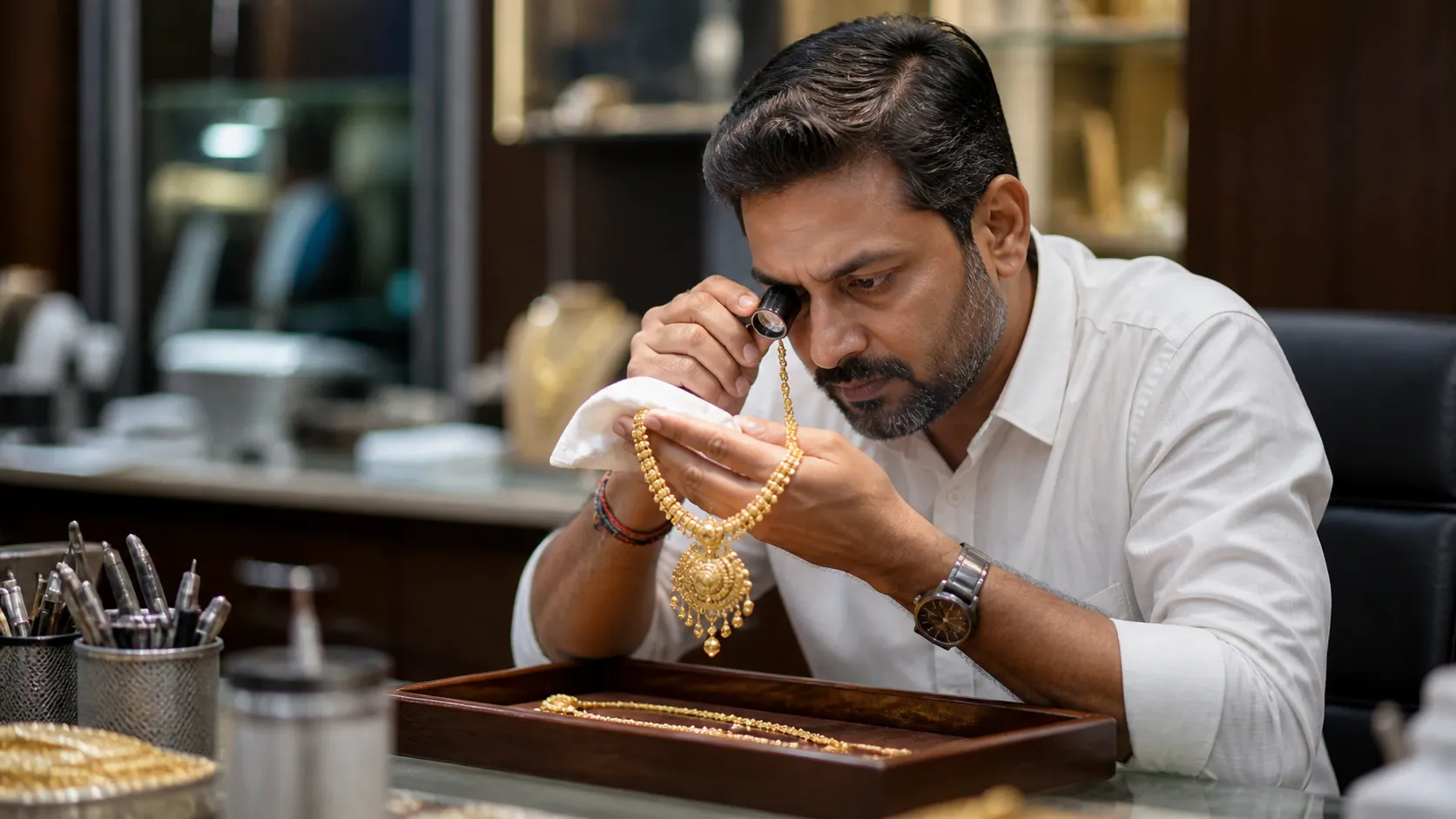
India's gems and jewellery sector is one of the oldest, most complex, and most globally significant export industries the country has. Surat processes approximately 90% of the world's cut and polished diamonds — 14 of every 15 diamonds sold globally pass through Surat's cutting and polishing workshops. Mumbai is among the world's major gold jewellery manufacturing and trading centres. Jaipur is globally recognised for coloured gemstone cutting and silver and gemstone jewellery. Together, this cluster generates USD 35–38 billion in annual exports — making gems and jewellery India's third-largest export category after petroleum products and engineering goods.
The sector is also uniquely demanding in its compliance landscape. Diamonds carry the ethical weight of the Kimberley Process — the international certification framework that ensures diamonds are not funding armed conflict. Gold jewellery carries hallmarking and purity compliance requirements in regulated markets. Gemstones require country-of-origin declarations that intersect with sanctions regimes in some markets. And the overall luxury positioning of much of the sector means brand, provenance, and trust are as important as price.
This guide covers the complete compliance, certification, and market entry framework for gems and jewellery exports from India.
India's Gems and Jewellery Export Landscape in 2026
Sub-Sector Breakdown
- Cut and polished diamonds: USD 16–18 billion — India's dominant gem export category. Surat processes 90%+ of world's diamonds by number. Market leaders: US, Hong Kong, UAE, Belgium, Japan.
- Gold jewellery (plain and studded): USD 10–12 billion. Handcrafted gold jewellery from Mumbai, Rajkot, Coimbatore; machine-made chains; high-end designer jewellery. Key markets: US, UAE, UK, Singapore, Hong Kong.
- Silver jewellery: USD 3–4 billion. Jaipur for oxidised silver and gemstone-set silver; Mumbai for silver chains and mass-market items. US is the dominant market.
- Coloured gemstones: USD 1–2 billion. Jaipur is the world's centre for coloured gemstone cutting — rubies, sapphires, emeralds, tourmalines. Markets: US, Europe, Japan.
- Lab-grown diamonds (LGD): USD 2–3 billion and growing rapidly. Surat has become the world's dominant LGD production centre — an important and strategically distinct sub-sector.
- Imitation and fashion jewellery: USD 500–800 million. Primarily to US, EU, and Gulf markets.
The Lab-Grown Diamond Disruption
Lab-grown diamonds deserve a separate note because they are simultaneously India's fastest-growing sub-sector and a source of genuine strategic tension in the industry. LGDs are chemically identical to natural diamonds but produced in reactors in weeks rather than formed over millions of years. They now sell at 70–90% discount to equivalent natural diamonds.
India — particularly Surat — is the world's largest LGD producer. But natural diamond mining companies (De Beers, Alrosa) have vigorously fought LGDs' positioning in luxury markets. For exporters, the key distinction: LGDs and natural diamonds are separate products with separate market dynamics, separate buyer segments, and separate disclosure obligations. Every LGD must be disclosed as lab-grown in marketing materials, certificates, and invoices. Non-disclosure of lab-grown origin is fraud.
Mandatory Compliance: Kimberley Process Certificate
The Kimberley Process Certification Scheme (KPCS) is an international certification framework established in 2003 to prevent "conflict diamonds" — diamonds whose proceeds fund rebel movements in armed conflict — from entering the legitimate diamond trade. India is a full Kimberley Process (KP) participant.
Who Needs KP Certification
The Kimberley Process applies to rough diamond trade — the movement of uncut, unpolished diamonds across international borders. Every shipment of rough diamonds exported from or imported into India must be accompanied by a KP Certificate.
For cut and polished diamond exports: KP Certificates are not legally required for polished diamonds. However, buyers — particularly in regulated markets like the EU and USA — may require a declaration of non-conflict origin as part of their supply chain due diligence. GJEPC provides declaration templates for this purpose.
How to Get a KP Certificate in India
KP Certificates for rough diamond exports from India are issued by the Gem and Jewellery Export Promotion Council (GJEPC) in coordination with the Ministry of Commerce. The process:
- Export declaration to GJEPC with details of rough diamond consignment
- GJEPC verifies the consignment and issues the KP Certificate
- The certificate accompanies the shipment — destination country customs and importing country KP authority verify the certificate at entry
India's KP compliance record is generally strong. Any rough diamond trader dealing with untrusted sources or attempting to export rough diamonds without a KP Certificate faces severe legal consequences under both Indian law and the importing country's laws.
Gold Hallmarking for Export
India's hallmarking system — administered by BIS (Bureau of Indian Standards) — is mandatory for domestic gold jewellery sales. For export, hallmarking requirements depend on the destination country:
- UK: Hallmarking is legally required for gold, silver, and platinum jewellery sold in the UK. The UK Assay Office is the hallmarking authority. Indian jewellery must either be sent to the UK Assay Office for hallmarking before retail sale, or bear a recognised international hallmark. BIS hallmarking is not automatically recognised — UK-specific hallmarking is required for retail sale in the UK.
- EU (most countries): Hallmarking requirements vary by EU member state. In countries with national hallmarking requirements (Austria, Finland, Ireland, Netherlands, Portugal, Sweden, UK pre-Brexit), Indian jewellery needs appropriate hallmarking before retail sale.
- USA: The US has no mandatory hallmarking law but has strict quality disclosure requirements under the Federal Trade Commission (FTC) guidelines — gold karat must be accurately stated and cannot be understated. "14K" gold must be 14 karat (58.3% gold purity) minimum.
- UAE: Dubai has its own hallmarking system through the Dubai Central Laboratory. Indian gold jewellery exported to UAE for retail sale typically requires UAE hallmarking.
- India BIS Hallmark: BIS hallmarking on your product signals Indian regulatory compliance and quality — many buyers accept it as a quality credential even where not legally required.
GJEPC Membership: Your Industry Foundation
The GJEPC (Gem and Jewellery Export Promotion Council) is the EPC for all gems and jewellery exporters. GJEPC membership (RCMC) is required for FTP scheme benefits on gems and jewellery exports and provides access to one of the most active buyer promotion ecosystems of any Indian EPC.
What GJEPC Membership Gives You
- IIJS (India International Jewellery Show): Organised by GJEPC, IIJS is the world's second-largest jewellery trade show — held annually in Mumbai and Bengaluru. GJEPC members exhibit at significantly subsidised rates. 65,000+ trade visitors from 65+ countries. The single most important buyer meeting opportunity for Indian jewellery exporters.
- International trade fair participation: GJEPC organises India Pavilions at JCK Las Vegas, Baselworld replacement shows, Hong Kong Jewellery and Gem Fair, Dubai Jewellery Show, and other major international fairs.
- KP Certificate issuance: GJEPC is the authorised KP issuing authority in India for rough diamonds.
- Certificate of Origin: GJEPC issues preferential COOs for FTA markets.
- Buyer connect and trade leads: GJEPC maintains a buyer database and facilitates introductions between registered exporters and international buyers.
How to join: Apply at gjepc.org. Registration fee: ₹10,000–35,000 depending on turnover category. Documents required: IEC, GSTIN, PAN, address proof, cancelled cheque.
Responsible Sourcing and ESG Compliance
The gems and jewellery industry is under increasing scrutiny on responsible sourcing — the ethical provenance of diamonds, coloured gemstones, and gold. For exporters targeting premium markets (USA luxury retailers, European sustainable jewellery brands), responsible sourcing credentials are increasingly non-optional.
RJC (Responsible Jewellery Council)
The RJC (Responsible Jewellery Council) is the leading responsible business certification for the global jewellery supply chain. RJC certification covers human rights, labour rights, environmental impact, business ethics, and product disclosure across the jewellery supply chain from mining to retail.
Major global jewellery brands (Tiffany, Cartier, Signet Jewelers, Pandora, H. Samuel) require their suppliers to be RJC-certified. Without RJC certification, you are not eligible to supply to these brands regardless of price competitiveness.
How to get RJC certification: Apply at responsiblejewellery.com. An accredited auditor assesses your facility against the RJC Code of Practices. Certification is valid for 3 years. Cost varies by facility size — typically USD 2,000–8,000 for the initial audit. GJEPC provides support to members pursuing RJC certification.
The OECD Due Diligence Framework for Coloured Gemstones
OECD has developed specific due diligence guidance for responsible mineral supply chains — applicable to coloured gemstones sourced from conflict-affected or high-risk areas. Exporters of rubies, sapphires, emeralds, and tanzanite from mining origins in Myanmar, Colombia, Afghanistan, and similar risk countries need to conduct and document supply chain due diligence under this framework. EU importers increasingly ask for this documentation.
Documentation for Gems and Jewellery Exports
Beyond standard commercial documents, gems and jewellery exports require:
- ☐ GIA / IGI / HRD Grading Certificate — For diamonds above 0.30 carat, international gemological laboratory grading certificates (GIA, IGI, HRD) are standard market requirements. Stones without certificates trade at a significant price discount. Ensure certificates are procured before shipment for certifiable diamonds.
- ☐ KP Certificate — For rough diamond shipments (not required for polished)
- ☐ Purity/Assay Certificate — For gold jewellery, a purity certificate from an accredited assay laboratory confirming karat/gold content
- ☐ CIBJO Nomenclature Compliance Declaration — For coloured gemstones, declaration that gemstone names and treatments are disclosed per CIBJO (World Jewellery Confederation) standard nomenclature
- ☐ Lab-Grown Diamond Disclosure — For LGDs, explicit written disclosure on invoice and certificates that diamonds are laboratory-grown
- ☐ Country of Origin Declaration — For gemstones, declaration of country of origin (relevant for sanctions compliance in some markets)
- ☐ RJC Certificate — For buyers requiring responsible sourcing certification
- ☐ Standard commercial documents: Invoice (with detailed item descriptions, carat weights, purity), Packing List, Shipping Bill, Bill of Lading/Airway Bill, Certificate of Origin
Special Customs Procedures for Gems and Jewellery
SEEPZ — The Diamond and Jewellery Export Hub
SEEPZ (Santacruz Electronics Export Processing Zone) in Mumbai is India's most important jewellery export processing zone. Many of India's large jewellery manufacturers and diamond exporters operate from SEEPZ, benefiting from:
- Duty-free import of diamond and gemstone inputs
- 100% export orientation with comprehensive duty and tax exemptions
- Simplified in-house customs procedures — faster clearance than standard port-based customs
- Co-location with diamond and gemstone trading companies, banks, and logistics providers
Air Freight — The Standard Mode
High-value, low-weight gems and jewellery almost universally move by air freight. Sea freight introduces unacceptable transit duration risk (damage, moisture, theft) for valuable jewellery. Air freight to major jewellery markets:
- Mumbai to New York (JFK): 14–18 hours
- Mumbai to Dubai: 3–4 hours
- Mumbai to Hong Kong: 6–8 hours
- Mumbai to London (Heathrow): 9–11 hours
Jewellery-specific air freight insurance and handling: Use specialised jewellery logistics companies (Malca-Amit, Brinks, Garda World, Loomis) for high-value consignments — they provide armed courier, specialised insurance, and secure vault facilities at both origin and destination. Standard freight forwarders are not equipped for high-value jewellery logistics.
Carnet ATA — For Trade Shows and Samples
The ATA Carnet is an international customs document that allows temporary export of goods (jewellery samples, trade fair display items) to 87+ countries without paying import duty at the destination — on the condition that the goods are returned to India within 12 months. Issued by FICCI, CII, or Indian Chambers of Commerce. Essential for jewellery exporters attending international trade fairs — eliminates the duty and re-export bond process at each destination country.
Key Export Markets for Gems and Jewellery
USA — The Premium Jewellery Market
The US is the world's largest jewellery consumer and India's largest individual jewellery export market. US buyers range from mass-market online platforms (Amazon, Overstock) to mid-market national chains (Zales, Kay, Jared) to premium independent jewellers and luxury brands. The US market is extremely quality and disclosure-sensitive — any misrepresentation of gold karat, diamond carat, or gemstone treatment triggers FTC action.
UAE — Diamond Trade and Re-Export Hub
Dubai's DMCC (Dubai Multi Commodities Centre) is one of the world's largest diamond trading hubs — Indian polished diamonds flow through Dubai for re-export to global markets. UAE is also a direct consumption market for high-end gold jewellery among the affluent Gulf population. India-UAE CEPA provides zero duty on gold jewellery to UAE.
Hong Kong — Asian Luxury Hub
Hong Kong remains Asia's premier jewellery trade hub despite political uncertainty. The Hong Kong Jewellery and Gem Fair (March and September) is among the world's most important jewellery trade events. India-origin diamonds and gemstones flow through Hong Kong to Chinese buyers and broader Asian markets.
UK — High Quality, Hallmarking Required
The UK is a significant Indian jewellery market — particularly for gold Indian-design jewellery among the large UK Indian diaspora community. UK hallmarking compliance is required for retail sale. Direct approaches to UK jewellery retailers and Asian jewellery wholesale distributors in London, Leicester, and Birmingham (with large Indian diaspora communities) are effective.
Japan — Precision and Documentation
Japan is a premium jewellery market with very high standards for documentation accuracy. Japanese buyers require meticulous gemological certificates, purity assay certificates, and complete provenance documentation. India exports significant volumes of diamond melee (small diamonds) to Japan's jewellery manufacturing industry.
Frequently Asked Questions
Do I need a separate licence to export gold jewellery from India?
No separate licence is required beyond your IEC and GSTIN for exporting gold jewellery. Gold jewellery export is freely permitted. However, for importing gold to manufacture jewellery for export, the Nominated Agency mechanism (MMTC, SBI, RBI-notified banks) or the replenishment licence under the Gold Jewellery Export Promotion scheme is relevant — consult GJEPC for current gold import for export manufacturing arrangements.
What is the customs duty situation for jewellery exports from India?
Gold and silver jewellery exports from India are zero-rated for GST (exported under LUT). They attract zero export duty from India. At the destination, duty rates vary — UAE at zero duty under India-UAE CEPA, USA at 5.5–13.5% MFN for gold jewellery (depending on the specific HS code), EU at 2.5–3% for gold jewellery. The India-UAE CEPA zero-duty benefit is a significant competitive advantage for Indian jewellery exporters targeting the Gulf market.
How do I price diamonds for export — is there a standard pricing reference?
Diamond pricing for polished diamonds follows the Rapaport Diamond Report — a weekly published price list widely used by the diamond trade as a reference. Polished diamond prices are typically quoted as a discount or premium to the Rap list (e.g., "−20% off Rap list for D/VS1 0.50ct round"). Subscription to the Rapaport Report (rapaport.com) is essentially mandatory for any diamond exporter. For coloured gemstones, there is no equivalent universal price list — prices are negotiated based on quality grading, gemological certificates, and market demand.
I manufacture costume/fashion jewellery (not precious metals). What compliance requirements apply?
Fashion jewellery without precious metal content has different compliance requirements: (a) EU — REACH regulation applies if jewellery contains nickel (a common allergen). EU nickel release limits for items in prolonged skin contact are very strict — test your products against EN 1811/EN 16128 standards. (b) US — CPSC (Consumer Product Safety Commission) requirements apply for children's jewellery, which has strict lead content limits. (c) General — avoid claims of precious metal content where none exists (FTC guidelines in USA, consumer protection laws in EU). GJEPC membership and RCMC are still recommended even for fashion jewellery exporters for RCMC-linked incentive access.
Conclusion
India's gems and jewellery sector has built a global position that would be impossible to replicate overnight — the diamond cutting skill accumulated over generations in Surat, the artisan goldsmithing traditions of Mumbai and Rajkot, the gemstone cutting expertise of Jaipur, and the commercial and financial infrastructure that has grown around these clusters.
The compliance demands are real and non-negotiable in regulated markets: KP certification for rough diamonds, accurate quality disclosure for polished diamonds and gold karat, RJC certification for supply to premium global brands, hallmarking for UK and select EU markets. These are not bureaucratic hurdles — they are the trust infrastructure of a global industry where product integrity is everything.
Join GJEPC, exhibit at IIJS, invest in GIA/IGI certificates for your certifiable diamonds, and pursue RJC certification if premium brand supply is your target. The global gems and jewellery market is enormously valuable, India is structurally at its centre, and the exporter who combines genuine product quality with robust compliance documentation will build a durable, high-value export business.