Introduction
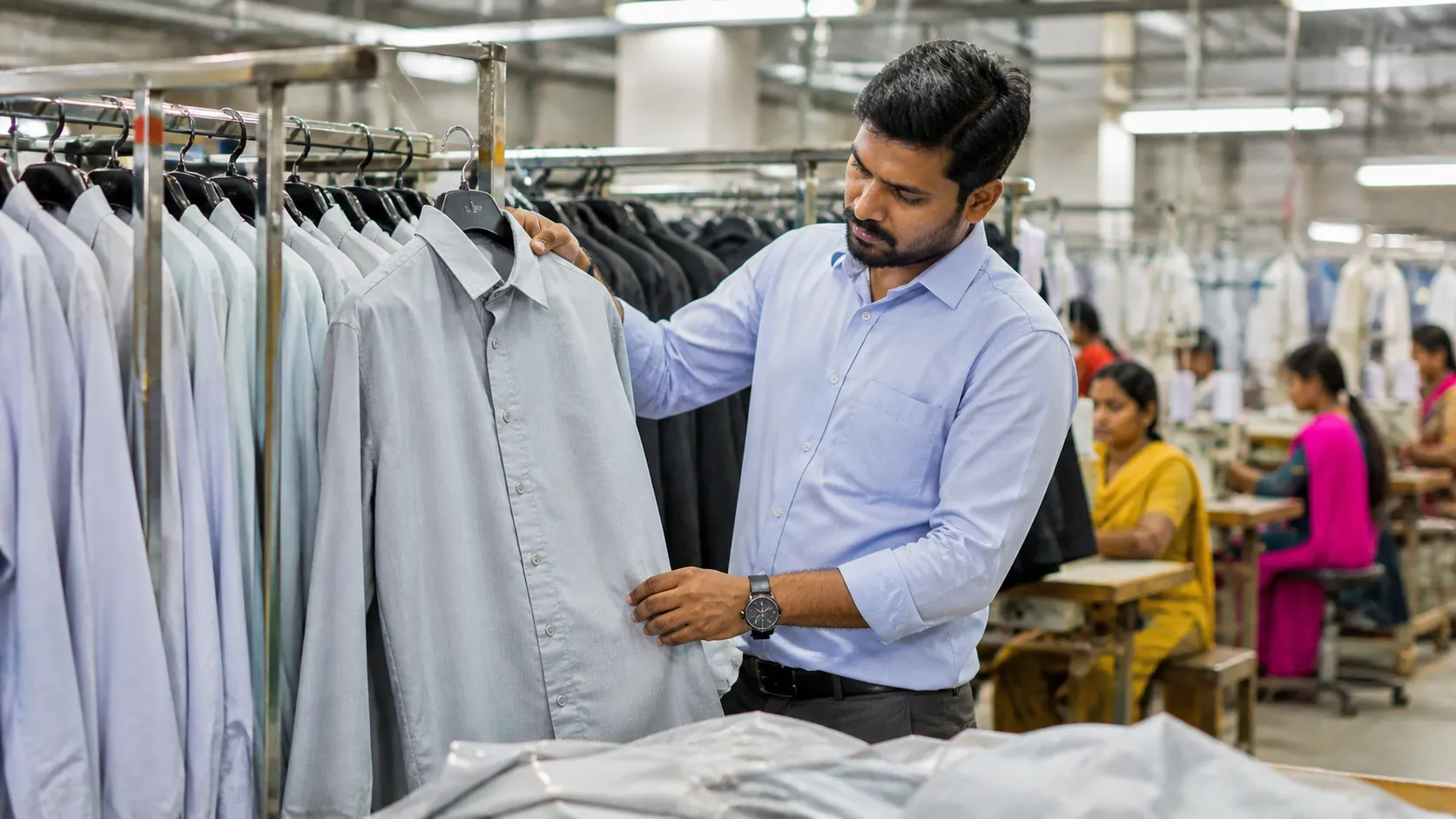
India is the world's second-largest textile exporter, after China, and the single largest exporter of cotton textiles by volume. The sector employs over 45 million people directly and another 60 million in allied industries — making it the largest manufacturing employer in India after agriculture. When textile exports grow, a measurable part of India's economy grows with them.
But the competitive reality is demanding. Bangladesh, Vietnam, Cambodia, and Indonesia all compete aggressively in the same mass-market categories. Chinese manufacturers, despite higher labour costs, retain advantages in synthetic fabrics and man-made fibre (MMF) textiles. For an Indian textile or garment exporter to build a sustainable international business, understanding the exact segments where India is genuinely competitive, the certifications that unlock premium market access, and the buyer categories most actively sourcing from India — is not optional background knowledge. It is the foundation of your export strategy.
This guide is organised around the practical decisions a textile or garment exporter faces: which category to focus on, which markets to target, which certifications to invest in, how to find buyers, and what compliance requirements you need to satisfy in your top destination markets.
India's Textile Export Landscape in 2026
Scale and Structure
India's textile and apparel exports in FY2025-26 are tracking toward USD 38–42 billion — roughly 10–12% of India's total merchandise exports. The sector spans an enormous range: cotton yarn and fabrics, synthetic and man-made fibre textiles, handloom and khadi, technical textiles, home textiles, ready-made garments (RMG), and fashion accessories.
India's Competitive Segments
India is genuinely competitive — often world-leading — in specific textile segments:
- Cotton textiles: India is the world's largest cotton producer and has the most vertically integrated cotton textile supply chain — from fibre to finished garment — in the world. Cotton yarn, cotton fabrics, and cotton-based home textiles (towels, bed linen, kitchen linen) are core strengths.
- Home textiles: Karur (Tamil Nadu) for kitchen and bath linen, Panipat (Haryana) for recycled polyester blankets and industrial textiles, Jaipur and Jodhpur for block-printed and hand-embroidered home décor — India dominates global trade in several home textile subcategories.
- Handloom and artisan textiles: No competitor can replicate India's handloom diversity — Banarasi silk, Kanjivaram silk, Jamdani, Pochampally, Sambalpuri, Chanderi. These are heritage products with authentic story that commands premium pricing in global markets where fast fashion is facing backlash.
- Technical textiles: A rapidly growing segment — geotextiles, medical textiles, agro-textiles, protective apparel. India's National Technical Textiles Mission has accelerated investment and capacity in this high-value segment.
- Knitwear: Tiruppur (Tamil Nadu) is Asia's largest knitwear cluster — producing cotton T-shirts, polos, innerwear, and knit outerwear for every major global brand.
India's Competitive Gaps
Honest self-assessment matters for market targeting:
- Fast fashion speed: Bangladesh and China's lead time advantages in fashion-forward RMG are real. Indian garment exporters targeting fast fashion retailers must invest in supply chain speed and systems.
- MMF and synthetic textiles: China dominates global polyester and nylon fabric markets. India is growing MMF capacity (PLI scheme support) but is not yet a default choice for buyers seeking cheap synthetic fabrics.
- Denim: India produces good denim (Ahmedabad cluster) but China and Bangladesh remain the default for high-volume denim garments globally.
Key Export Markets for Indian Textiles and Garments
USA — Largest Market, High Tariffs
The USA is India's largest individual textile export destination — approximately USD 7–8 billion annually. American buyers source Indian cotton knitwear, home textiles, and specialty garments at significant scale.
The challenge: US tariffs on Indian garments are high (12–32% depending on category) and India has not secured an FTA. The competitive disadvantage vs Central American (CAFTA) and certain Caribbean suppliers is real. India competes on quality, specific product expertise (cotton knitwear from Tiruppur, home textiles from Karur), sustainable production credentials, and for many US buyers, the China-alternative positioning.
How to compete in the US market:
- GOTS (organic cotton), OEKO-TEX, and WRAP certifications are table stakes for US mid-market and premium buyers
- Lead time and replenishment responsiveness matter as much as price for many US buyers
- Target buyers actively diversifying from China — use ImportYeti to identify US apparel importers currently sourcing from China for your specific category
European Union — Premium Market with Strong Sustainability Demand
EU countries collectively represent approximately USD 6–7 billion in Indian textile imports. Germany, UK (post-Brexit treated separately), Netherlands, France, Spain, and Italy are the major markets.
EU characteristics that define what you need to succeed here:
- Sustainability is not optional: EU buyers — brands, retailers, and sourcing companies — increasingly require environmental and social compliance certifications. GOTS, GRS (Global Recycled Standard), OEKO-TEX, Bluesign, and Higg Index scores are actively evaluated in supplier selection.
- EU GSP (still applicable, evolving): India benefits from EU GSP which reduces garment duty from approximately 12% to 9.6% in most categories — a meaningful reduction that partially offsets the competitive disadvantage vs countries with EU FTAs.
- EU Textiles Strategy and ESPR: EU's upcoming sustainability regulations for textiles (Digital Product Passport, mandatory recycled content, repairability requirements) will progressively affect what products can enter the EU market. Get ahead of these requirements now.
UAE and GCC — Zero Duty Under CEPA, Fast Growing
Under India-UAE CEPA, Indian textiles and garments enter UAE at zero duty. The UAE is both a consumption market (27 million population including large South Asian workforce) and a re-export hub (Indian textiles distributed onward to Saudi Arabia, Kuwait, Bahrain, Oman). Growing rapidly for Indian exporters post-CEPA.
Australia — Zero Duty Under ECTA, High Income Market
India-Australia ECTA gives Indian garments zero duty access to a high-income market where Chinese and Bangladeshi competitors pay 5% MFN. Australian fashion retailers are actively diversifying from China. Growing opportunity for Indian cotton knitwear, home textiles, and specialty fabrics.
Japan — Premium Quality Market, Strict Standards
Japan imports significant volumes of Indian cotton yarn and fabrics for domestic processing into high-value garments. Japanese buyers prioritise consistency, precision documentation, and immaculate quality. India-Japan CEPA provides preferential rates. For Indian exporters able to meet Japan's quality standards — JETRO (Japan External Trade Organization) buyer introduction programmes are worth exploring.
Mandatory and Important Certifications for Textile Exports
Certifications are increasingly the entry tickets to premium international buyers. Here is a guide to the most important ones:
OEKO-TEX Standard 100
What it is: A testing and certification system confirming that textile products have been tested for harmful substances and are safe for human use. Covers 100+ restricted substances. Certificates are valid for one year and must be renewed annually with updated testing.
Who needs it: Any exporter targeting European, US, or Australian buyers in the mid-market and premium segment. Increasingly requested by buyers in the Gulf and Japan. Without OEKO-TEX, you will lose orders to certified competitors in these markets.
How to get it: Apply to an OEKO-TEX authorised testing institute in India (Bureau Veritas, Intertek, SGS, TÜV SÜD all have India laboratories). Submit fabric and yarn samples for testing. Certification issued within 3–6 weeks for standard products. Annual re-certification required.
Cost: ₹50,000–2,00,000 per product category per year depending on product range and testing institute.
GOTS (Global Organic Textile Standard)
What it is: The leading global standard for organic textiles. GOTS certification confirms that the textile meets organic fibre criteria (certified organic cotton, linen, hemp, silk, or wool) AND that the entire processing chain meets environmental and social criteria.
Who needs it: Any exporter targeting the organic textiles market — European organic fashion brands, US organic baby clothing brands, sustainable lifestyle retailers globally. GOTS is a strong differentiator in the premium sustainability segment.
How to get it: Your entire supply chain must be GOTS-certified — fibre source (organic certified farm), spinning mill, fabric mill, dyeing/processing unit, garment maker. This is a chain-of-custody certification, not just a product test. Cost: USD 1,500–5,000 per year depending on your stage in the supply chain. Time: 3–6 months for initial certification.
GRS (Global Recycled Standard)
What it is: Certification confirming that products contain a verified percentage of recycled material (recycled polyester, recycled cotton, recycled nylon). Chain-of-custody certification like GOTS.
Who needs it: Exporters of recycled synthetic textiles — recycled polyester fabrics, recycled PET filling, recycled nylon products. Panipat's recycled textile cluster has extensively adopted GRS. Growing demand from global brands committed to recycled material use in sustainability commitments.
WRAP (Worldwide Responsible Accredited Production)
What it is: Facility certification confirming compliance with 12 social compliance principles — no forced or child labour, safe working conditions, legal wages, environmental protection. Widely accepted by US buyers and mass-market retailers.
Who needs it: Any exporter targeting US mass-market and mid-market buyers (Walmart, Target, Kohls, JCPenney). WRAP is the minimum social compliance certification expected by most American apparel buyers. Without it, you are not in consideration for US retail supply chains at scale.
How to get it: Apply at wrapcompliance.com. An independent auditor visits your facility and assesses compliance against WRAP's 12 principles. Certification is valid for 1–2 years. Initial audit cost: USD 1,500–3,000.
SA8000 (Social Accountability)
What it is: An auditable social certification standard based on ILO conventions and UN human rights norms. More rigorous and internationally recognised than WRAP — particularly respected by European and Japanese buyers.
Who needs it: European premium fashion brands, ethical sourcing programmes, buyers participating in Fair Wear Foundation or similar initiatives. SA8000 is the gold standard social certification for textile exports to conscientious European buyers.
BCI (Better Cotton Initiative)
What it is: A global not-for-profit initiative supporting cotton farming improvements through better agricultural practices. BCI membership and sourcing of BCI cotton is a requirement or preference for many global apparel and home textile brands.
Who needs it: Cotton garment and home textile exporters targeting brands that have made BCI cotton sourcing commitments (H&M, IKEA, Marks & Spencer, Adidas — over 2,500 brands globally are BCI partners). Note: BCI is a mass balance system — you can source BCI cotton from the supply chain pool even if the specific fibre is not traceable to a specific farm.
How the Export Process Works for Textiles: Key Compliance Steps
AEPC Membership and RCMC
Register with AEPC (Apparel Export Promotion Council) at aepcindia.com for RMG exports. TEXPROCIL (Cotton Textiles EPC) for cotton yarn and fabric exports. SRTEPC (Synthetic and Rayon Textiles EPC) for synthetic textiles. Your RCMC from the relevant EPC is required for FTP scheme claims.
ROSCTL Scheme for Garment Exporters
The RoSCTL (Rebate of State and Central Taxes and Levies) scheme provides rebate on embedded taxes for garment and made-up exports — similar to RoDTEP but specific to the apparel sector. Rates are published separately from RoDTEP. AEPC members are the primary beneficiaries. Ensure your CHA claims RoSCTL on Shipping Bills for garment exports — it is in addition to RoDTEP for this sector.
Aatmanirbhar Bharat Textile Scheme — PLI
India's PLI (Production-Linked Incentive) scheme for man-made fibre textiles and technical textiles provides incentives for manufacturers scaling production in these categories. If you are investing in MMF or technical textile capacity, evaluate PLI eligibility with the Ministry of Textiles.
TUFS (Technology Upgradation Fund Scheme)
TUFS provides subsidised credit for investment in textile machinery modernisation. If you are upgrading weaving, knitting, processing, or garmenting equipment, TUFS can reduce your capital cost — making your production more competitive internationally.
Finding Buyers for Textile and Garment Exports
Trade Fairs — The Most Important Channel
Textile trade fairs are where the global sourcing community concentrates. The most important for Indian textile exporters:
- Texworld/Apparel Sourcing (Paris, January and September): Europe's largest sourcing fair for fabric and garment buyers. Thousands of European brand and retailer buyers attend. Strong platform for Indian fabric and RMG manufacturers.
- MAGIC / Project (Las Vegas, February and August): The USA's largest apparel trade show. Essential for Indian garment exporters targeting US brands and specialty retailers.
- Première Vision (Paris, February and September): Premium fabric fair. For Indian weavers producing high-quality fabrics — especially handloom, silk, and specialty cottons.
- ITMA (every 4 years, different cities): The world's largest textile machinery and technology fair. Less about buyer meetings and more about innovation and capability showcasing.
- Canton Fair (Guangzhou, April and October): Despite being in China, significant numbers of global textile buyers attend — Indian exporters can exhibit in the India pavilion.
- Heimtextil (Frankfurt, January): World's largest home textile trade fair. Essential for Indian home textile exporters (towels, bed linen, curtains).
Apply to AEPC or TEXPROCIL for MAI-funded participation at relevant government-supported fairs. The subsidy (75–100% for MSME exporters) can make trade fair participation financially accessible even for smaller manufacturers.
Global Brand and Retailer Sourcing Portals
Many global fashion brands and retailers have online supplier registration portals — H&M, Inditex (Zara), PVH, Kontoor, Gap, Walmart, Target. These require specific certifications (WRAP, GOTS, OEKO-TEX, social audits) as prerequisites but offer access to huge sustained buyer volumes once qualified. Invest in certifications first; then approach these portals systematically.
Sourcing Agents Based in India
Many global brands and retailers operate sourcing offices in India — particularly in Bengaluru, Delhi-NCR, and Mumbai. H&M, Inditex, Li & Fung, Mast Industries, Target India, and dozens of others have in-country sourcing teams that directly interact with Indian manufacturers. Building relationships with these sourcing offices is a highly efficient path to large buyer volumes.
Frequently Asked Questions
What is the minimum order quantity that US and European buyers typically require?
MOQ varies enormously by buyer type. Mass market retailers and brands (Walmart, H&M, Inditex): 5,000–15,000 pieces per style. Mid-market specialty retailers: 1,000–5,000 pieces per style. Independent boutiques and small brands: 200–500 pieces per style. E-commerce brands: 300–1,000 pieces initially, scaling rapidly. For Indian manufacturers with smaller production capacities, targeting specialty and mid-market buyers initially — rather than chasing large mass-market brands — is often more achievable and more profitable per unit.
Which certification should I invest in first if I have a limited budget?
Prioritise based on your target market and buyer type:
- Targeting US buyers primarily: WRAP first (social compliance baseline requirement)
- Targeting European premium buyers: OEKO-TEX first (safety standard baseline), then work toward GOTS if organic is relevant to your product
- Targeting sustainable fashion brands globally: GOTS first for organic cotton products; GRS first if you work with recycled materials
- All markets: OEKO-TEX is the single most universally useful textile certification across US, EU, Australia, Japan, and Gulf markets
I manufacture handloom textiles. Which export markets should I focus on?
Handloom textiles with authentic craft heritage command premium pricing in markets where consumers are consciously rejecting fast fashion — primarily Germany, Netherlands, Scandinavia, Japan, and the premium tier of the US market (independent boutiques, ethical fashion brands, gift shops in museum stores). The Crafts Council of India and state-level handloom boards provide market development support. Focus on authenticity storytelling, geographic indication (GI) tags where applicable (Banarasi silk, Kanjivaram, Pochampally, Sambalpuri have GI tags), and positioning the handloom heritage as the product's primary value proposition — not just the fabric.
Conclusion
India's textile and garment sector has genuine competitive advantages that are growing, not shrinking — in cotton textiles, home textiles, handloom heritage products, technical textiles, and sustainable manufacturing credentials. The combination of CEPA (UAE zero duty), ECTA (Australia zero duty), EU GSP, and the China+1 sourcing strategy driving US buyers toward Indian alternatives creates a genuinely favourable external environment for 2026 and beyond.
What separates the exporters who capture this opportunity from those who do not is not primarily production capability — India has abundant production capability. It is the combination of the right certifications, the right buyer relationships, and the operational discipline to deliver consistently on quality, lead time, and documentation. Invest in certifications strategically, build relationships at trade fairs and through buyer portals, and maintain the operational standards that justify your buyers' confidence in your supply chain.