
IEC Code was the first registration I looked up when I decided to explore export. Every article I read kept mentioning it — but nobody actually explained what it was, why it existed, or what would happen if I didn’t have one.
If you’re trying to understand IEC Code for export in India and keep hitting the same vague answers, this article is for you.
By the end of this, you’ll know exactly what IEC Code is, why it’s mandatory, who needs it, what it costs, and what mistakes to avoid. No assumptions. Starting from zero.
You can read our detailed guide on: “How to Start an Export Business in India: 10 Clear Steps“
What is IEC Code? The Simple Definition
IEC stands for Import Export Code.
It is a 10-digit unique identification number — also called Import Export Code India — issued by the DGFT (Directorate General of Foreign Trade) under India’s Ministry of Commerce and Industry.
Every individual or business that wants to export goods or services from India — or import into India — needs this code. It is your legal identity in the world of cross-border trade.
IEC is a one-time registration. Once issued, it is valid for the lifetime of your business. You don’t renew it — but you do need to update it once a year, which is free and takes a few minutes. More on that below.
Why is IEC Code Mandatory for Export in India?
This is the part that matters most for a beginner to understand clearly.
IEC is not just a formality. It is woven into every stage of the export process. Without it, the entire chain breaks.
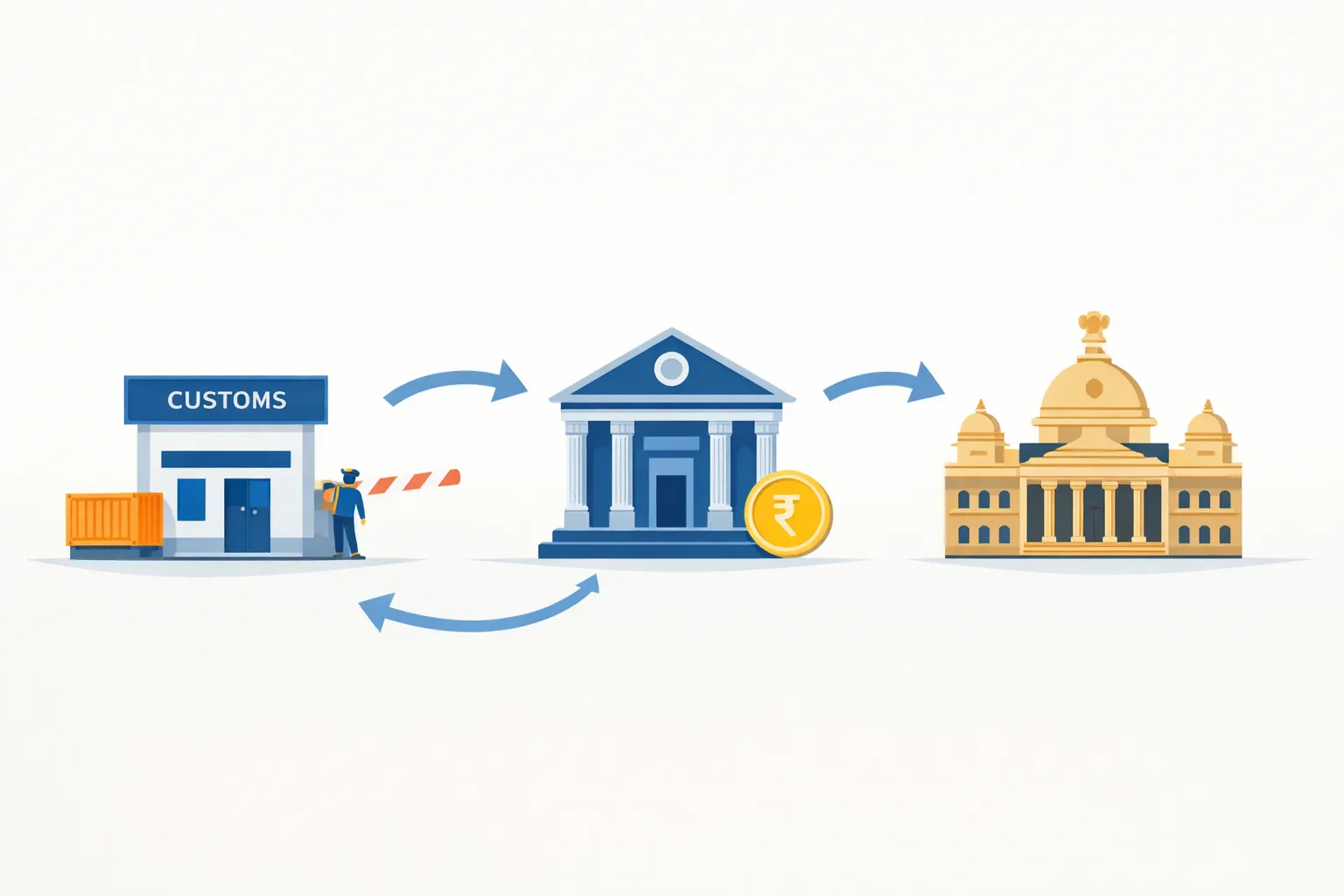
Customs will not clear your shipment. When you file a Shipping Bill on ICEGATE — India’s customs portal — your IEC Code is a mandatory field. No IEC means no Shipping Bill. No Shipping Bill means your goods don’t leave India.
Banks will not process foreign payments. When a buyer sends you money from abroad, your bank needs to verify that the payment is linked to a legitimate export transaction. IEC is how they do that. Without it, foreign remittances cannot be properly processed against your export.
Government export schemes require IEC. Every benefit India offers exporters — Duty Drawback, RoDTEP, EPCG, and others — requires a valid IEC Code to apply. Without it, you are not eligible for any of these.
The bottom line is simple: without IEC, you cannot legally export from India. There is no workaround.
Who Needs an IEC Code in India?
More people need IEC than most beginners realise.
Manufacturer exporters — businesses that produce goods and sell them to foreign buyers — need IEC.
Merchant exporters — traders who source products from manufacturers or local markets and export them — need IEC.
Service exporters — IT companies, freelancers, consultants, and designers delivering work to foreign clients — generally need IEC for formal service export operations and to receive foreign currency properly.
Importers — businesses or individuals bringing goods into India from other countries — also need IEC. The same code covers both import and export activity.
Individuals exporting personally — in some cases, individuals making personal exports also need IEC depending on the nature and value of goods.
There are a small number of exemptions — personal use goods below a certain value, certain government departments, and a few specific categories. But for any business export of any kind, IEC is mandatory without exception.
If you are exporting even once — even a single trial shipment — you need an IEC Code before that shipment moves.
What Information is Linked to Your IEC Code?
When you register for IEC on the DGFT portal, a profile is created with the following information attached to your code:
- Business name and address — the registered name and location of your business or proprietorship
- PAN number — your business PAN, or your personal PAN if registering as an individual
- Bank account details — the current account linked to your export transactions
- Nature of business — manufacturer, merchant exporter, service provider, etc.
- Export and import activity type — the categories of goods or services you deal in
Keeping this information current is important. If your bank account changes, your address changes, or your business structure changes — update your IEC profile on the DGFT portal immediately.
Outdated IEC details can cause mismatches in customs filings and banking transactions, which leads to unnecessary delays at the worst possible time — when a shipment needs to move.
Your bank account linked to your IEC is also where your AD Code registration comes from. The AD Code connects your specific bank branch to your export transactions in the customs system.
You can read our detailed guide on: “What is AD Code? How to Register It with Your Bank”
IEC Code vs GSTIN — What is the Difference?
This confusion comes up constantly among beginners — and it’s worth clearing up directly.
IEC Code and GSTIN are two completely separate registrations that serve completely different purposes.
GSTIN — your Goods and Services Tax Identification Number — is for domestic tax compliance. It governs how you collect and pay GST on sales within India.
IEC Code is specifically for cross-border trade. It identifies you as an authorised exporter or importer in India’s international trade system.
Most exporters need both. Having a GSTIN does not remove the requirement for an IEC Code, and having an IEC Code does not replace your GST obligations. They are separate registrations, separate portals, and serve entirely separate functions.
Get both before your first shipment.
What is the IEC Code Registration Fee?
The government fee for IEC Code registration is ₹500 — paid on the DGFT portal at the time of application.
That’s the only mandatory cost. No annual renewal fee. No government charge to keep it active. One payment of ₹500 and your IEC is yours for life.
If you choose to use a CA, agent, or registration service to apply on your behalf, they will charge a service fee on top. This typically ranges from ₹500 to ₹2,000 depending on who you use.
The process is genuinely straightforward enough to do yourself. The DGFT portal is clear, the documents required are minimal, and approval comes quickly.
You can read our detailed guide on: “How to Get IEC Code in India: Step-by-Step Guide”
What Can You Do Once You Have Your IEC Code?
Once your IEC Code is issued, it unlocks the following:
- Legally export and import goods from India
- Open a foreign currency account with your bank
- Receive international payments against export transactions
- File a Shipping Bill on ICEGATE for customs clearance
- Apply for government export incentive schemes — Duty Drawback, RoDTEP, EPCG
- Register on specialised export platforms — APEDA, Spices Board, Pharmexcil
- Apply for RCMC with the Export Promotion Council relevant to your product category
- Get recognised as a legitimate exporter by foreign buyers and trade bodies
Your IEC Code is your entry pass into India’s entire export ecosystem. Without it, none of the above is accessible.
Does IEC Code Expire or Need Renewal?
IEC Code does not expire — but it does require a mandatory annual update on the DGFT portal.
This is one of the most commonly missed details among new exporters.
The annual update window is April 1 to June 30 every year. During this period, you log into the DGFT portal, verify that your IEC details are current, and confirm the update. It costs nothing and takes less than five minutes.
If you miss this window and don’t complete the annual update, your IEC Code can be deactivated by DGFT. A deactivated IEC means your Shipping Bill filings will fail and your export transactions will be blocked until it is reactivated.
Reactivation is possible — but it creates unnecessary delays, especially if a shipment is time-sensitive.
Set a reminder every April. Five minutes of your time saves significant headache later.

Common IEC Code Mistakes Beginners Make in India
These come up repeatedly — worth knowing before you apply.
Applying with the wrong PAN. If you’re registering as a sole proprietor, use your personal PAN. If registering under a company or LLP, use the business PAN. Using the wrong one creates complications that require correction later.
Not linking the correct bank account. The bank account you link during IEC registration must be an active current account in your business name. Linking a savings account or an account with a different name causes problems when foreign payments arrive.
Forgetting the annual update. Missing the April to June update window deactivates your IEC. Put it in your calendar the day you receive your code.
Using someone else’s IEC Code. Every exporter must have their own IEC. Using another person’s or company’s IEC Code for your shipments is illegal and creates serious compliance and tax issues for everyone involved.
Not updating IEC when business details change. Changed your bank? Moved your office? Updated your business name? Update your IEC profile on the DGFT portal immediately. Every detail on your IEC must match your current reality.

Conclusion
IEC Code is the foundation of everything in export. It’s the first registration you get, the one that never leaves your side, and the one that unlocks every other part of the process.
The good news is that getting it is simple, cheap, and fast. ₹500, an online application, and one to two working days.
Once you have it, keep it updated — both when your details change and every year between April and June. That’s all the maintenance it requires.
If you’re ready to apply, the next article walks you through the exact step-by-step process on the DGFT portal.
Key Takeaways
- IEC Code — Import Export Code — is a 10-digit number issued by DGFT that every exporter and importer in India must have before any cross-border transaction.
- Without a valid IEC Code, your shipment will not clear customs, your bank will not process foreign payments, and you cannot access any government export schemes.
- The IEC Code registration fee is only ₹500 — one of the cheapest and most important business registrations you will ever make.
- IEC Code does not expire but requires a free annual update between April 1 and June 30 each year — missing this window can lead to deactivation.
- IEC Code and GSTIN are two completely separate registrations — both are needed for most exporters and one does not replace the other.
Frequently Asked Questions
Q1: Can I use my personal PAN to get an IEC Code or do I need a business PAN?
It depends on your business structure.
If you are registering as an individual or sole proprietor, your personal PAN is used. There is no separate business PAN for a sole proprietorship — your personal PAN serves as the business PAN.
If you are registering under a private limited company, LLP, or partnership firm, the PAN of that entity must be used. Using your personal PAN for a company registration creates a mismatch that causes problems in customs filings and banking transactions.
Match the PAN to the entity you are registering under. When in doubt, confirm with your CA before applying.
Q2: How long does it take to get an IEC Code after applying?
In most cases, IEC Code is issued within one to two working days after a complete application is submitted on the DGFT portal.
The application is processed automatically in many cases — which means approval can sometimes come within hours if all documents are in order and your PAN and bank details are verified correctly.
Delays typically happen when there is a mismatch in submitted information — wrong PAN, unverified bank account, or incomplete address details. Double-check everything before submitting to avoid going back and forth with corrections.
Q3: What happens if I export without an IEC Code?
Exporting without an IEC Code is illegal under the Foreign Trade (Development and Regulation) Act.
On a practical level, it is also nearly impossible to complete. The Shipping Bill on ICEGATE requires your IEC Code as a mandatory field — without it, the filing cannot be completed and customs clearance will not happen.
If goods are somehow exported without a valid IEC — which would involve serious procedural violations — the exporter faces penalties under the Foreign Trade Policy and the shipment can be seized. There is no legal or practical pathway to export without IEC.
Q4: Can I have more than one IEC Code for different businesses?
Each legal business entity gets one IEC Code — and only one.
If you run a sole proprietorship, you have one IEC linked to your personal PAN. If you also run a private limited company, that company gets a separate IEC linked to the company PAN. Two different legal entities mean two different IEC Codes.
What you cannot do is have two IEC Codes for the same legal entity. DGFT issues one IEC per PAN — applying again under the same PAN will not create a new code, it will return your existing one.
Q5: Can I update my IEC Code if my business details change?
Yes — and you must do this promptly whenever details change.
If your bank account changes, your registered address moves, your business name is updated, or your contact details change, log into the DGFT portal and update your IEC profile immediately.
The update process is straightforward — it uses the same portal where you applied. Most updates are processed within a day.
Keeping your IEC details current is not optional. Mismatches between your IEC profile and your actual bank or business details can cause customs filing errors and payment processing issues that delay your shipments at the worst possible time.