Introduction
India's merchandise exports in FY2024-25 came in at approximately USD 437 billion. Services exports added another USD 340 billion. Combined, India's total exports of goods and services were roughly USD 777 billion — a respectable number, growing consistently, but still significantly short of the government's stated ambition of USD 2 trillion in exports by 2030.
That gap — USD 777 billion today, USD 2 trillion targeted by 2030 — is enormous. It requires more than doubling India's total export economy in roughly five years. Understanding which sectors are genuinely on track to drive that growth, which sectors are overpromising and underdelivering, and what structural changes are required to close the gap is not just a policy conversation — it is a strategic map for every Indian exporter thinking about where to invest their energy and capital over the next four years.
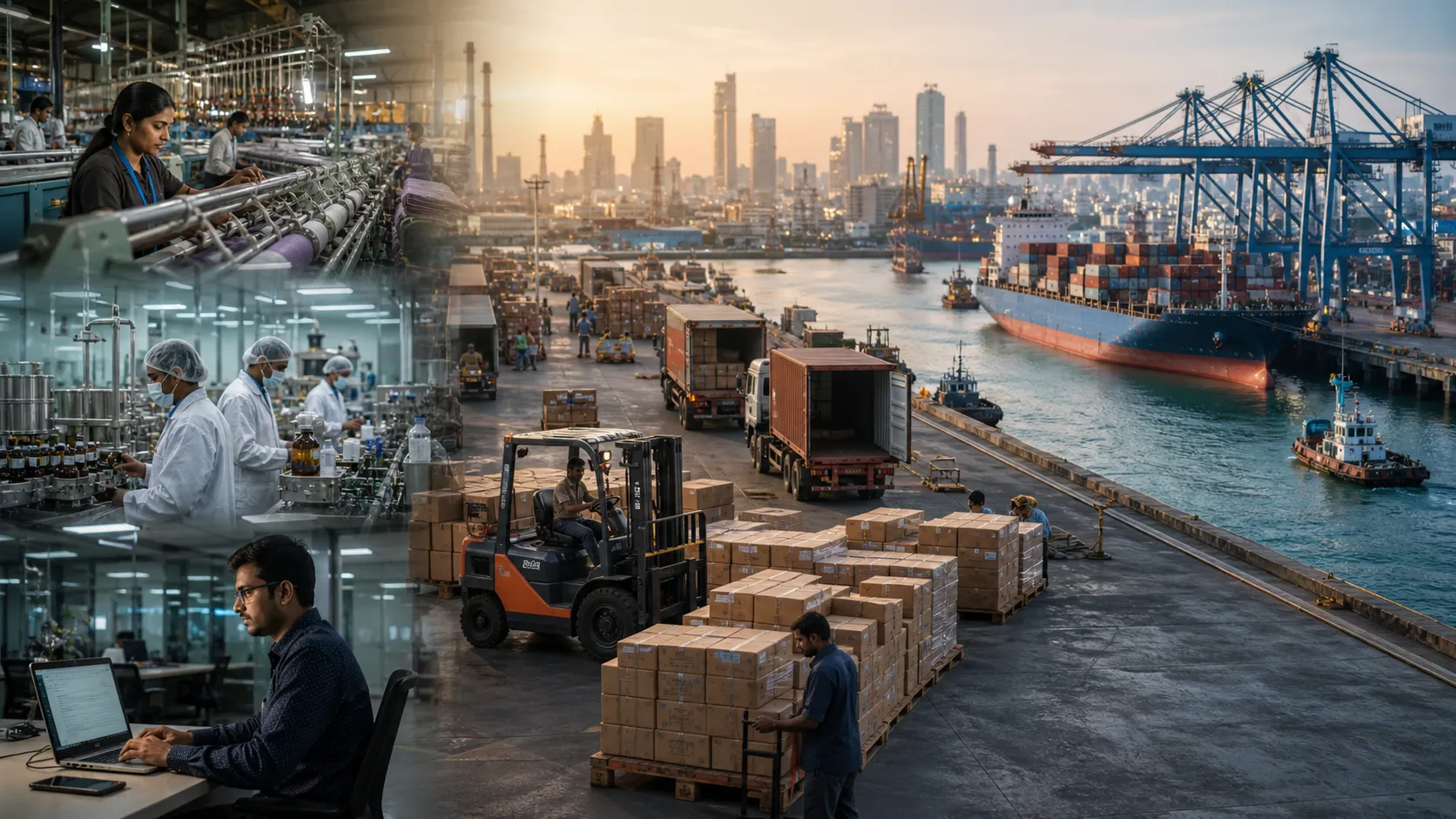
This article analyses India's export trajectory sector by sector, identifies the realistic growth levers, and gives Indian exporters the context they need to align their individual business decisions with the macro trends that will shape their markets through 2030.
The Mathematics of the 2030 Target
To reach USD 2 trillion by FY2030, India's total exports need to grow at approximately 17% per year compounded from the current base. For context:
- India's goods exports CAGR over the past decade: approximately 8–9%
- India's services exports CAGR over the past decade: approximately 12–14%
- The required growth rate of 17% p.a. would be significantly above any sustained historical growth period for India
The honest assessment: the USD 2 trillion target by 2030 is aspirational rather than probable at current trajectory. A more realistic scenario — based on current growth rates, policy momentum, and global trade conditions — suggests India reaches USD 1.2–1.4 trillion in total exports by 2030. That is still a transformative expansion, and the sectoral analysis below is relevant regardless of the precise headline number achieved.
Sector Analysis: Goods Exports
Engineering Goods — Largest Sector, China+1 Tailwind
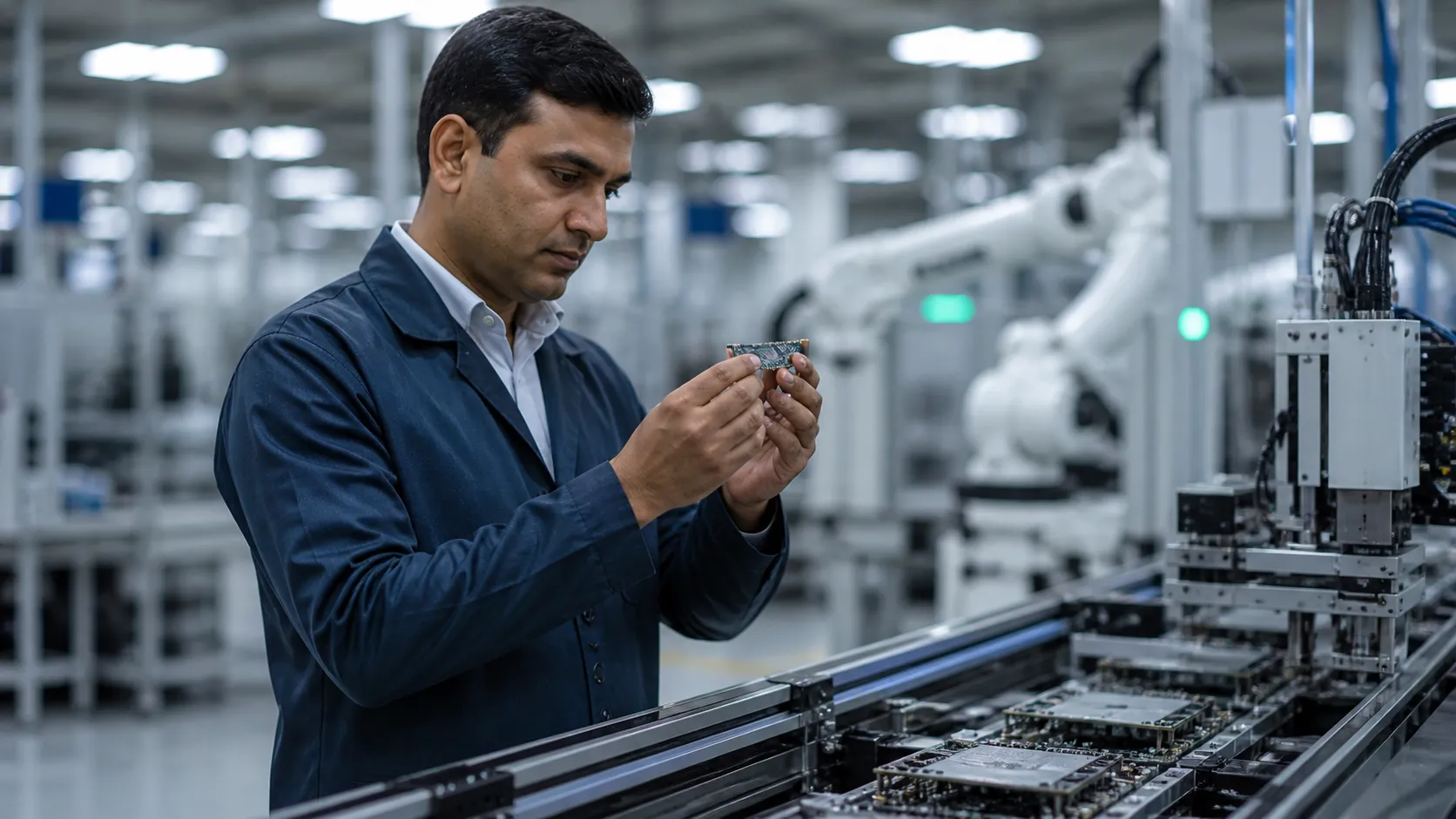
Current scale: USD 100+ billion. India's largest goods export category. Engineering goods' growth trajectory is the most structurally supported of any goods category — the combination of China+1 supply chain diversification, US Section 301 tariffs on Chinese goods, India's growing manufacturing capability, and PLI scheme investments in automotive and electronics manufacturing all point toward sustained above-average growth.
Growth drivers through 2030:
- Auto component exports benefiting from global OEMs qualifying Indian suppliers as China alternatives
- Electronics manufacturing scaling under PLI — Apple supplier relocations, Samsung expansion
- Defence exports growing from near-zero (2016) toward USD 5+ billion target — Tejas fighter components, BrahMos missiles, naval vessels
- Renewable energy equipment — solar modules, wind turbines, EV components for global green transition
Realistic 2030 target: USD 150–170 billion. Engineering goods could contribute an additional USD 50–70 billion in incremental exports by 2030 — the single largest absolute dollar contributor to export growth.
Petroleum Products — Large but Volatile
Current scale: USD 80–90 billion. India's petroleum product exports — primarily refined petroleum exported from Reliance Industries' Jamnagar complex and other Indian refineries — are large but structurally limited in growth. India's comparative advantage in refining is real but capacity-constrained. Global energy transition dynamics may reduce petroleum product demand growth through 2030.
Realistic 2030 assessment: Modest growth to USD 90–100 billion — contributing incremental but not transformational growth to the 2030 target.
Chemicals and Pharmaceuticals — High Value, Strong Pipeline
Current scale: Combined USD 60–70 billion. India's chemical and pharmaceutical export base is deep — 50+ FDA-approved manufacturing facilities, extensive API production capacity, growing specialty chemicals expertise. Both sectors are benefiting from the China+1 trend in global pharmaceutical and chemical supply chains.
Growth drivers through 2030:
- Biosimilars — Indian companies (Biocon, Dr. Reddy's, Cipla) scaling biosimilar exports to US, EU, and emerging markets
- Complex generics — first-to-file ANDA strategies giving Indian pharma pricing advantages as blockbuster drugs go off-patent
- Specialty chemicals — import substitution of Chinese specialty chemicals accelerating post-Covid
- CDMO (Contract Development and Manufacturing) — India positioning as an alternative to Chinese CMOs for global innovators
Realistic 2030 target: Combined USD 90–110 billion — meaningful contributor to the 2030 target.
Textiles and Apparel — Structural Underperformance
Current scale: USD 38–42 billion. Despite India's natural advantages in cotton and the growing global interest in China+1 sourcing for apparel, India's textile export growth has consistently underperformed relative to potential. Bangladesh's ready-made garment sector — which benefits from zero-duty access to EU and other markets that India does not have — and Vietnam's well-developed garment export infrastructure continue to outcompete Indian exporters in mass-market apparel.
Structural challenges:
- No India-EU FTA (under negotiation but no conclusion in sight) — India pays 12% duty in EU vs zero for Bangladesh, Cambodia, and other LDCs
- Man-made fibre (MMF) and synthetic textiles — India is significantly behind China and Vietnam in synthetic textile competitiveness despite PLI support
- ROSCTL and RoDTEP provide some incentive offset, but the FTA disadvantage remains structural
Growth catalyst potential: An India-EU FTA — if concluded — would be transformative for Indian textile exports. The EU is the world's largest apparel market and India faces a significant duty disadvantage. FTA conclusion would unlock an estimated USD 5–8 billion in additional annual textile exports to the EU immediately.
Realistic 2030 target: USD 50–60 billion — modest growth unless India-EU FTA is concluded.
Agricultural and Food Products — High Potential, Compliance Bottleneck
Current scale: USD 50–55 billion. India has extraordinary natural advantages in agriculture — diverse agro-climatic zones, skilled farming communities, world leadership in spices, basmati, marine products, and several other categories. But the sector's growth is consistently held back by the compliance failures discussed in our agricultural export guide — pesticide residue violations, phytosanitary non-compliance, and infrastructure gaps in cold chain and post-harvest processing.
Growth potential: India's agricultural export potential is genuinely USD 100+ billion — comparable to Brazil's agricultural export base. Closing the gap requires a sustained, systematic investment in farm-level compliance infrastructure, cold chain development, and processing capacity — not just government scheme announcements.
Realistic 2030 target: USD 65–80 billion — significant growth if compliance infrastructure is built at scale; modest if the compliance gap persists.
Gems and Jewellery — Lab-Grown Diamond Disruption
Current scale: USD 35–38 billion. The gems and jewellery sector faces a fundamental disruption from lab-grown diamonds (LGDs). Surat has repositioned as the world's dominant LGD producer, which is a genuine competitive advantage in a growing category — but LGD prices have dropped 70–90% below natural diamond prices, which means that even with growing LGD volumes, the value of diamond exports may not grow proportionally.
Realistic 2030 assessment: Flat to modest growth — the LGD transition is a volume story but not necessarily a value story. Gold jewellery exports have better growth potential, particularly under India-UAE CEPA zero-duty access and India-EU FTA if concluded.
Sector Analysis: Services Exports
IT and Software Services — The Engine
Current scale: USD 250+ billion. India's IT services export sector is the most reliable, structurally advantaged, and innovation-resilient export engine the country has. The sector is not standing still — it is actively moving up the value chain from legacy IT maintenance into AI services, cloud transformation, cybersecurity, and digital product development.
Growth drivers through 2030:
- AI and ML services — India's engineering talent base is being deployed into AI model training, AI application development, and AI infrastructure management at scale
- Cloud migration wave — global enterprises transitioning from on-premise to cloud infrastructure are generating enormous demand for Indian IT services companies specialised in cloud architecture and migration
- GCC (Global Capability Centres) expansion — MNCs establishing India-based captive centres is accelerating, directly driving IT employment and services export revenues
- SaaS product exports — Indian SaaS companies (Zoho, Freshworks, Chargebee, Postman) are growing global customer bases that generate recurring foreign exchange earnings
Realistic 2030 target: USD 350–400 billion — the single largest absolute dollar contributor to India's 2030 export ambition. IT services alone could add USD 100–150 billion in incremental exports by 2030.
Other Services — Tourism, Healthcare, Education
Tourism exports (foreign exchange from inbound tourists) at USD 25–30 billion has significant upside potential — India's share of global tourism is well below its cultural and geographic weight. Healthcare services (medical tourism at USD 9 billion) and education exports (USD 6–8 billion) are growing but remain niche relative to their potential.
The FTA Factor: How Trade Agreements Will Shape 2030
India's FTA landscape in 2026 is more active than at any point in the country's trade history:
- India-UAE CEPA: In force since May 2022 — delivering measurable trade growth
- India-Australia ECTA: In force since December 2022 — early positive results for textiles, pharma
- India-EU FTA: Under active negotiation — a concluded deal would be transformative, particularly for textiles and pharma exports to Europe
- India-UK FTA: Under negotiation — significant potential for services and manufactured goods
- India-Canada FTA: Under negotiation
- India-GCC FTA: Under discussion — would build on the India-UAE CEPA with broader GCC coverage
The India-EU FTA is the single most consequential pending trade deal for Indian merchandise exporters. EU is the world's largest single market and India currently faces competitive disadvantages against LDC competitors in textiles, against Vietnamese manufacturers in several categories, and against other FTA partners in industrial goods. An India-EU FTA would unlock several billion dollars in annual incremental trade — primarily textiles, pharma, and engineering goods.
The PLI Schemes: Manufacturing Push
India's Production-Linked Incentive (PLI) schemes across 14 sectors are designed to attract investment and build export-oriented manufacturing capacity. Early results:
- Mobile and electronics: Strong — Apple's India production reaching USD 14+ billion. iPhone exports from India growing rapidly.
- Pharmaceuticals: Moderate — API manufacturing capacity being built but commercialisation slower than targeted
- Textiles (MMF and technical): Early stage — investments announced but production scaling taking time
- Specialty chemicals: Moderate progress — India attracting investment from global chemical companies diversifying from China
- Semiconductors: Early stage — Tata Electronics, Micron partnership, and CG Power semiconductor facilities under development. India's semiconductor export ambitions are 2028–2030+ timeline.
What the 2030 Trajectory Means for Individual Exporters
For an individual exporter planning their business strategy through 2030, the macro sectoral analysis points to three strategic conclusions:
1. Position in China+1 supply chains now. The window for Indian engineering, chemicals, and textile exporters to qualify as alternative suppliers to global OEMs and brands is open and active. It will not stay open indefinitely — supply chains, once established, tend to stabilise. Exporters who qualify and establish relationships now will benefit from a structural supply chain shift; those who wait may find the positions filled.
2. Invest in compliance capability for regulated markets. The sectors with the highest growth potential — pharma, food and agriculture, electronics, engineering goods — are precisely the sectors with the most demanding compliance requirements in the US, EU, and Japanese markets. Exporters who build genuine compliance capability (certifications, quality systems, regulatory approvals) are investing in durable competitive advantage. Those who avoid compliance investment are limiting themselves to lower-value, less-regulated markets with more price competition and thinner margins.
3. Track FTA developments closely. An India-EU FTA — if concluded in 2026–2028 — would materially change the competitive landscape for textiles, pharmaceuticals, and processed food exports. Build your EU market knowledge and buyer relationships now so that when FTA access becomes available, you can activate it quickly.
Frequently Asked Questions
Is the USD 2 trillion export target realistic?
As noted above — at current growth trajectories, USD 1.2–1.5 trillion by 2030 is more realistic than USD 2 trillion. The target requires a 17% p.a. compound growth rate against a historical run rate of 8–12%. That said, "aspirational targets" in India's economic policy have sometimes been underestimated — India's IT sector growth in the 2000s and 2010s consistently surprised analysts to the upside. The honest answer: the target is ambitious but not impossible if several growth levers (PLI manufacturing scale-up, FTA conclusions, agricultural compliance improvement, services export diversification) all execute simultaneously at above-historical rates.
Which export sector offers the best opportunity for a new MSME exporter in 2026?
For new MSME exporters in 2026, three sectors offer the best combination of accessible entry barriers, active buyer demand, and policy support: (a) Engineering and auto components — China+1 demand is active and well-documented; ISO 9001 or IATF 16949 is achievable; US and EU buyer qualification programmes are open. (b) Processed and specialty food — India's diaspora in UAE, US, UK, and Australia creates strong inbound demand; UAE CEPA zero-duty access is immediately available; compliance investment is manageable for most categories. (c) IT services and SaaS — lowest capital entry barrier of any export sector; global demand is deep and growing; accessible through LinkedIn and Upwork without trade fair investment.
How does India compare to China and Vietnam as an export competitor?
India is no longer a low-cost, low-quality alternative to China and Vietnam — it is increasingly a quality-and-capability competitor with a cost advantage in specific categories. In labour-intensive manufacturing (garments, light assembly), Vietnam and Bangladesh retain labour cost advantages. In engineering manufacturing, chemicals, and pharmaceuticals, India is either at parity with or above Chinese quality standards for regulated markets. India's sustainable competitive advantages — English-language workforce, common law legal system, democratic stability, IP protection — are increasingly valued by Western buyers as geopolitical factors in China's favour diminish. India is not "the next China" — it is building its own distinct export identity around high-value manufacturing and world-leading services.
Conclusion
India's export ambition through 2030 is genuine, well-resourced, and supported by genuine structural trends — China+1 diversification, growing FTA access, PLI manufacturing investment, and an IT sector that continues to grow and evolve. The specific USD 2 trillion headline number matters less than the directional reality: India's exports are growing, the sectors with the highest potential are clearly identifiable, and the policy environment is actively supportive.
For individual exporters, the strategic implication is clear: align your export development efforts with the sectors and markets that are riding these structural tailwinds. Engineering goods and China+1. Processed food and UAE/Australia FTA. IT services and global AI demand. Pharma and biosimilars. These are not speculative bets — they are the documented, data-backed growth vectors of India's export economy through 2030.