
Everyone tells you to get your IEC Code and list on Alibaba. Nobody tells you what to actually do after that to make a buyer say yes. That gap — between having everything set up and actually receiving a confirmed purchase order — is where most new exporters get stuck.
This article covers that part. The full journey from having a product ready to receiving a confirmed first order — with honest timelines, practical steps at each stage, and none of the motivational filler that makes export guides feel useful but isn’t.
What a First Export Order Actually Looks Like
Before the steps, it helps to reset expectations about what you are actually working toward.
First export orders are rarely large. A sample order, a trial shipment of one or two cartons, or a small test quantity is the most common form a first order takes. Buyers do not send large orders to suppliers they have never worked with. They test first — small quantity, low risk — and scale up if the product and service meet their expectations.
The margin on a first order is often thin. You may be offering a better price to win the business, absorbing sample costs, or spending more time on documentation than the order value justifies. That is normal and worth it.
The goal of your first export order is not profit. It is proof of capability — to the buyer, and honestly to yourself. A successfully executed first order, delivered on time with correct documentation, opens the door to repeat business that is far more valuable than whatever margin you made on shipment one.
Step 1: Have Your Product and Pricing Ready Before Outreach
You cannot approach buyers without knowing exactly what you are selling and at what price. This sounds obvious — but a significant number of new exporters start outreach before they have these basics locked in, and it costs them credible opportunities.
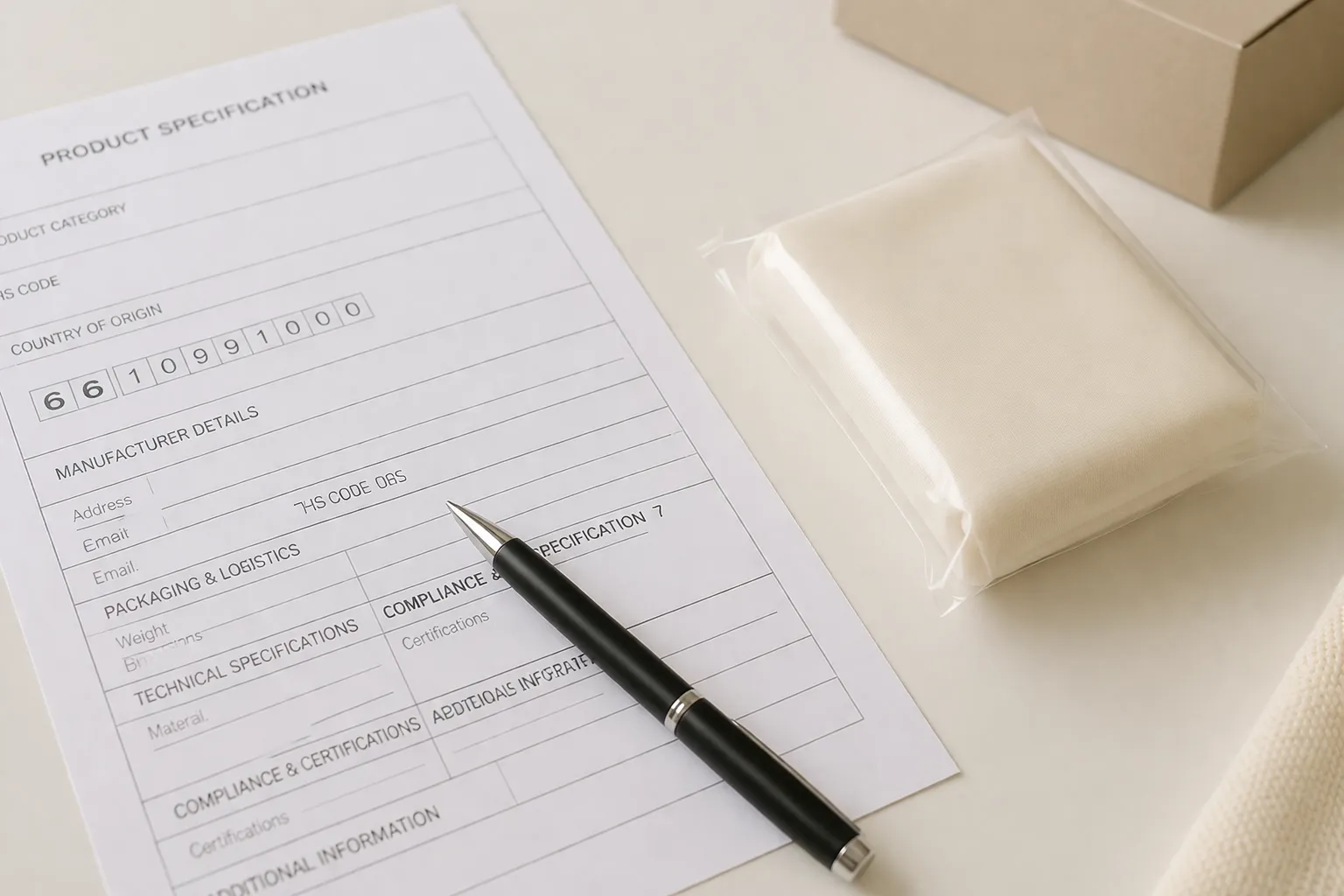
Product specification — the grade, variety, form (raw, processed, packaged), available quantity, and packaging format. A buyer’s first question after “what do you sell?” is almost always “can you tell me more about the product?” If you cannot answer that precisely and immediately, the conversation ends.
FOB pricing — the export price calculated correctly from your actual cost structure, not estimated. Include product cost, packaging, inland transport to port, and all documentation charges. Know your floor price — the minimum you can accept and still cover costs and a basic margin.
Minimum Order Quantity — decide your MOQ before any buyer conversation. Changing your MOQ mid-negotiation signals that you haven’t thought this through.
Payment terms — decide in advance what payment terms you are comfortable with for a first-time buyer: full advance, 50% advance and 50% before shipment, or LC. Having this decided before a buyer asks prevents you from agreeing to terms that expose you to unnecessary risk.
You can read our detailed guide on: “How to Find Foreign Buyers for Your Export Business in India“
Step 2: Prepare Your Buyer-Facing Documents
The first document you send a buyer tells them more about your professionalism than anything you say in a message. Prepare these before approaching anyone.
Product Catalogue — a clean PDF of two to four pages. Product photos, specifications, available variants, and pricing. It does not need to be designed by an agency. It needs to be clear, accurate, and professional. A well-structured catalogue in a simple Word or Canva template is far better than no catalogue.
Company Profile — one page. Who you are, what you export, your production or sourcing capacity, any quality certifications you hold, and your contact details. Buyers want to know they are dealing with a real, functioning business before they spend time on a product inquiry.
Proforma Invoice template — have a blank template ready to fill in and send the moment a buyer asks for a formal price quote. Sending a Proforma Invoice within hours of a request signals that you are organised and serious.
Sample policy — decide before your first inquiry whether you send free samples or charge for them. Both approaches are acceptable. What is not acceptable is having no answer when a buyer asks.
You can read our detailed guide on: “What is a Proforma Invoice? How It Differs from Commercial Invoice”
Step 3: Start Active Buyer Outreach
Most beginners are too passive at this stage — listing on a platform and waiting for inquiries rather than actively creating them. Waiting is not a strategy.
List on B2B platforms — IndiaMART and Alibaba as a starting point. Fill your product listings completely — photographs, specifications, certifications, and response history all contribute to how seriously buyers take your profile.
Use import data tools — Volza, Zauba, or ImportGenius show you companies already buying your product category in your target markets. These are the warmest leads available because they are already in the market for what you sell.
Send cold emails consistently — target twenty to thirty potential buyers per week. Not a hundred in one day and then nothing for two weeks. Consistent weekly outreach compounds over time. A buyer who does not respond in week one may respond in week six when their current supplier has a problem.
Connect with buyers on LinkedIn — search for purchasing managers, import managers, and trading company owners in your target countries. Professional connection before a product pitch is far more effective than a cold sales message to a stranger.
Contact your Export Promotion Council for trade leads — if you have your RCMC, your EPC sends genuine buyer inquiries to members. Check those leads and respond promptly.
You can read our detailed guide on: “Which Product Should You Export from India? How to Choose“
You can read our detailed guide on: “How to Write a Cold Email to a Foreign Buyer (With Template)”
Step 4: Handle the First Inquiry Professionally
When an inquiry comes in, how you respond in the first twenty-four hours often determines whether the conversation continues or ends there.
Respond the same day — or within twenty-four hours at the absolute latest. A buyer making product inquiries is comparing multiple suppliers simultaneously. A slow response gets replaced by a faster one.
Address every question the buyer asked — read their message carefully and answer each point specifically. Skipping a question signals that you did not read carefully — not a good first impression.
Send your product catalogue and company profile with the first reply — do not make the buyer ask for basic information. Give it before they have to request it.
Ask qualifying questions — what quantity are they looking for, what is the destination port, what is their delivery timeline, and have they imported this product before? These questions help you understand whether this is a serious inquiry or an exploratory one — and they show the buyer that you think in terms of logistics, not just product.
The first reply sets the tone for the entire buyer relationship. Treat it accordingly.
Step 5: Send a Professional Proforma Invoice
When a buyer shows serious interest and asks for pricing or a formal quote — do not send a WhatsApp message with numbers. Send a formal Proforma Invoice.
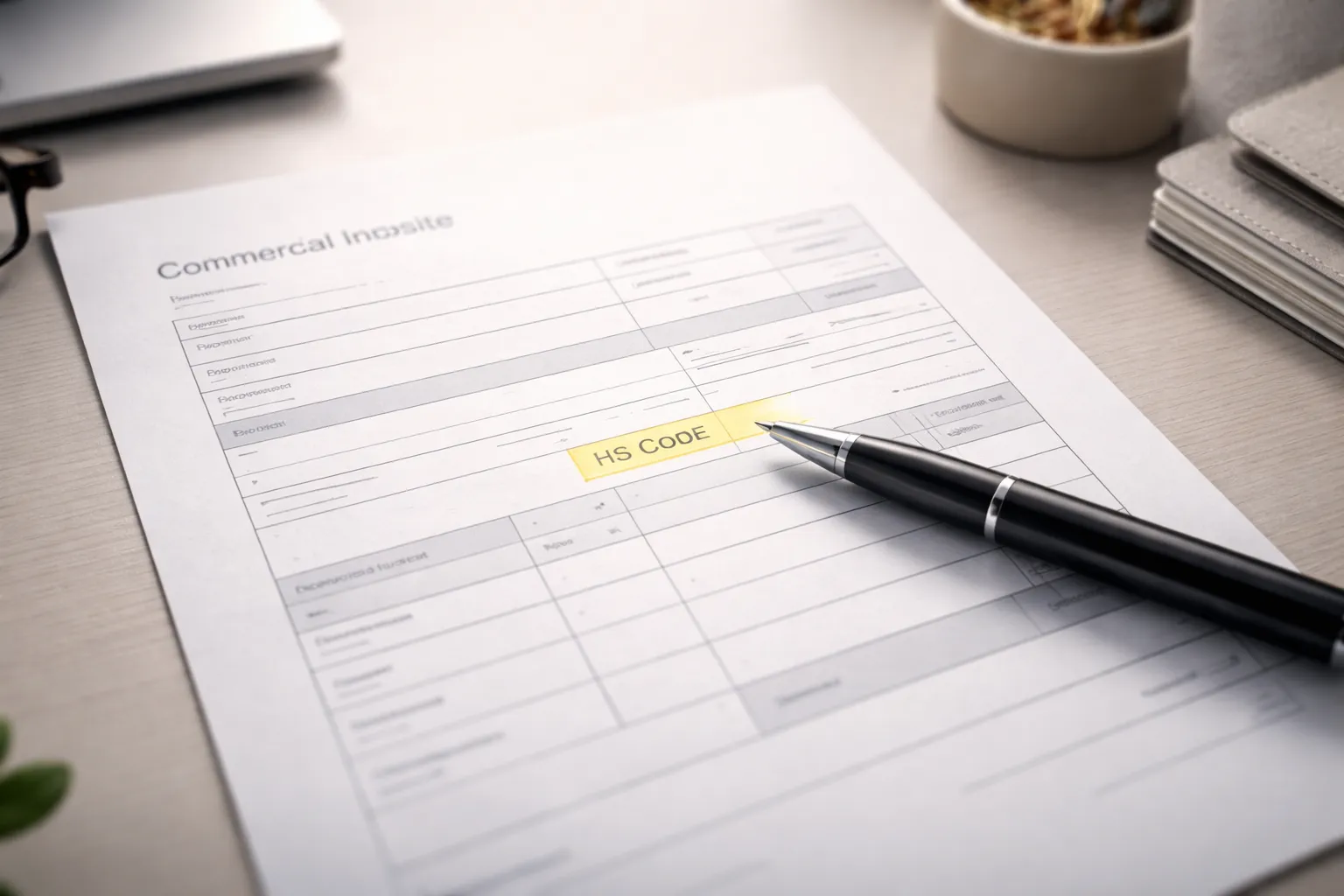
The Proforma Invoice should include: product description, HS Code, quantity, unit price in foreign currency, Incoterm (FOB or CIF), total value, payment terms, validity period for the quote, and your bank details.
A well-prepared Proforma Invoice tells the buyer three things: you know export documentation, you are serious about this transaction, and you have done this before — or are prepared as if you have.
Follow up after three to five days if there is no response. One follow-up message is professional. Two is the maximum before moving on to other leads.
You can read our detailed guide on: “What is a Proforma Invoice? How It Differs from Commercial Invoice”
Step 6: Negotiate Without Losing the Order
Almost every buyer will come back with a counteroffer on price. This is not a rejection — it is standard practice in international trade. How you handle negotiation often determines whether the order happens at all.
Know your floor price before any negotiation starts. The floor price is the minimum you can accept and still cover all costs with a basic margin. Do not agree to anything below it — a loss-making first order creates more problems than no first order.
Do not drop price immediately. When a buyer pushes back, offer value before offering a discount — better packaging, faster delivery timeline, or a smaller sample shipment at cost. Dropping price instantly signals that your original price had no basis.
If you must reduce price — get something in exchange. A higher MOQ, a shorter payment timeline, or upfront advance payment are all reasonable exchanges for a price reduction. Price concessions given for nothing set a difficult precedent for future orders.
Confirm everything in writing once terms are agreed — including the agreed price, quantity, payment terms, and delivery timeline. A summary email confirming the agreed terms is sufficient if a formal Purchase Order is not yet ready.
Step 7: Confirm the Order and Get a Purchase Order
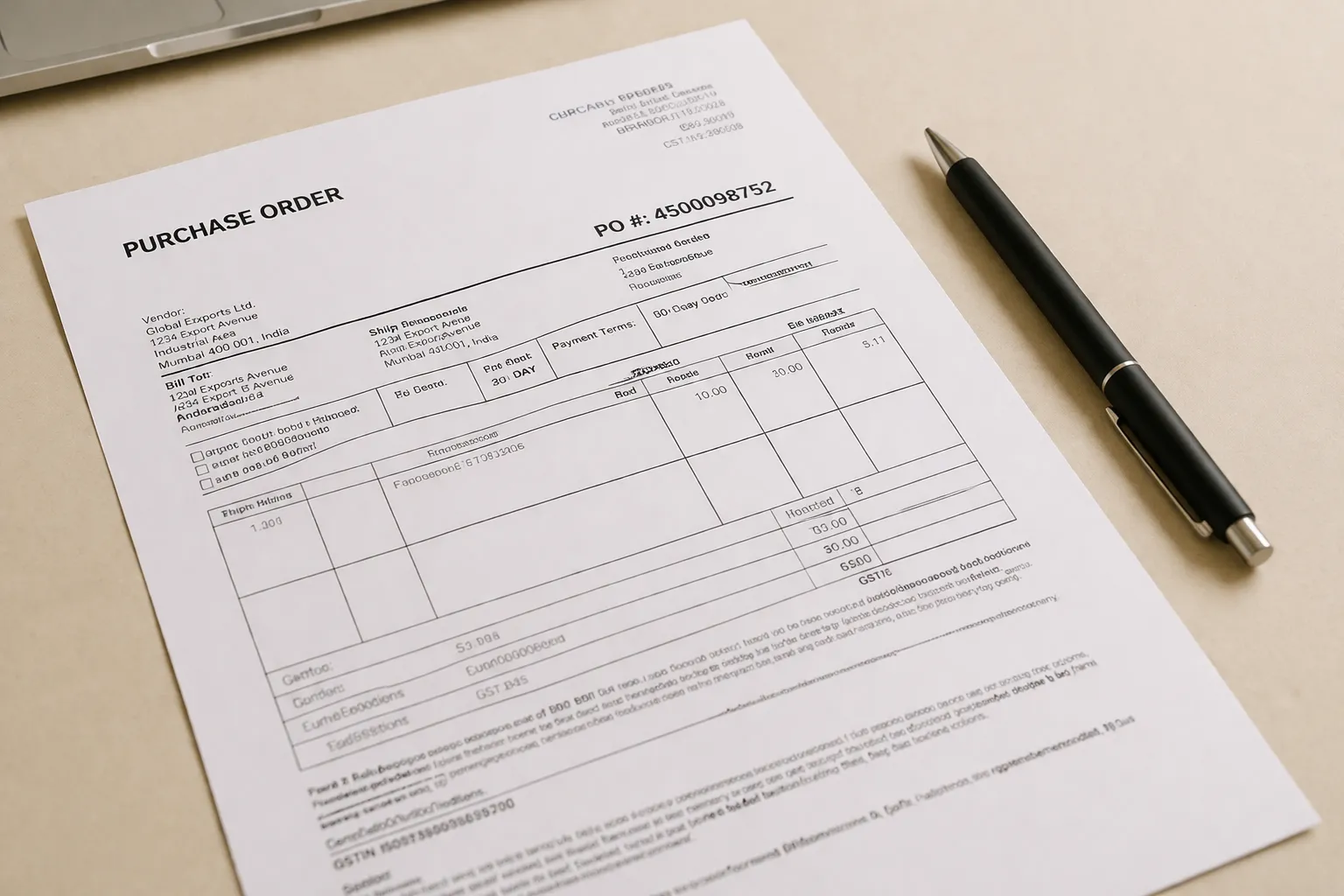
Before you do anything else — before booking freight, before starting production, before ordering packaging — get a written Purchase Order from the buyer.
A Purchase Order should include: product details and specifications, agreed quantity, price per unit and total value, Incoterm, destination port, expected delivery timeline, and payment terms.
Do not start production or sourcing without a confirmed PO. This is one of the most common costly mistakes new exporters make — proceeding on a verbal commitment that never converts to an actual order. Verbal agreements in international trade have no legal standing and no enforceability.
If a buyer is genuinely committed to placing an order, sending a Purchase Order takes them five minutes. Reluctance to send one is a meaningful signal worth paying attention to.
Step 8: Arrange Payment Security Before Shipping
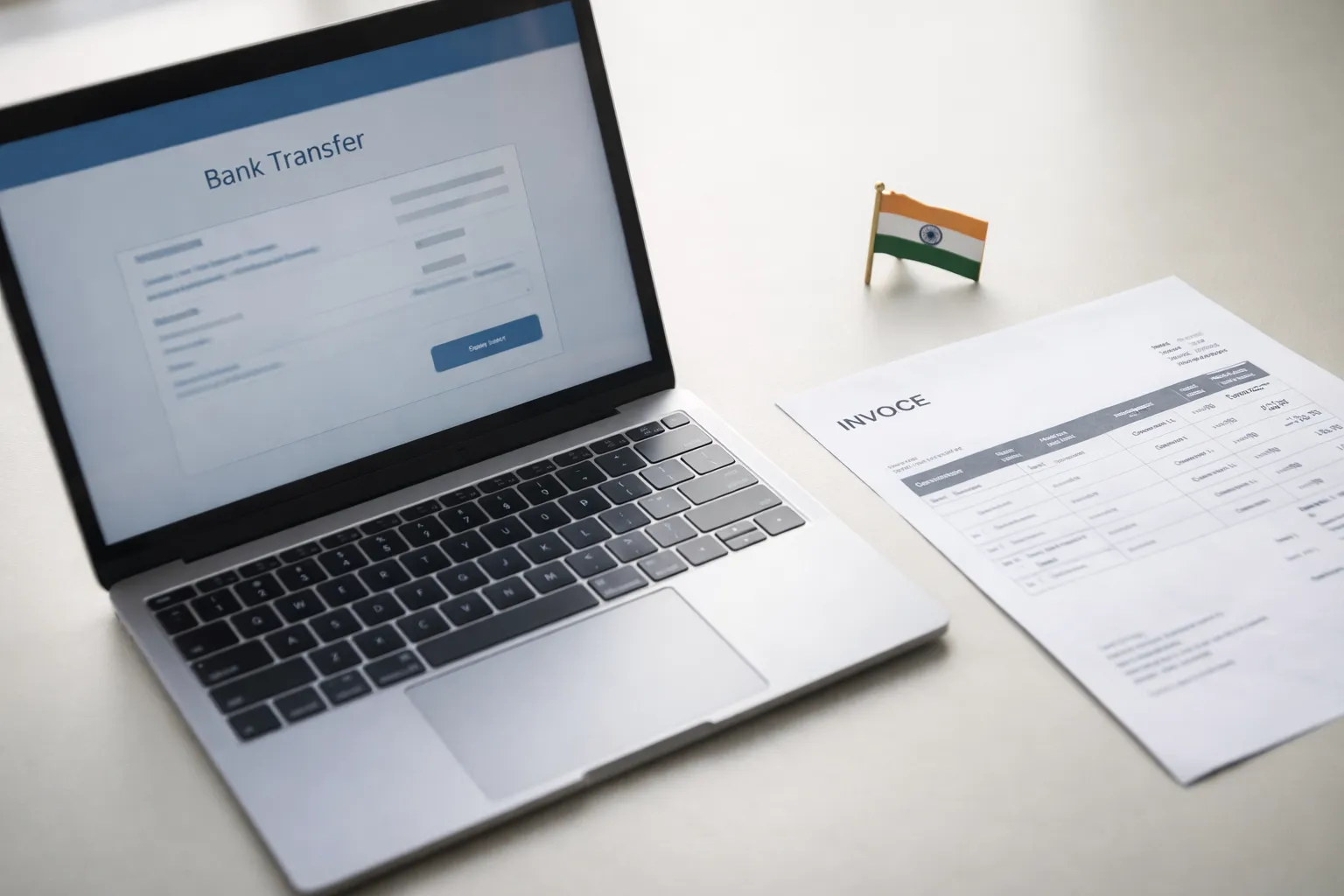
For a first-time buyer — someone you have never transacted with before — collecting payment security before shipping is non-negotiable.
Advance payment is the cleanest arrangement for a first order. Full payment in advance eliminates payment risk entirely. Many buyers are willing to pay in advance for small first orders, especially if the amount is modest.
50% advance and 50% before shipment is a common middle ground that protects both parties — the buyer has confirmation you are producing, and you have partial payment before committing to the shipment.
Letter of Credit (LC) provides bank-level payment security for larger orders — the buyer’s bank guarantees payment against compliant documents. LC involves more documentation but is the standard for larger first orders with unknown buyers.
Do not ship on open credit terms with a buyer you have never dealt with before. The risk of non-payment on a first shipment to an unverified buyer is real. If a buyer insists on credit terms before any track record exists between you, consider ECGC (Export Credit Guarantee Corporation) insurance before agreeing.
You can read our detailed guide on: “How to Find the Correct HS Code for Export in India (ITC-HS Guide)“
How Long Does the First Export Order Take?
This is the honest timeline most export guides do not share.
From starting outreach to first serious inquiry: four to eight weeks with consistent active effort across multiple methods.
From first inquiry to confirmed Purchase Order: two to eight weeks depending on the buyer’s decision cycle, their internal approval process, and how many rounds of back and forth happen on product and pricing.
From confirmed PO to shipment: two to six weeks depending on your product — whether it needs production, sourcing, or quality inspection — and the freight booking lead time.
Realistic total from serious start to first shipped order: three to six months. For some products and some markets, faster. For others, longer.
This is not a discouraging timeline — it is the accurate one. Exporters who expect their first order in the first month get discouraged and give up at month two, just before results start appearing. Exporters who plan for a four to six month runway stay active long enough to see the process work.
Do not measure success by the first month. Measure it by whether you are still consistently executing at month four.
What to Do After Your First Order is Confirmed
The confirmed Purchase Order is not the finish line — it is the start of the execution phase.
Arrange production or sourcing immediately and confirm the timeline with your supplier or production team against the delivery date committed to the buyer.
Book freight early. Good vessel space fills quickly, especially for popular trade lanes. Confirm your freight booking and share the expected shipment date with your buyer promptly.
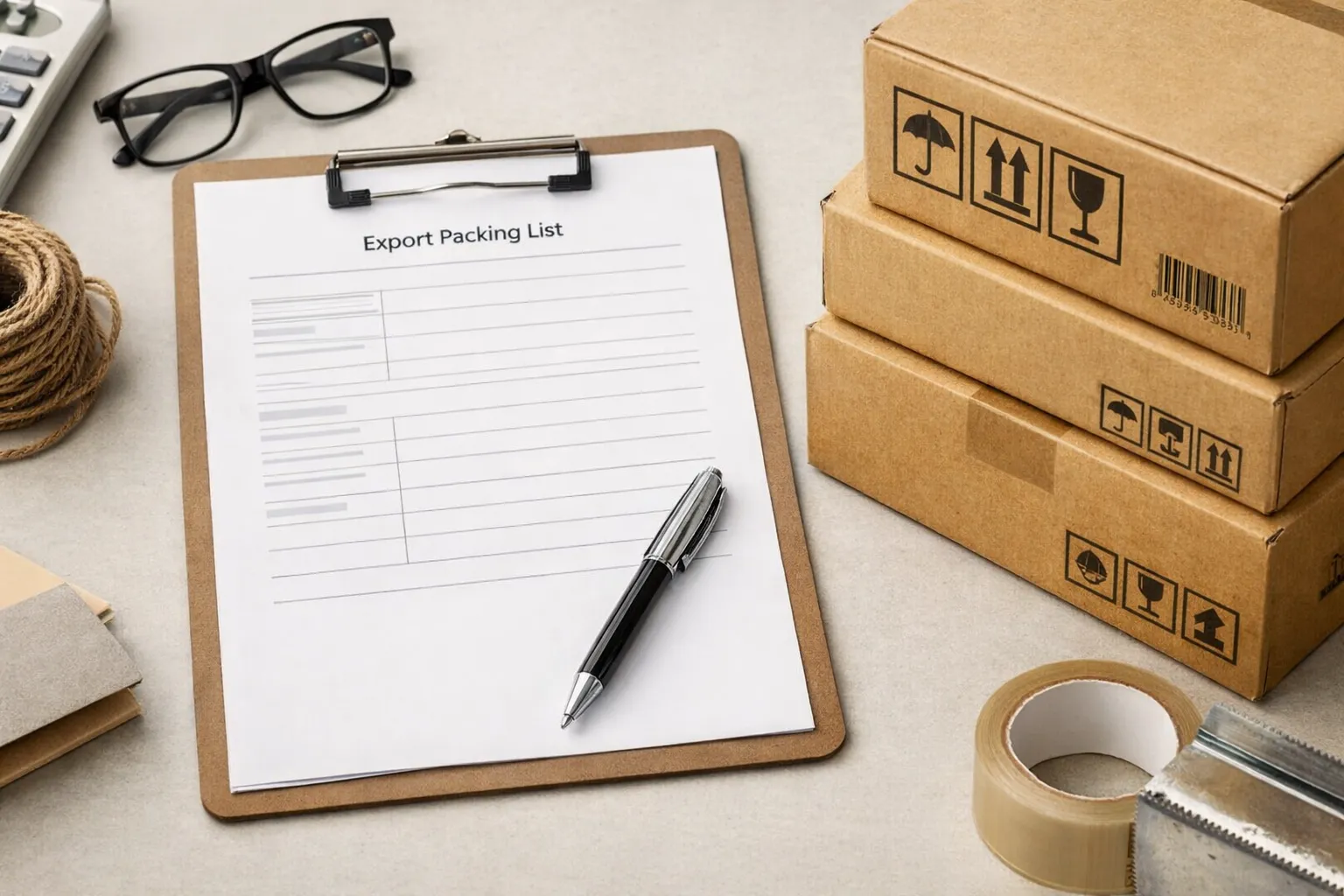
Prepare all export documents carefully — commercial invoice, packing list, Shipping Bill, and any product-specific certificates. Cross-check every document against your Purchase Order before submitting. Mismatches between documents and the PO create complications at customs that delay your shipment.
Keep the buyer informed at every stage — when production is complete, when goods are packed, when the shipment is booked, when the Bill of Lading is issued. Regular communication during the first order builds the kind of trust that leads to a second order before the first one has even arrived.
After delivery, follow up to confirm receipt, ask for feedback on the product and the process, and begin the conversation about the next order. The relationship started with the first order is more valuable than the first order itself.
Conclusion
Getting your first export order is less about finding the perfect platform or the perfect buyer and more about preparing properly, staying active consistently, and handling every step of the process professionally when the opportunity arrives.
Most of the work happens before any buyer responds — in getting your pricing right, your catalogue ready, and your outreach consistent. When a serious inquiry comes in, you want to be ready to convert it, not scrambling to prepare the basics.
The first order will take longer than you expect. It will probably be smaller than you hoped. It will teach you more about your product, your process, and your pricing than months of preparation. That is its real value.
Key Takeaways
- The goal of your first export order is not maximum profit — it is proving your capability to a new buyer and building the foundation for repeat business.
- Have your product specification, FOB pricing, MOQ, and buyer-facing documents ready before approaching any buyer — preparation determines conversion.
- Respond to every inquiry within twenty-four hours and send a formal Proforma Invoice — not an informal price message — when a buyer asks for pricing.
- Never start production or book freight without a written Purchase Order from the buyer — verbal commitments in international trade have no enforceability.
- For first-time buyers, always collect advance payment or secure an LC before shipping — open credit terms with an unverified buyer expose you to real non-payment risk.
Frequently Asked Questions
Q1: How long does it realistically take to get the first export order in India?
The realistic range for most first-time exporters using active methods — platform listings, cold outreach, EPC trade leads — is three to six months from the start of serious effort to a first shipped order.
The breakdown: four to eight weeks from starting outreach to the first serious inquiry, two to eight weeks from inquiry to confirmed Purchase Order, and two to six weeks from confirmed PO to shipment.
This timeline varies by product category, target market, and how consistently you execute. Some exporters move faster — particularly for lower-value products where buyers are comfortable placing small trial orders quickly. Others take longer — particularly for engineered products or regulated categories where the buyer’s evaluation process is more involved.
The most important thing is not to judge the process by the first month. Consistent effort over four to six months is what produces results, not a burst of activity followed by discouragement.
Q2: Should I send free samples to every buyer who asks?
No — and having a clear sample policy before your first inquiry saves you from a decision you will otherwise make under pressure every time.
Sending free samples to every inquiry is expensive, especially if you are exporting physical goods with meaningful per-unit costs or high international courier charges. Many sample requests come from people who are not serious buyers — they are exploring, comparing, or in some cases collecting samples with no intention of ordering.
A reasonable approach for most exporters: send free samples to buyers who have provided specific, verifiable company details, shown genuine product knowledge in their inquiry, and agreed to pay international courier charges. For buyers you cannot verify or who are reluctant to cover shipping costs — a nominal sample charge is reasonable and filters out non-serious inquiries.
For your most promising leads — a buyer you have had multiple detailed exchanges with who is clearly evaluating suppliers seriously — absorbing the sample cost is an investment worth making.
Q3: What should I do if a buyer places an order but then goes silent?
This happens more often than most export guides acknowledge — and how you handle it depends on what stage the silence occurs.
If the buyer goes silent after sending a Purchase Order but before payment or production has started: follow up once professionally, referencing the PO and asking for confirmation that they want to proceed. If there is no response after two follow-ups over two weeks, treat the order as inactive and move on. Do not start production or sourcing on an unconfirmed order.
If the buyer has paid advance and then goes silent before shipment: continue with production as agreed, document everything, and keep sending updates. Silence from a buyer who has already paid is usually a communication gap rather than intent to abandon. Send regular shipment updates regardless of whether they respond.
If the shipment has gone out and the buyer goes silent after receiving goods: this is the most serious scenario. Follow up through email, LinkedIn, and phone. If non-payment is the issue and the amount is significant, escalate to a trade lawyer familiar with cross-border disputes or contact ECGC if you have cover. This is why advance payment or LC for first-time buyers is strongly recommended — it eliminates this risk entirely on the first transaction.