A lot of people ask me — I have a small business, what can I actually export? And most of the time, they’ve already talked themselves out of it before asking. They assume export is only for large manufacturers with big factories and government connections.
It’s not.
There are genuinely practical export business ideas for small businesses in India that work across different budgets, skill sets, and starting points. Some of India’s most consistent exporters are small workshops, home-based processors, freelancers, and artisans. The opportunity is real — you just need the right idea matched to your actual situation.
This article covers 10 real options — each with a different entry point and a clear starting path.
What Makes a Good Export Business Idea for Small Businesses in India?
Before the list, here’s the filter every small business export idea in India should pass:
- Proven international demand — buyers in other countries are already importing this
- Manageable compliance — you can handle the regulatory requirements without a large team
- Reasonable starting capital — you don’t need crores to begin
- India’s natural advantage — India produces or makes this better, cheaper, or more authentically than most competing countries
If an idea passes all four, it’s worth exploring seriously.
Idea 1: Spices and Dry Foods Export from India
Why it works: India is the world’s largest producer and exporter of spices. Turmeric, cumin, chilli, cardamom, coriander — buyers across the world actively source these from India because of quality, variety, and price. This is one of the most established export categories for small businesses.
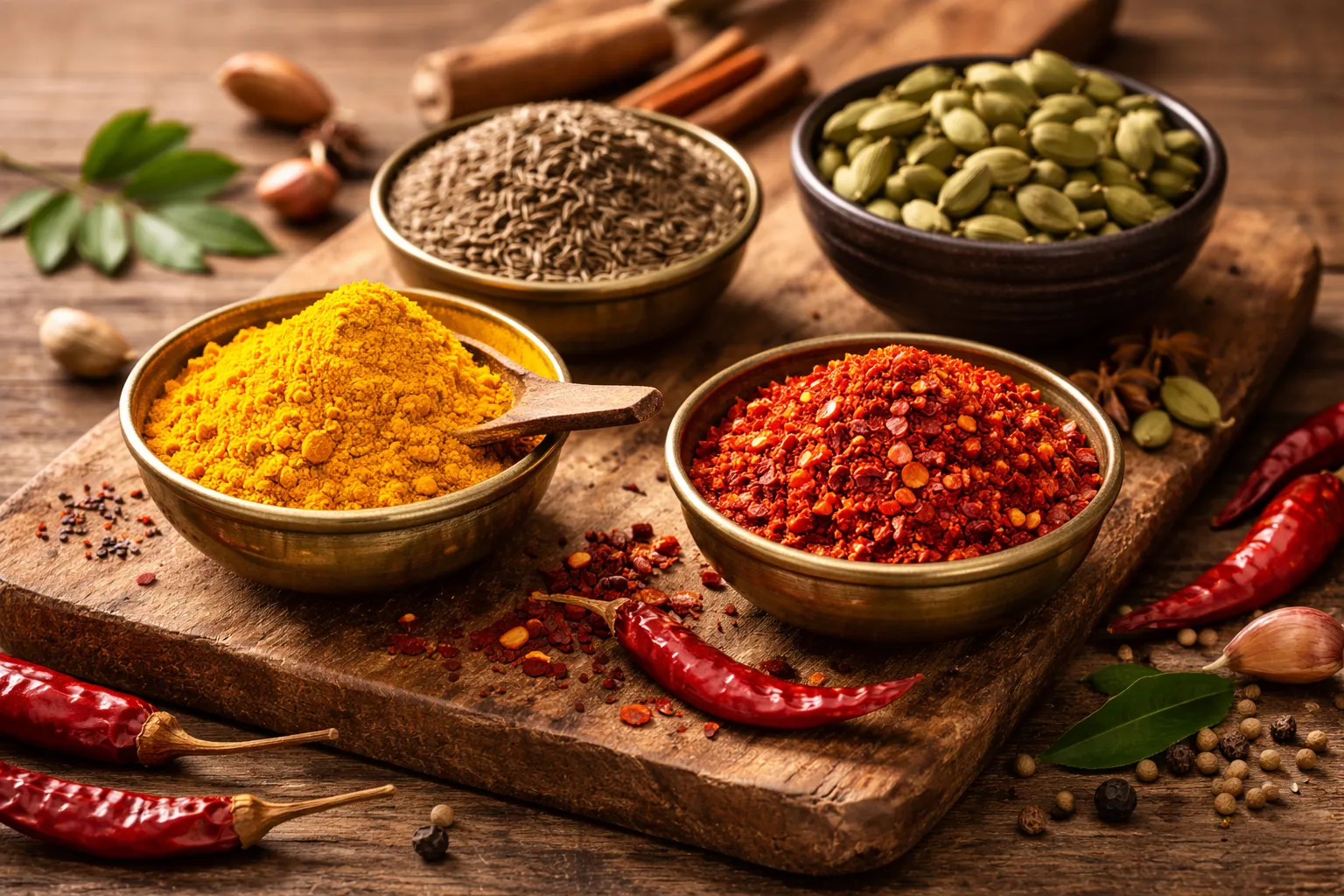
Who it suits: Small farmers, local traders, home-based processors, and anyone with access to a reliable spice supply chain.
Key markets: USA, UAE, UK, Germany, and most of the Middle East.
What to watch: FSSAI registration is mandatory for food products. Packaging standards matter — moisture control, labelling, and shelf life all affect whether your shipment gets accepted or rejected at the destination. Buyers in developed markets are strict about this.
Starting point: Get FSSAI registration, source quality product consistently, and list on Alibaba or connect directly through the Spices Board of India. The Spices Board actively supports small exporters with training and buyer connections.
Idea 2: Handmade and Artisan Products Export from India
Why it works: Global consumers — especially in the US, UK, and Europe — have a growing appetite for authentic, handmade products. Mass-produced goods are everywhere. Something genuinely handcrafted from India carries a story, and buyers pay a premium for that.
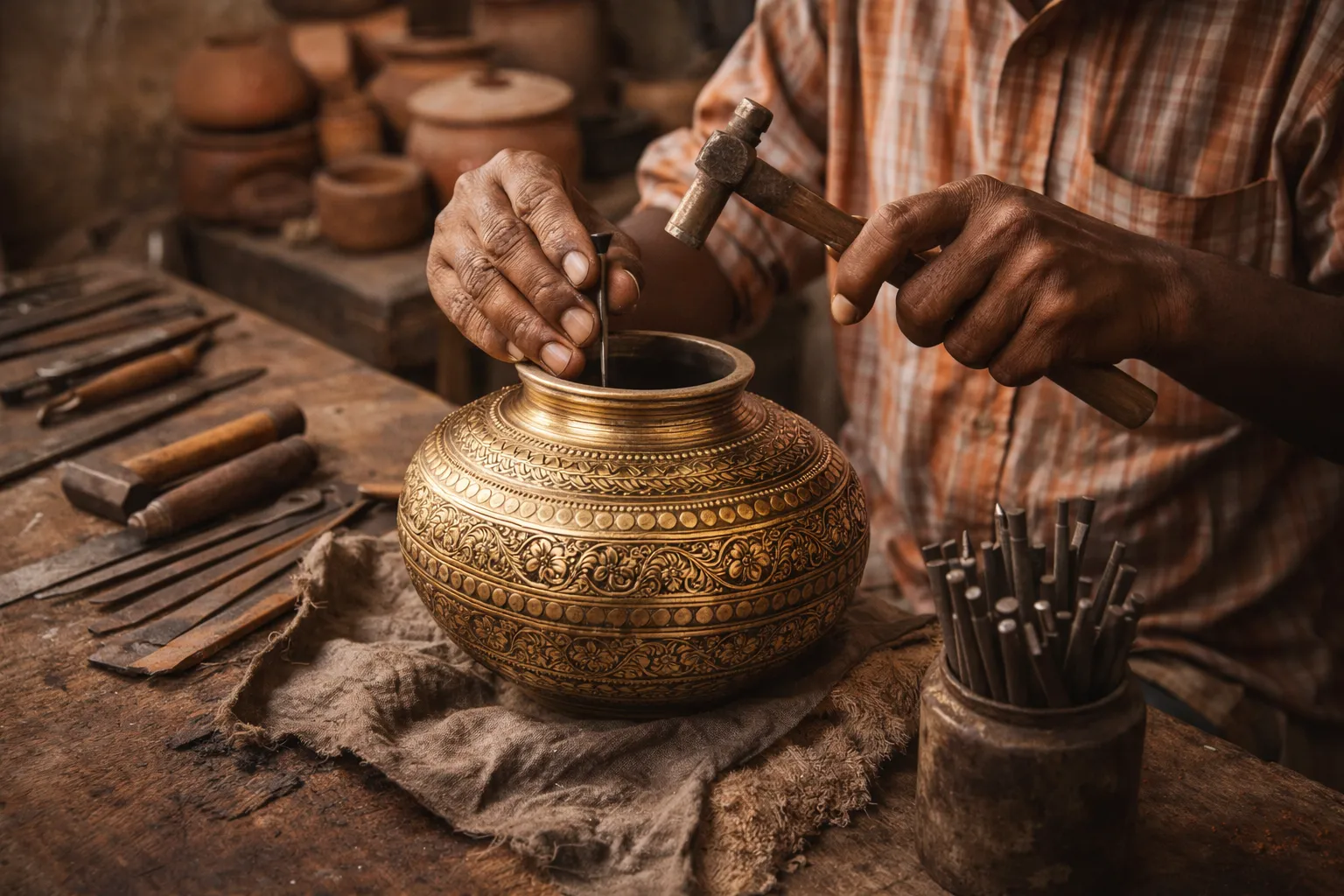
Who it suits: Artisans, craft cluster operators, NGOs working with craftspeople, and small workshops producing pottery, brassware, woodwork, block-printed textiles, or woven goods.
Key markets: USA, UK, Germany, France, and Australia.
What to watch: Consistency is the hardest part. Handmade products vary naturally — but buyers expect the same quality across every order. Packaging fragile items for international shipping also requires more care and cost than standard goods.
Starting point: Register with the Export Promotion Council for Handicrafts (EPCH). They maintain buyer databases, organise trade fairs, and provide support specifically for artisan exporters. This is one of the most supportive EPCs for small-scale handicraft export business in India.
You can read our detailed guide on: “How Much Money Do You Need to Start an Export Business in India?“
Idea 3: Organic and Natural Products Export from India
Why it works: The global wellness market has been growing steadily for years. Organic turmeric, moringa powder, cold-pressed oils, natural skincare, and Ayurvedic ingredients all have strong and growing demand internationally. India has both the raw material and the traditional knowledge that backs these products.

Who it suits: Small organic farmers, Ayurvedic product makers, herbal processors, and natural cosmetic brands.
Key markets: USA, Germany, Japan, UAE, and the UK.
What to watch: Organic certification is not optional for most serious buyers in this space — they will ask for it. Labelling compliance also varies by destination country. The EU and US have strict rules on health claims made on product packaging.
Starting point: Get certified through an APEDA-recognised organic certification body. Once certified, list on international organic B2B platforms and reach out directly to health food importers in your target markets.
Idea 4: Textiles and Garments
Why it works: India is one of the world’s top textile exporters — and for good reason. Cotton fabric, handloom textiles, readymade garments, home linen, and ethnic wear all have consistent international demand. The supply chain is deep, which means even small traders can source reliably.
Who it suits: Small weavers, tailoring and stitching units, fabric traders, and anyone connected to a garment manufacturing cluster.
Key markets: USA, UK, EU countries, and the Middle East.
What to watch: International buyers have specific quality standards, sizing requirements, and lead time expectations. Getting these wrong leads to rejected orders. Start with buyers who are open to working with smaller suppliers and build volume gradually.
Starting point: Connect with the Apparel Export Promotion Council (AEPC). They support small exporters with buyer connections, trade fair participation, and compliance guidance specific to the textile and garment category.
Idea 5: Home Décor and Furniture
Why it works: Indian home décor has a strong global aesthetic — brass lamps, carved wooden furniture, hand-painted ceramics, jute baskets, and block-printed cushion covers are bought by interior designers and home goods retailers worldwide. The category commands good margins because of design value, not just material cost.
Who it suits: Woodworkers, metal craftsmen, ceramic makers, and small interior product manufacturers.
Key markets: USA, UK, Germany, France, and the Netherlands.
What to watch: Wooden items require ISPM-15 compliant packaging — the wood used in crates and pallets must be heat-treated. Fragile items need careful packaging to survive international freight. Freight costs are higher for bulky items — factor this into your pricing before quoting buyers.
Starting point: List on Alibaba and IndiaMART with good product photography. Attend the India International Trade Fair in Delhi — it attracts serious international home décor buyers every year.
Idea 6: Leather Goods and Accessories
Why it works: India is among the top leather goods exporters globally. Bags, wallets, belts, footwear, and leather accessories made in India are exported to some of the most demanding markets in the world — including Germany and Italy, which are known for their exacting quality standards.

Who it suits: Small leather workshops, accessory makers, and manufacturers in leather clusters like Agra, Chennai, Kanpur, and Kolkata.
Key markets: Germany, Italy, USA, UK, and the Middle East.
What to watch: International buyers increasingly ask about leather sourcing compliance — particularly around animal welfare and environmental standards. Finishing quality matters enormously in this category. A product that looks good in a photo but doesn’t hold up to close inspection will not generate repeat orders.
Starting point: Connect with the Council for Leather Exports (CLE) — India’s dedicated export promotion council for the leather industry. They provide buyer introductions, certification support, and trade fair participation specifically for leather exporters.
Idea 7: Ayurvedic and Herbal Products Export from India
Why it works: Post-pandemic, global interest in natural health, immunity, and traditional medicine has grown significantly. Ayurvedic supplements, herbal teas, essential oils, and wellness products from India are finding buyers in markets that previously had little awareness of them. The category is still relatively open for new entrants compared to more saturated sectors.
Who it suits: Ayurvedic product manufacturers, herbal processors, and small wellness brands with genuine formulations.
Key markets: USA, UK, UAE, and Southeast Asia.
What to watch: The US market specifically requires FDA compliance for any health-related product claim. Getting this wrong can result in shipments being rejected at US customs — an expensive experience for any exporter, especially a first-timer. Always research destination country regulations before committing to a market.
Starting point: Get AYUSH certification for your products. Connect with Pharmexcil — the Pharmaceuticals Export Promotion Council — which also covers herbal and Ayurvedic products and supports exporters with market access and compliance guidance.
Idea 8: Engineering and Auto Components
Why it works: India’s engineering goods export sector has grown consistently over the last decade. Castings, forgings, precision components, auto parts, and industrial fittings made in India are in active demand from manufacturers in the US, Germany, and Africa. Indian engineering goods compete on both price and quality in global markets.
Who it suits: Small machine shops, component manufacturers, and precision engineering units — particularly those already supplying to domestic OEMs.
Key markets: USA, Germany, UK, and Africa.
What to watch: Buyers in this category have strict technical specifications. Quality certifications — ISO in particular — are often expected before a buyer will place an order. This is not the easiest category for a complete beginner, but for someone already in manufacturing, it offers strong margins and long-term buyer relationships.
Starting point: Connect with EEPC India — the Engineering Export Promotion Council. They are one of the most active EPCs in terms of trade fair support, buyer matchmaking, and export development programmes for small engineering manufacturers.
Idea 9: Stationery and Paper Products
Why it works: Handmade paper, eco-friendly notebooks, recycled stationery, and sustainable packaging products from India have a genuine niche in European, US, and Japanese markets. As sustainability becomes a mainstream buying decision, products with a natural or handmade story are finding more buyers willing to pay a premium.
Who it suits: Small paper mills, handmade paper producers, stationery makers, and eco-product businesses.
Key markets: Europe, USA, and Japan.
What to watch: Buyers in this space often have minimum order quantity expectations that small producers may struggle to meet consistently. Quality consistency across batches is also a common challenge for handmade paper products — something to address before approaching serious buyers.
Starting point: List products on Etsy Global and Alibaba. Attend international stationery trade fairs where eco and sustainable products have dedicated sections. Build a strong product story — buyers in this category respond to the narrative behind the product, not just the specification sheet.
You can read our detailed guide on: “How to Start an Export Business in India: 10 Clear Steps“
Idea 10: Digital Services and Freelance Export from India
Why it works: Software development, graphic design, content writing, video editing, digital marketing, and consulting are all exports under Indian law. If you deliver a service to a client outside India and receive foreign currency in return — that is a digital service export from India. No physical product, no freight, no customs clearance.

Who it suits: Freelancers, small digital agencies, IT consultants, and anyone with a marketable skill that can be delivered remotely.
Key markets: USA, UK, Australia, and Canada.
What to watch: Foreign currency received for service exports must be documented properly. Your bank will issue a FIRC — Foreign Inward Remittance Certificate — for each payment, which serves as your proof of export for GST and compliance purposes. GST implications for service exports are also worth understanding before you start billing international clients at scale.
Starting point: Platforms like Upwork, Fiverr, and Toptal connect you directly with international clients. For formal service export operations, an IEC Code is required under Indian law.
How to Choose the Right Export Business Idea for Your Situation
With ten ideas in front of you, the question is: which one is actually right for you?
Ask yourself three things honestly:
What do I already have access to? A product you can source today, a skill you already have, or a network you’re already part of — that’s your real starting point. Don’t build from scratch when you already have a foundation.
What is my starting budget? Digital services and spices have low entry costs. Engineering goods and furniture have higher ones. Match the idea to what you can realistically fund from the beginning.
Am I ready for physical goods logistics? Shipping products internationally involves freight, customs, and documentation. Service exports involve none of that. If you’re not ready for that complexity yet, a service export is a legitimate and simpler starting point.
You can read our detailed guide on: “Which Product Should You Export from India? How to Choose“
Your Next Step After Choosing Your Export Business Idea
Once you have an idea that fits your situation, don’t invest heavily before validating it.
Check international demand first using ITC Trade Map and DGFT trade data. Confirm that real buyers in real countries are actively importing this product in meaningful volumes.
Then get your registrations in place — IEC Code, GST registration, AD Code. These take two to three weeks and cost very little.
Then find one buyer before scaling anything. One confirmed order teaches you more about your export business than months of preparation ever will.
You can read our detailed guide on: “Can You Export from Home in India? Is It Legal?”
Conclusion
The question is never really “what should I export?” The real question is “what can I realistically start with, given what I already have?”
Every idea on this list has working examples of small Indian businesses behind it. None of them required crores to start. Most began with one product, one market, and one buyer.
That’s still how it works.
Key Takeaways
- There are real and practical export business ideas for small businesses in India across multiple categories — the right one depends on your product access, budget, and readiness for logistics.
- India has a proven natural advantage in spices, textiles, handicrafts, organic products, leather goods, and engineering components — all with established international demand.
- Digital service exports like IT, design, and freelancing are fully valid export businesses under Indian law and require no physical shipment or logistics setup.
- Choose an export idea based on what you already have access to — product, skill, or network — rather than what appears to be trending at any given moment.
- Always validate international demand using real trade data before investing in production, packaging, or platform subscriptions.
Frequently Asked Questions
Q1: Which export business has the lowest startup cost in India?
Digital service exports have the lowest startup cost by a significant margin. If you have a marketable skill — development, design, writing, consulting — you can begin exporting services with almost zero upfront investment beyond an IEC Code and GST registration.
Among physical product exports, spices and dry agricultural products are the most affordable to start. You can source small quantities locally, get FSSAI registration, and test the market before committing to large volumes. Many spice exporters have completed their first shipment with under ₹50,000 in total outlay.
Q2: Can a home-based business export products from India legally?
Yes — completely legal. There is no requirement to have a commercial office or factory to export from India.
A home address can be used for your IEC Code, GST registration, and business correspondence. Many exporters in handicrafts, spices, organic products, and digital services operate entirely from home through their early years. What matters legally is that your registrations are correct and your transactions go through a proper current account.
Q3: Do I need a separate registration for each type of product I export?
No — your IEC Code covers all products you export. One code is valid across your entire export business regardless of how many product categories you deal in.
However, certain products have category-specific requirements on top of the IEC Code. Food products need FSSAI registration. Organic products need organic certification. Ayurvedic products may need AYUSH certification. These are product-level compliances — not separate export licences. Your IEC Code remains single and universal.
Q4: Which export business idea is best for someone with no product of their own?
Two clear options work well here.
The first is merchant exporting — you source products from manufacturers or local markets and sell them to foreign buyers. You don’t need to make anything. Spices, handicrafts, and textiles are all categories where merchant exporters operate successfully without manufacturing anything themselves.
The second is digital service export — if you have a skill that can be delivered remotely, you already have your product. No sourcing, no inventory, no freight.
Both are legitimate starting points for someone without their own manufactured product.
Q5: Do small exporters in India get any government support or schemes?
Yes — and more than most beginners realise.
Export Promotion Councils (EPCs) are government-supported bodies that provide buyer databases, trade fair access, market intelligence, and compliance guidance specific to your product category. EPCH for handicrafts, AEPC for apparel, Spices Board for spices, and EEPC for engineering goods are among the most active.
Beyond EPCs, government schemes like Duty Drawback, RoDTEP, and EPCG reduce your effective export costs. MSME exporters also have access to priority sector lending and export credit through banks at subsidised rates.
Most of these benefits are underutilised simply because small exporters don’t know they exist. Registering with the relevant EPC for your product category is the fastest way to start accessing them.