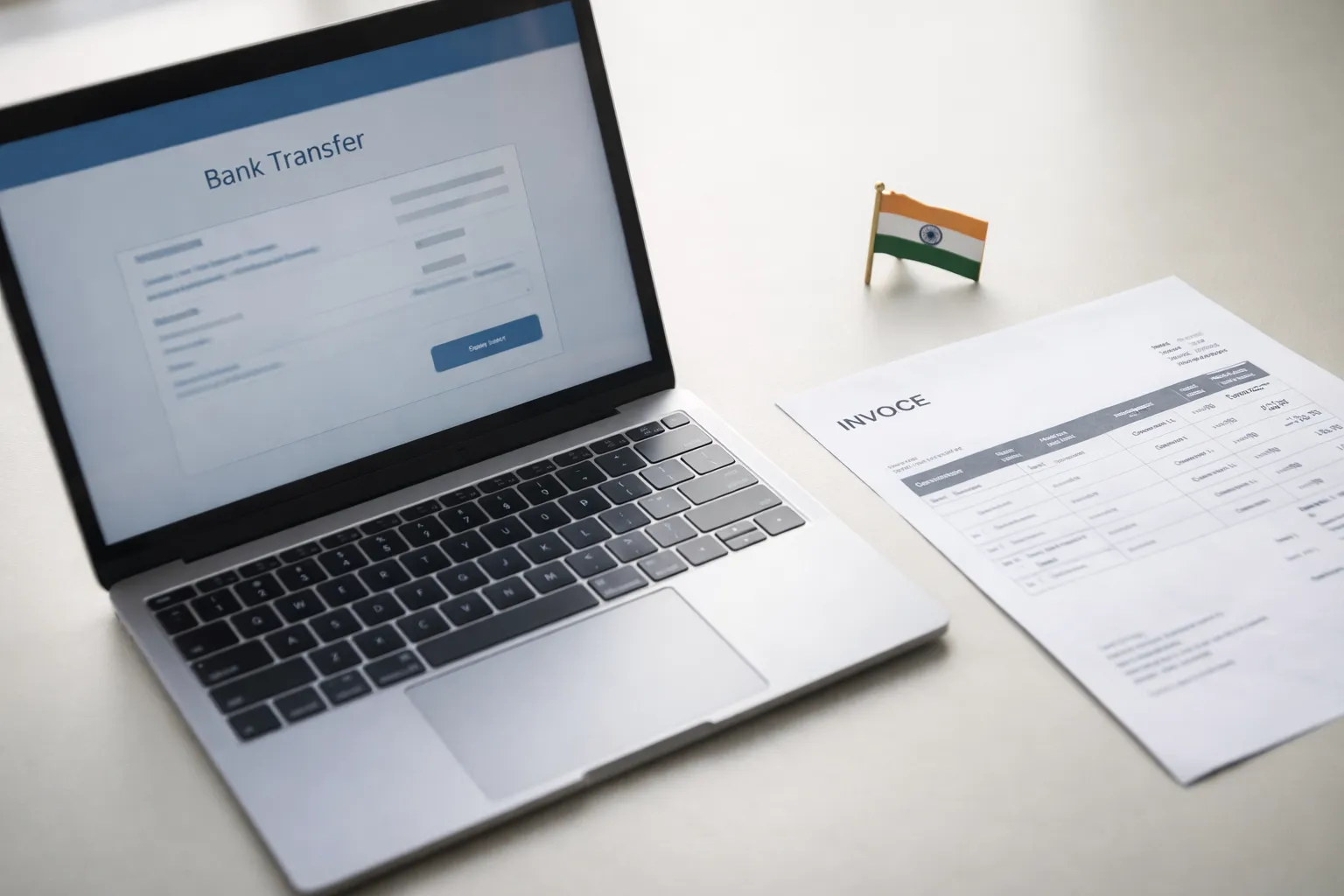
When I first started, I had no idea how money actually moves from a buyer in another country to my bank account in India. I knew people exported and got paid — but the mechanics of it, the different methods, and which one to use in which situation were completely unclear to me.
Getting paid is ultimately why you export. And yet most beginners have no clear picture of how international payments actually work until they are in the middle of their first transaction trying to figure it out in real time.
This article covers every export payment method used in India — from the safest to the riskiest — with honest notes on when each one makes sense and when to be cautious.
How International Export Payments Work — The Basic Flow
Before going into individual methods, here is the basic mental model of how international export payment works.
You and your buyer agree on a payment method before any goods are shipped — this is part of the negotiation, not an afterthought. Once goods are shipped and documents are exchanged, payment moves through the international banking system — primarily the SWIFT network — from the buyer’s bank in their country to your bank in India.
The foreign currency — USD, EUR, GBP, or whatever was agreed — arrives in your export current account in India. Your bank either converts it to INR at the prevailing exchange rate or holds it in an EEFC account (Exchange Earners’ Foreign Currency account) if you choose to keep it in foreign currency temporarily.
RBI regulations under FEMA require that export payment must be realised within a specified period after the shipment date — typically nine months for most goods. Missing this window creates compliance issues.
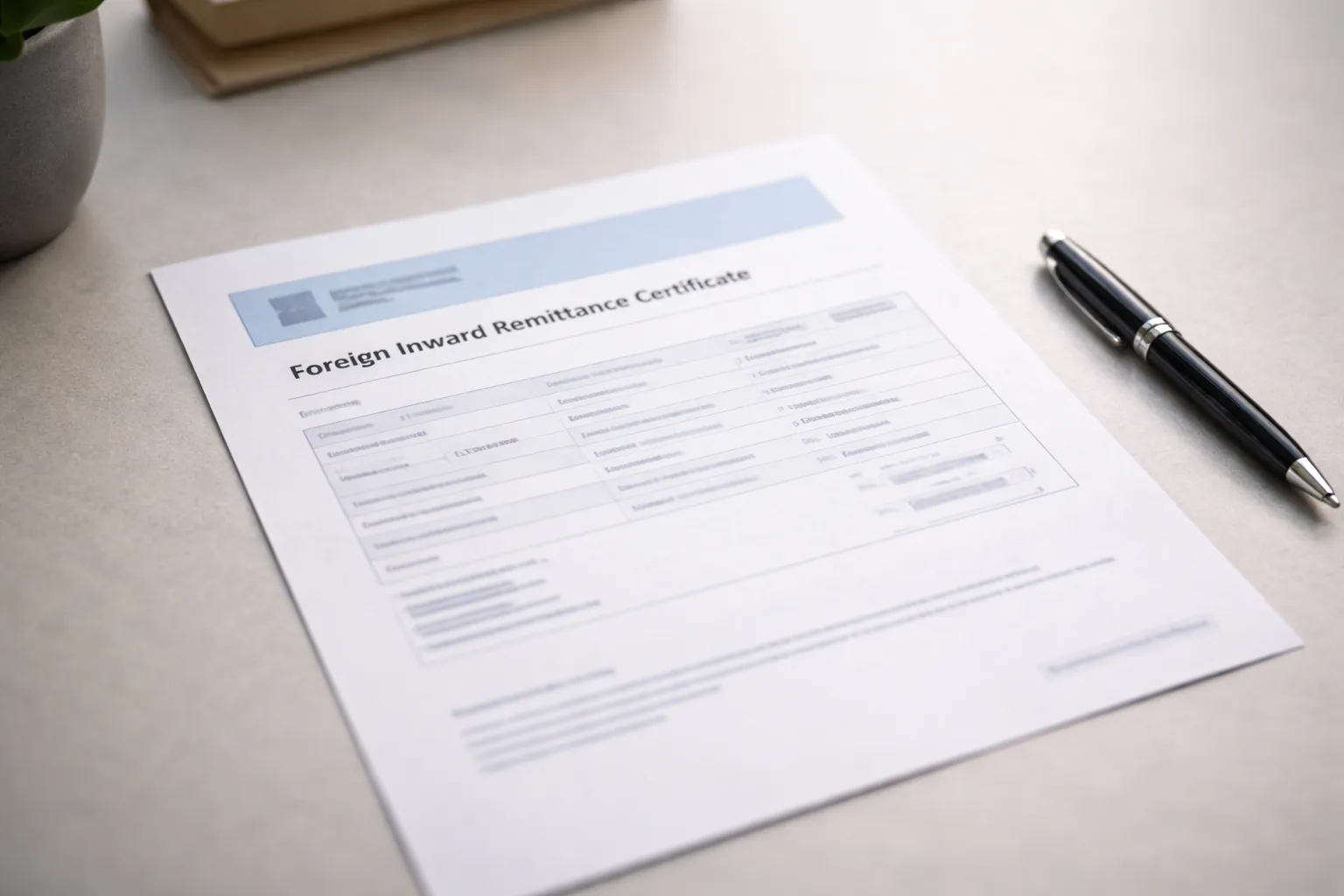
After the payment arrives, your bank issues a FIRC — Foreign Inward Remittance Certificate — which is your formal proof that the foreign payment has been received. Keep every FIRC. You will need it repeatedly.
Method 1: Advance Payment — Safest for the Exporter
Advance payment is exactly what it sounds like — the buyer pays before you ship anything.
This is the safest payment method for an exporter. You receive the money first, confirm it has cleared your account, and then ship the goods. There is no risk of non-payment because payment has already happened.
Advance payment is common for first-time buyers, small order values, and custom-made or personalised products where the exporter has already committed resources before the order can be fulfilled.
Common advance payment structures:
100% advance — full payment before shipment. Cleanest arrangement. Zero payment risk for the exporter.
50% advance + 50% before BL release — buyer pays half upfront, and the remaining half before you release the Bill of Lading. The buyer cannot collect the goods without the BL, so this maintains leverage on the second payment while splitting the risk.
30% advance + 70% against documents — less secure than the above, but used in relationships where the buyer is slightly more established and wants more flexibility. The 70% is still due before or upon document presentation, not after delivery.
The buyer’s perspective on advance payment: they are trusting you to ship as agreed and as specified. Make that trust easy to extend — communicate professionally, share production updates, ship on time, and send documents promptly. A buyer who has a good first advance payment experience is far more likely to continue working with you.
You can read our detailed guide on: “What is Advance Payment in Export? When Safe, When Risky”
Method 2: Letter of Credit (LC) — Most Structured Secure Payment
A Letter of Credit is the most structured and secure payment method in international trade — and also the most misunderstood by beginners.
Here is the simple version: the buyer goes to their bank and asks them to issue a guarantee of payment to your bank. The buyer’s bank — called the issuing bank — sends this guarantee to your bank in India — called the advising or confirming bank. The guarantee says: if this exporter presents the correct documents as specified in this LC, we will pay them.
The critical point is that the bank pays you — not the buyer directly. The payment obligation is taken on by a bank, which is far more reliable than relying solely on the buyer’s willingness to pay.

What makes LC secure: as long as you present documents that comply exactly with the terms stated in the LC, payment is guaranteed regardless of what happens with the buyer — even if the buyer’s business runs into trouble.
What makes LC complex: every document you submit must match the LC terms precisely. A different date format, a slightly different product description, or a missing signature on one document constitutes a discrepancy. Discrepancies can delay payment or cause the bank to refuse payment until corrections are made.
Types of LC:
Sight LC — payment is made immediately when you present compliant documents to the bank. The fastest LC structure for the exporter.
Usance LC — payment is made after a fixed period from the date of document presentation — 30, 60, or 90 days. You ship and present documents now, but receive payment later. This gives the buyer time to sell the goods before paying, which is why they prefer it — but it introduces a waiting period for you.
Cost to factor in: both your bank and the buyer’s bank charge fees for LC transactions. These are not trivial amounts on larger transactions. Factor bank charges into your pricing when a buyer proposes LC payment terms.
You can read our detailed guide on: “Letter of Credit Explained for Beginners (With a Real Example)”
Method 3: Documents Against Payment (DP)
Documents Against Payment — also called Cash Against Documents — is a step down in security from LC but still maintains meaningful protection for the exporter.
Here is how it works: you ship the goods and send the shipping documents — Bill of Lading, commercial invoice, packing list — to your bank. Your bank forwards those documents to the buyer’s bank. The buyer’s bank tells the buyer: pay, and we will release the documents. The buyer pays, receives the documents, and uses the Bill of Lading to collect the goods from the port.
The protection mechanism is this: without the original Bill of Lading, the buyer cannot collect the goods from the shipping line. So if they don’t pay, they don’t get the goods.
The risk: the goods are already at the destination port. If the buyer refuses to pay and cannot collect the goods, you have a shipment sitting at a foreign port that you need to either recover, sell to another buyer in that country, or abandon. All of these options are expensive and complicated.
DP is suitable for buyers you have some track record with — not for a first-time transaction with a buyer you have never dealt with before.
Method 4: Documents Against Acceptance (DA)
Documents Against Acceptance is structurally similar to DP — but with a significantly higher risk profile for the exporter.
The difference: under DA, the buyer receives the shipping documents — and therefore the goods — not upon payment, but upon signing a bill of exchange accepting the obligation to pay at a future date. That future date is typically thirty, sixty, or ninety days after the shipment date or document presentation date.
In plain terms: the buyer has your goods, and you have their promise to pay later. That promise is formalised in a bill of exchange — a legal instrument — but enforcing it across international borders if the buyer defaults is slow, expensive, and uncertain.
DA terms are used in long-standing trading relationships where there is genuine mutual trust built over years and multiple successful transactions. For a beginner, or for any transaction with a buyer you have not established a track record with, DA terms carry risk that significantly outweighs the benefit of accommodating the buyer’s preference.
Honest note: if a buyer is pushing hard for DA terms on a first order, treat that as a flag worth examining carefully before agreeing.
Method 5: Open Account
Open account is the simplest arrangement in structure and the highest risk for the exporter.
You ship the goods. You send the invoice. The buyer pays after receiving the goods — on whatever timeline was agreed, typically thirty, sixty, or ninety days from the invoice date or shipment date. No bank is involved in guaranteeing the payment. No documents are withheld pending payment. You are shipping entirely on trust.
Open account is common in two scenarios: long-term established trading relationships where both parties have a deep track record, and transactions between companies within the same corporate group.
For everyone else — particularly for new or unfamiliar buyers — open account terms expose the exporter to full non-payment risk with limited recourse.
If you find yourself in a situation where a buyer requires open account terms and the relationship justifies it, the practical mitigation is ECGC export credit insurance — the Export Credit Guarantee Corporation of India provides insurance cover against non-payment on export transactions. The insurance does not eliminate the risk but it means you are not fully exposed if the buyer defaults.
You can read our detailed guide on: “What is ECGC? How Export Credit Insurance Protects You”
Method 6: Escrow and Online Payment Platforms
For smaller value exports and service exports, online payment platforms and escrow arrangements have become a practical option.
Escrow involves a neutral third party holding the payment until both the buyer and exporter confirm the transaction has been completed as agreed. Once both parties confirm, the escrow provider releases the payment. This protects both sides — the buyer knows payment is held securely, and the exporter knows the money exists before delivering.
Online platforms — Payoneer, Wise, and PayPal — are commonly used for service exports, digital deliverables, and small value goods. They are fast, simple, and relatively low cost for smaller transactions.
Limitations to be aware of: these platforms are not designed for large value goods exports. Transaction limits, currency conversion costs, and platform terms can create complications at scale. More importantly, RBI has specific rules under FEMA about how export proceeds must be repatriated to India — not all online platforms are fully compliant pathways for this, depending on the transaction type and value.
Before using any online payment platform for export receipts, verify that your bank and CA are comfortable with the repatriation and FIRC documentation process for that platform.
Comparison — Which Payment Method Should You Choose?
| Payment Method | Risk for Exporter | Best For |
|---|---|---|
| Advance Payment | Zero | First-time buyers, small orders, custom products |
| Letter of Credit | Very Low | Large orders, new buyers, high-value shipments |
| Documents Against Payment | Low-Medium | Buyers with some established track record |
| Documents Against Acceptance | High | Trusted long-term buyers only |
| Open Account | Highest | Group companies, long-term proven relationships |
| Escrow / Online Platforms | Low | Service exports, small value goods transactions |
What is FIRC and Why Does It Matter?
FIRC stands for Foreign Inward Remittance Certificate.
It is a document issued by your bank in India confirming that a specific foreign currency payment has been received in your account from abroad. It contains details of the payment — the amount, the currency, the source country, and the purpose of remittance.
FIRC is your formal proof that export payment has arrived. It is required for claiming GST refunds, Duty Drawback, RoDTEP benefits, and all other export incentive schemes. Without a FIRC for each shipment, you cannot prove to the government that you actually received the corresponding foreign payment — and your incentive claims will fail.
Some banks now issue e-FIRC — a digital version — directly through the banking portal. Ask your bank whether they issue e-FIRC and how to access it after each payment arrives. Whether physical or digital, store every FIRC permanently — you may need it months after the payment arrived when filing annual compliance or incentive claims.
Common Payment Mistakes Beginners Make
Shipping to a first-time buyer without advance payment or LC. This is the single most common payment mistake in early-stage exporting. The goodwill lost from a non-payment experience on a first shipment is far more damaging than losing one potential order by insisting on secure terms.
Not reading LC terms carefully before shipping. An LC is only as good as your ability to present compliant documents. Read every term in the LC before you ship — check that you can meet every document requirement before committing to the shipment.
Using a personal savings account for export payments. Export payment must flow through a current account. A savings account is not set up for foreign remittance processing, and your bank will not be able to issue a proper FIRC. Your AD Code is also linked to your current account specifically.
Not collecting FIRC from the bank after payment arrives. Many new exporters do not know to ask for it. The bank does not always send it automatically. Ask your bank how to access your FIRC after every foreign payment is received.
Offering DA or open account terms too early. These terms should come after a relationship is established — not as a concession to win a first order. The short-term gain of landing one order is not worth the risk of non-payment with no banking protection.
Not factoring bank charges into export pricing. LC transactions, SWIFT transfers, and foreign currency conversion all carry bank fees. These fees are real costs that reduce your effective realisation on every shipment. Calculate them before you quote — not after you receive payment.
A Word on Payment Safety
Payment safety in export does not start at the payment stage. It starts at the negotiation stage — when you agree on payment terms before anything is produced or shipped.
No payment method is completely risk-free. Even advance payment carries a small reputational risk if you fail to deliver. But advance payment and LC are as close to risk-free as international trade gets — and they are the right starting point for any relationship that has not yet established a track record.
As trust builds across multiple successful transactions, you can consider moving to DP, and eventually DA terms if the relationship warrants it. That progression — from secure to flexible — is how long-term export relationships are supposed to develop.
Never let a buyer pressure you into shipping before your payment arrangements are properly secured. A buyer who is genuinely committed to the transaction will accept reasonable payment terms. Pressure to ship without security is almost always a flag worth taking seriously.
You can read our detailed guide on: “Common Export Frauds in India and How to Protect Yourself”
Conclusion
International payment methods are not as complicated as they first appear — once you understand what each one is protecting against and for whom.
Advance payment and LC protect the exporter. Open account and DA protect the buyer. DP sits in the middle. Your choice of method in any given transaction should reflect the level of trust that exists between you and the buyer at that point in the relationship — not what is most convenient or what the buyer prefers.
Start secure. Build trust through successful transactions. Extend more flexibility as the relationship earns it. That is the progression that keeps your export business financially safe as it grows.
Key Takeaways
- Export payment methods range from advance payment — safest for the exporter — to open account — highest risk — and the right choice depends on your level of trust with the buyer.
- Letter of Credit is the most structured secure payment option for large value shipments with new or unfamiliar buyers — payment is guaranteed by the buyer’s bank, not the buyer.
- Never ship to a first-time buyer without advance payment or a confirmed Letter of Credit — the risk of non-payment with no banking protection is real and the recovery process is difficult.
- FIRC — Foreign Inward Remittance Certificate — is your proof of export payment received and is required for GST refunds, Duty Drawback, and all export incentive claims — collect it after every payment.
- Always factor bank charges, currency conversion costs, and payment timeline into your export pricing — especially for LC and DA terms where processing fees are significant.
Frequently Asked Questions
Q1: Which payment method is safest for a first-time Indian exporter?
Advance payment is the safest payment method for a first-time exporter — and the one most experienced exporters recommend for all first-time buyer relationships regardless of experience level.
With advance payment, you receive the money before you ship anything. There is no scenario where you ship goods and don’t get paid — because payment has already arrived in your account.
For buyers who are uncomfortable with 100% advance, a 50% advance and 50% before the Bill of Lading is released is a reasonable middle ground. The buyer gets assurance that you are shipping — they can see the booking confirmation and pre-shipment documents — and you retain leverage on the second payment through the BL.
Letter of Credit is a close second in terms of safety and is more appropriate for larger order values where the buyer may be unwilling to pay 50-100% advance on a significant sum.
Q2: How long does it take for export payment to arrive in my Indian bank account?
For SWIFT transfers — the standard international payment route — the payment typically takes two to five working days from when the buyer’s bank initiates the transfer to when it arrives in your account in India. Some corridors — particularly USD payments from the USA — are faster. Others — particularly payments involving multiple correspondent banks — can take slightly longer.
For advance payments, the timeline depends on when the buyer initiates the transfer. For LC payments, the timeline depends on how quickly documents are processed and verified by the banks involved — typically seven to twenty-one days from document presentation, depending on whether it is a sight LC or a usance LC.
For DA terms, payment arrives on the agreed future date after acceptance — thirty, sixty, or ninety days as specified. This is the method with the longest payment realisation period.
Q3: Can I receive export payment in my savings account or do I need a current account?
You need a current account — not a savings account — to receive export payments properly.
Export payments are foreign currency remittances that must be processed through a bank account that is set up for international trade transactions. Your AD Code — which links your export shipments to your bank account in the customs system — is registered against your current account specifically.
A savings account is not designed for foreign remittance processing at the volume and documentation level that export transactions require. Banks cannot issue a proper FIRC against a savings account payment. Your GST refund and incentive claims — which require FIRC — will therefore be compromised.
Open a current account in your business name before your first shipment, link your AD Code to it, and ensure all export payment instructions to your buyers reference this account. This is a non-negotiable part of the export setup process.