
After getting my IEC Code and setting up all my registrations, the next question that stopped me completely was — okay, but who is actually going to buy from me? And how do I even reach them?
Getting registrations done is the easy part. Finding an actual buyer who will place a real order is where most new exporters get stuck the longest — sometimes for months.
This article covers every practical method to find foreign buyers for your export business in India — from online platforms to trade fairs to cold outreach. Each method comes with an honest note on what it requires, what it costs, and how long it realistically takes.
You can read our detailed guide on: “What is IEC Code? Everything a Beginner Must Know“
Why Finding Buyers is Harder Than It Looks
Before going into methods, it helps to understand what you are actually up against.
Foreign buyers receive hundreds of supplier inquiries every month. Most of those inquiries are generic, poorly presented, and easy to ignore. Standing out requires effort — in how you present your product, how you communicate, and how consistently you follow up.
Trust is the biggest barrier. A buyer in Germany or the USA has no reason to trust a new supplier they found on a platform — unless you give them reasons to. That takes time and multiple touchpoints.
Most beginners do not get their first export order in the first month. Understanding this upfront prevents the frustration of expecting fast results from a process that is inherently slower than domestic sales.
Method 1: B2B Online Platforms
This is the most accessible starting point for a new exporter — and the first place most beginners go.
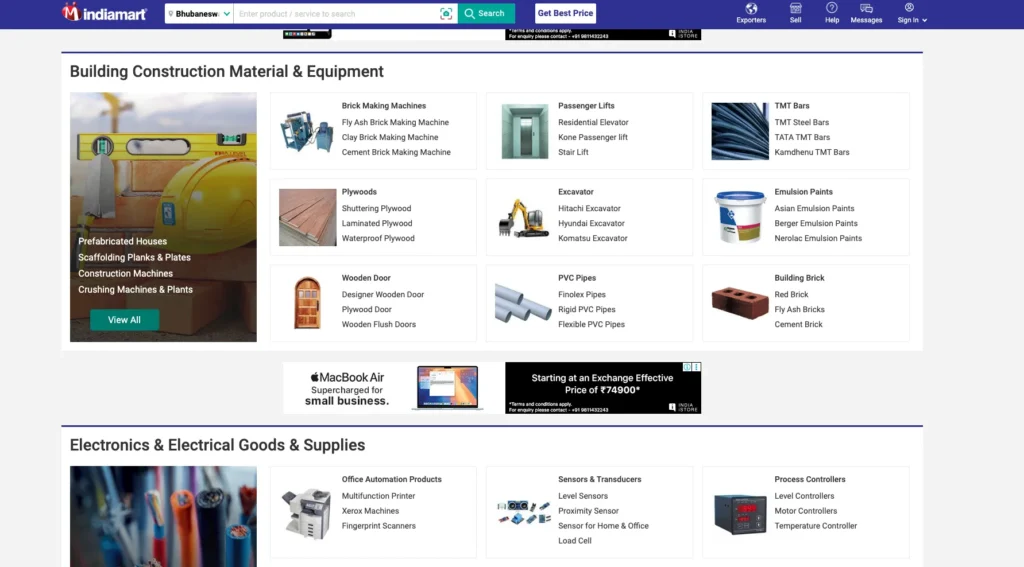
IndiaMART is India’s largest B2B marketplace. It has significant international traffic and generates export inquiries across most product categories. A free listing is possible, but paid plans give substantially higher visibility and inquiry volume.
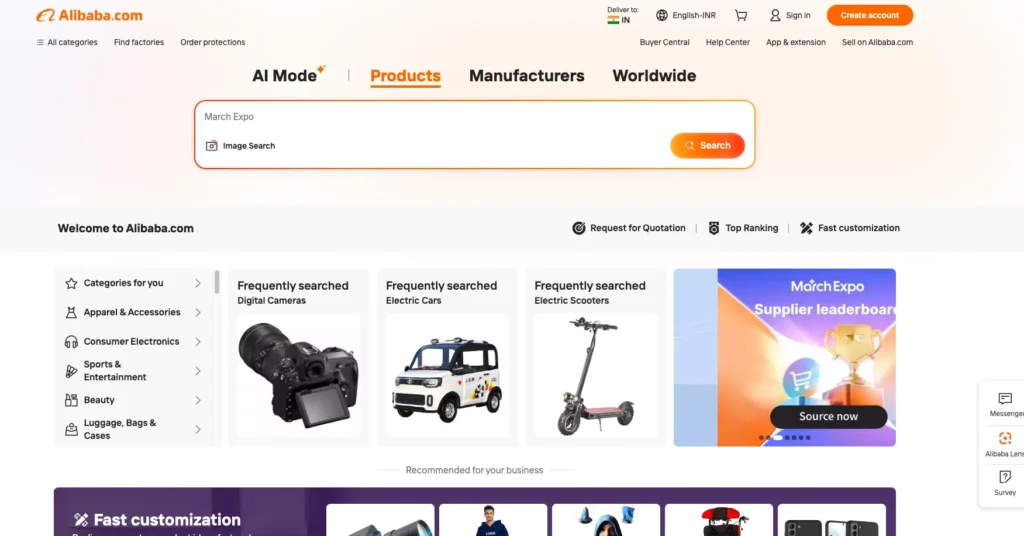
Alibaba is the largest global B2B platform — used by importers in nearly every country. For manufactured goods, processed food, textiles, handicrafts, and engineering products, Alibaba has genuine international buyer traffic. Gold Supplier membership improves visibility and credibility on the platform, but it comes with a cost. Expect the process of building credibility and receiving serious inquiries to take a few months.
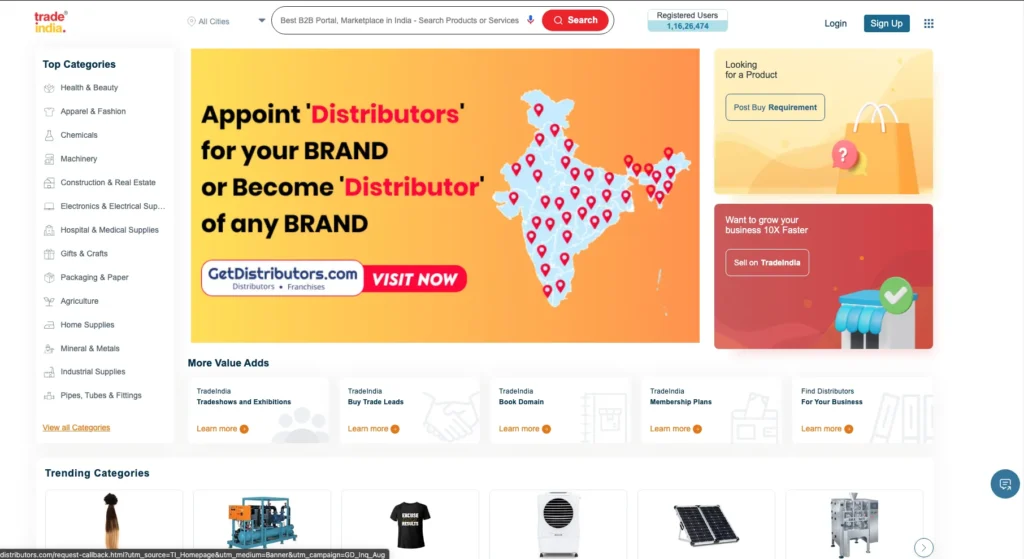
TradeIndia is another Indian B2B platform with international reach. Worth listing on alongside IndiaMART for broader coverage.
Global Sources has stronger traction in electronics, consumer goods, and lifestyle products — particularly for buyers in North America and Europe.
ExportersIndia.com is useful for specific product categories and generates decent inquiry volume in some niches.
The honest reality across all these platforms: free listings generate few serious inquiries. Paid plans improve results — but they require upfront investment before you have your first order. Think of platform listings as a foundation, not an immediate source of buyers.
You can read our detailed guide on: “Alibaba for Indian Exporters: Complete Beginner Setup Guide”
Method 2: Government Trade Portals and Databases
This method is overlooked by most beginners — which means less competition for the buyers listed there.
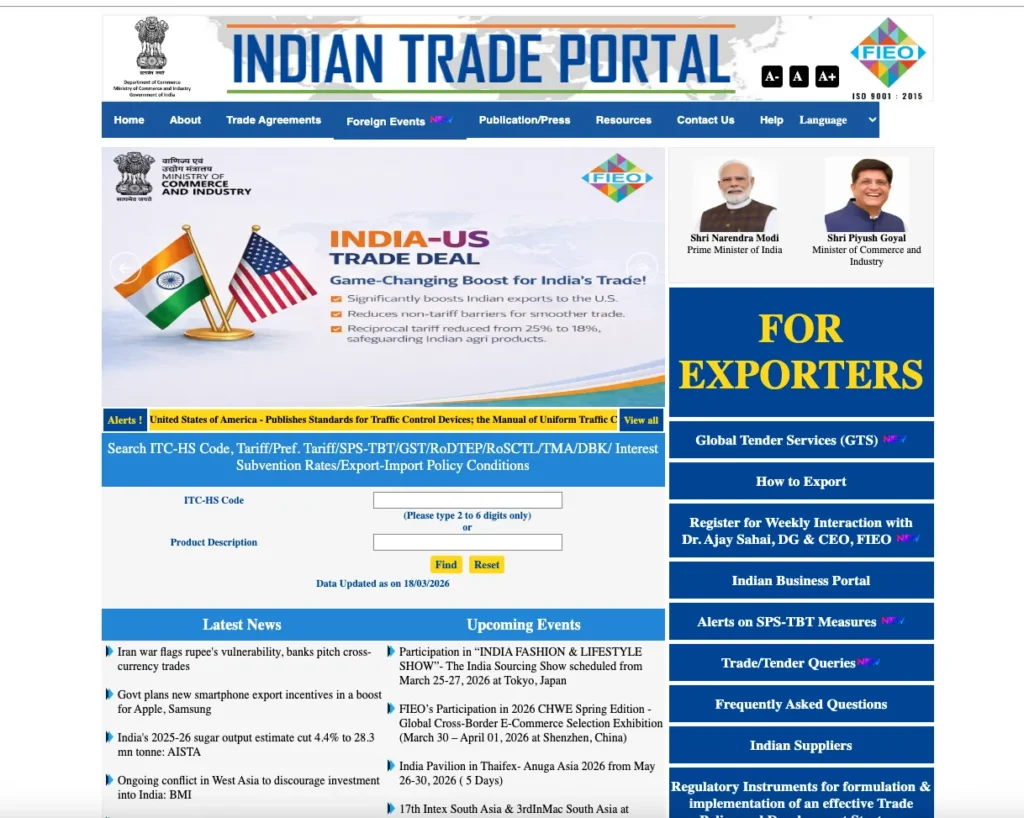
Indian Trade Portal — indiantradportal.in — is a government-run portal that publishes trade leads, buyer inquiries, and market access information for Indian exporters. It is free to use and regularly updated with genuine buyer requirements.
ITC Trade Map — trademap.org — is one of the most useful free tools available to any exporter. Enter your HS Code and the tool shows you which countries imported the highest volume of your product in the last three years — by value, by growth rate, and by source country. This tells you exactly where global demand for your product exists before you spend time approaching buyers there.
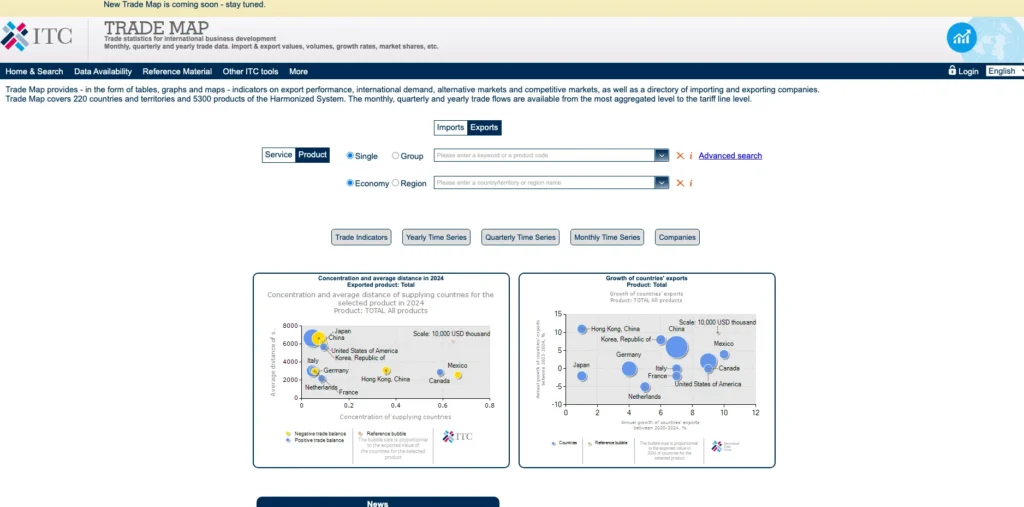
Ministry of Commerce trade data and DGFT trade reports provide market-level intelligence — useful for understanding seasonal demand, emerging markets, and trade agreement benefits that could make your product more competitive in specific countries.
Practical approach: before reaching out to any buyer, use ITC Trade Map to identify your top five target countries by import volume for your product. Then focus all your outreach on buyers in those countries first. This is how you stop guessing and start targeting.
Method 3: Export Promotion Councils
This is the most underused buyer-finding resource available to Indian exporters — especially for beginners.
Every product sector in India has a dedicated Export Promotion Council. These EPCs maintain genuine buyer databases, send trade leads to registered members, facilitate introductions with international importers, and represent Indian exporters at global trade fairs.
The councils most relevant to common export categories: APEDA for agricultural and processed food products, EPCH for handicrafts, AEPC for apparel and garments, EEPC for engineering goods, Spices Board for spices, and Pharmexcil for pharmaceuticals and herbal products.
To access these resources, you need RCMC — Registration cum Membership Certificate — with the council relevant to your product. The membership cost is relatively low. The buyer access you get in return is genuine and comes from an organisation that has been building those relationships for decades.
The trade leads that EPCs send to members are not public — they go to registered members only. That alone makes RCMC registration worth pursuing early in your export journey.
You can read our detailed guide on: “RCMC Registration: Which Export Council to Join and Why”
Method 4: Trade Fairs and Exhibitions
Trade fairs require the most preparation and cost — but they build buyer trust faster than any online method.
Meeting a buyer face to face, showing them your physical product, and having a real conversation collapses the trust barrier that takes months to build through email and platform messaging.
Key Indian trade fairs with significant international buyer attendance include the India International Trade Fair (IITF) in Delhi, the India Expo Centre fairs in Greater Noida, and sector-specific fairs like Agrotech, Texworld India, and Stationery World.
International trade fairs where Indian exporters regularly meet global buyers include Canton Fair in China, Ambiente in Germany for home and lifestyle products, Gulfood in Dubai for food products, and MAGIC in Las Vegas for apparel.

The government’s Market Access Initiative (MAI) scheme partially subsidises international trade fair participation costs for eligible Indian exporters — worth checking before booking your first international exhibition.
Honest note: showing up at a trade fair without preparation wastes the opportunity. You need product samples, a professional catalogue, clear pricing, and a follow-up plan ready before you walk in.
You can read our detailed guide on: “Trade Fairs for Indian Exporters: Which to Attend and How to Prepare”
Method 5: Cold Email Outreach
This is one of the most direct and underrated methods — and the one that gives you the most control over who you approach.
Finding the right companies is the first step. Import data tools — Volza, Zauba, ImportGenius — show you which companies in specific countries are already importing your product category, how frequently, and in what volumes. These are your warmest potential buyers — they are already in the market for what you sell.
Writing the email is where most beginners go wrong. Keep it short — three to four paragraphs maximum. Introduce yourself and your product clearly. Mention one specific reason your product might be relevant to them. Attach a clean product catalogue. End with a simple call to action — asking if they would like a sample or specification sheet.
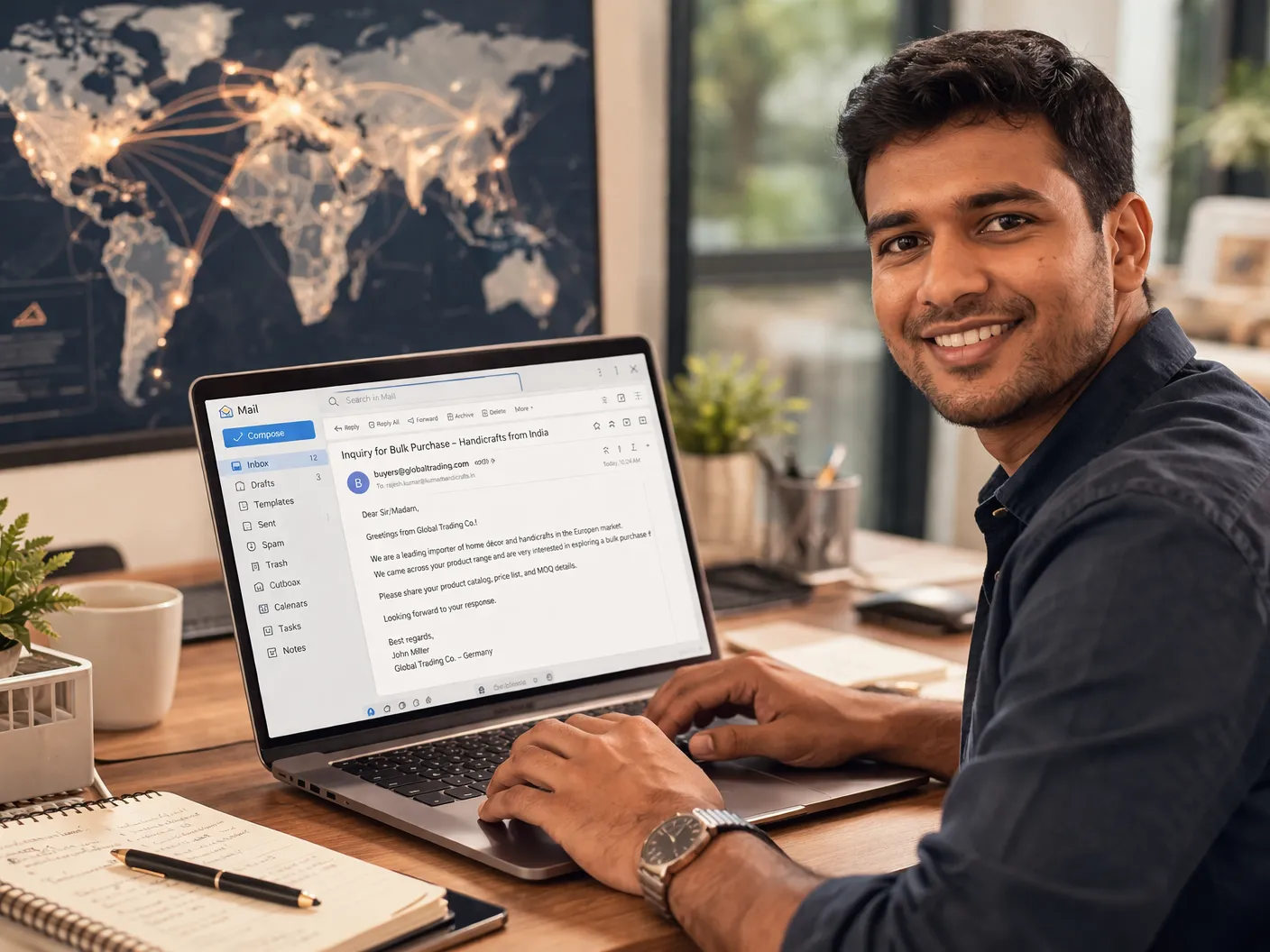
Follow up. Most responses to cold email come after the second or third message, not the first. Send one follow-up after seven days and another after two weeks if there is no response.
Response rates are low — typically five to fifteen percent at best. But buyers who respond are genuinely interested, which makes the conversion rate on those responses much higher than platform inquiries.
You can read our detailed guide on: “How to Write a Cold Email to a Foreign Buyer (With Template)”
Method 6: LinkedIn and Social Media
LinkedIn has become a serious B2B buyer discovery channel — particularly for exporters of industrial goods, engineering components, food products, and professional services.
Search for importers, wholesale buyers, purchasing managers, and trading companies in your target country. Connect with a short, professional message — not a product pitch immediately. Once connected, engage with their content and share your own. A buyer who has seen your posts and profile for two or three months is far more likely to respond positively to a product message.
Posting regularly on LinkedIn — about your product, your export process, market insights, and product quality — builds credibility that works in the background while you pursue other methods.
Instagram and YouTube work particularly well for lifestyle product categories — handmade goods, home décor, organic products, fashion accessories. Buyers and sourcing agents actively browse these platforms for new suppliers.
Honest note: social media is a slow channel. Build it consistently alongside faster methods — not instead of them.
Method 7: Indian Embassy Commercial Wings — A Free Resource Most Exporters Never Use
This method is almost entirely unknown among small and first-time exporters — and it is completely free.
Every Indian embassy abroad has a Commercial Wing staffed by Commercial Attachés whose specific job is to help Indian exporters connect with buyers in that country. You can contact the Commercial Attaché at the Indian embassy in any of your target countries, provide your product details and company profile, and ask them to share it with relevant local importers.
This is not a guarantee of immediate buyer contacts — but it is a legitimate channel that operates through trusted government networks in the destination country. For buyers who are cautious about finding new Indian suppliers, an introduction through the embassy commercial wing carries credibility that a cold email simply does not.
How to use it:
- Identify the Indian embassy in your target country at mea.gov.in
- Find the Commercial Wing contact — usually listed separately on the embassy page
- Send a short introduction email with your company profile, product details, and target buyer profile
- Ask if they can share your details with importers or connect you with relevant trade bodies in that country
Conversely, many foreign country embassies in India maintain trade desks that connect their country’s importers with Indian suppliers. Contact the commercial or trade section of the embassy of your target country in New Delhi or Mumbai and ask whether they facilitate such introductions.
Both services are free. Both are almost entirely unused by small exporters. Both are worth trying — especially for target countries where other methods have not yet produced results.
📋 Buyer-Ready Checklist — Download as PDF Before you approach a single buyer, make sure everything on this list is ready. Exporters who approach buyers unprepared lose opportunities that won’t come back.
Free Buyer-Ready Checklist
What to Have Ready Before You Start Looking for Buyers
Approaching buyers without these things in place wastes real opportunities. A buyer who is interested in your product will want answers immediately — if you cannot provide them, they move to the next supplier.
- Clear product specification sheet — what it is, grades, variants, minimum order quantity
- Pricing in foreign currency — FOB or CIF from your nearest port
- Professional product catalogue — even a clean, well-designed PDF works
- Product samples ready to dispatch on short notice
- One-page company profile — your background, production capacity, certifications
- Business email with your own domain — not a Gmail address for professional outreach
- IEC Code and basic export registrations completed
You can read our detailed guide on: “How to Get Your First Export Order: A Realistic Guide”
How Long Does It Take to Get Your First Export Order?
This is the question every new exporter asks — and the honest answer is that there is no fixed timeline.
The range that reflects most exporters’ real experience: first serious inquiry within two to four months of starting active outreach, and first confirmed order within four to six months from when you began consistently applying multiple methods.
That range assumes you are actively using at least two or three methods simultaneously — platform listings, cold outreach, and EPC trade leads, for example — and following up on every inquiry you receive.
What stretches the timeline: waiting passively for inquiries on a free platform listing, not following up after the first message, approaching buyers without a catalogue or pricing ready, and targeting markets where your product has low demand.
What compresses it: using import data to target buyers already purchasing your product category, having professional presentation materials ready from day one, following up consistently, and attending at least one trade fair or exhibition in your first year.
Consistency matters more than which specific method you choose. The exporters who find buyers fastest are not the ones who tried the most platforms — they are the ones who followed up every single time, stayed visible, and kept improving their pitch after every rejection.
Conclusion
Finding foreign buyers is not a one-time task — it is an ongoing process that runs parallel to everything else in your export business.
Start with what is most accessible for your situation — a platform listing, an ITC Trade Map analysis, or RCMC registration with your relevant EPC. Add a second method once the first is running. Build your online presence steadily in the background. Contact your target country’s Indian embassy commercial wing — it costs nothing and most of your competitors have never done it.
Have your product catalogue, pricing, and samples ready before you start. A buyer who is interested will not wait two weeks for you to prepare a specification sheet.
Be patient. The first order takes longer than expected for almost every exporter. What matters is that you stay active, follow up consistently, and treat every inquiry — even the ones that don’t convert — as a step closer to the one that does.
Key Takeaways
- Finding foreign buyers takes consistent effort over time — most exporters using active methods get their first serious inquiry within two to four months and their first order within four to six months.
- B2B platforms like IndiaMART and Alibaba are the most accessible starting point but free listings produce limited results — paid plans deliver meaningfully more inquiry volume.
- Export Promotion Councils maintain genuine buyer databases accessible through RCMC membership — one of the most underused buyer-finding resources available to Indian exporters.
- Cold email outreach using import data tools like Volza or Zauba targets buyers already importing your product category — higher quality leads than most platform inquiries.
- Indian embassy commercial wings abroad offer free buyer connection services that almost no small exporter uses — contact the Commercial Attaché in your target country before spending money on paid platforms.
Frequently Asked Questions
Q1: Which is the best platform to find foreign buyers for Indian exporters?
There is no single best platform — the right one depends on your product category.
For most manufactured goods, processed food, and general merchandise, Alibaba has the largest global buyer reach. For buyers within India and South Asia, IndiaMART generates strong inquiry volume. For electronics and consumer goods targeting North America and Europe, Global Sources has better traction.
The practical approach is to list on two platforms simultaneously — Alibaba and IndiaMART for most exporters — and test which generates better inquiry quality for your specific product over three months. No platform replaces good product presentation, professional communication, and consistent follow-up.
Q2: Can I find buyers without paying for any platform or subscription?
Yes — several methods cost nothing.
The Indian Trade Portal, ITC Trade Map, and government trade databases are completely free. RCMC membership with your Export Promotion Council has a modest one-time cost but gives access to buyer databases and trade leads that would otherwise be inaccessible. Cold email outreach costs nothing beyond your time. Indian embassy commercial wings are free to contact. LinkedIn outreach is free at the basic level.
The honest caveat: free methods generally require more time and active effort than paid ones. Starting with free methods while you validate your product and pricing is sensible — invest in paid platforms once you have confirmed buyer interest and are ready to handle inquiries at volume.
Q3: How do I verify if a foreign buyer inquiry is genuine or a scam?
Scam inquiries are common on B2B platforms — knowing the red flags saves you from wasting time and losing money.
Signs an inquiry is likely genuine: the buyer has a verifiable company with a real website and registered address, they ask specific questions about product specifications, MOQ, and lead times, they request samples before placing an order, and communication is professional and consistent over multiple exchanges.
Red flags to watch for: the buyer offers to pay significantly above your asking price, they ask you to overpay a shipping agent and keep the difference, they push to move communication off the platform immediately, they cannot provide a verifiable company name or address, and the inquiry comes from a free Gmail or Yahoo account with no company domain.
Before proceeding with any new buyer, do basic due diligence: search the company name online, verify their website is active, check that their email domain matches their company name, and search for the company in trade forums or on LinkedIn. For larger orders, use payment terms that protect you — advance payment or LC — before committing to production.