
When I first needed to find the HS Code for my product, I opened the customs tariff list and immediately closed it. It was 100 pages long and organised in a way that made no sense to me at the time.
Nobody had explained what the number actually meant or how the system worked. Every export article just said “mention your HS Code on the invoice” — without telling you how to find it.
This article covers exactly that. What HS Code is, why it matters, how the classification system works, and the right way to find your code using free official tools — without going through 100 pages of tariff schedules.
What is an HS Code?
HS Code stands for Harmonised System Code — an internationally standardised system for classifying every product that is traded across borders.
It was developed by the World Customs Organisation (WCO) and is used by more than 200 countries. When a product moves from one country to another, both sides use the HS Code to identify what it is, what duties apply, and whether any trade restrictions exist.
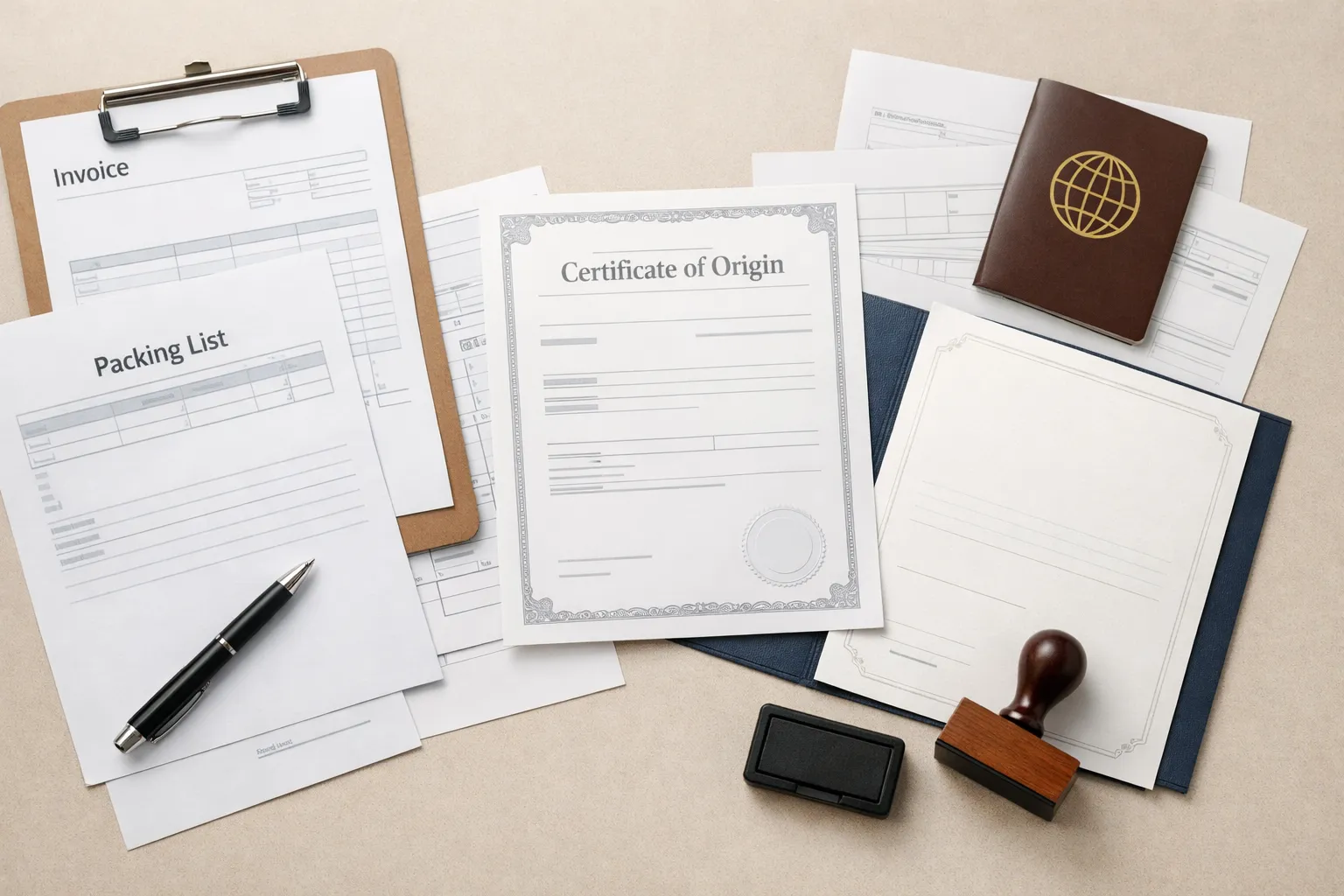
In India, the system is called the ITC-HS Code — Indian Trade Classification based on the Harmonised System. Every product exported from India is assigned an ITC-HS Code, and this code appears on your commercial invoice, packing list, Shipping Bill, and Certificate of Origin.
The HS Code is not just a label. It determines your applicable export incentives, the import duty your buyer pays at their end, and whether your product requires any special licence or permit to export.
HS Code vs HTS Code — What is the Difference?
This is one of the most commonly searched questions among new exporters — and the confusion is understandable because both terms appear frequently in export-related content.
HS Code is the international standard — a 6-digit code developed by the World Customs Organisation and used as the common base across all 200+ member countries. Every country’s classification system starts from this 6-digit foundation.
HTS Code — Harmonised Tariff Schedule — is the United States-specific extension of the HS Code. It is 10 digits long. The first 6 digits are the same as the international HS Code. The additional 4 digits are US-specific extensions used by American customs for more granular classification and duty calculation.
In India, the ITC-HS Code is 8 digits. The first 6 digits align with the international HS Code. The last 2 digits are India-specific further classification.
As an Indian exporter, you use the 8-digit ITC-HS Code on all your export documents. If you are exporting to the USA, your buyer will use the 10-digit HTS Code on their end for import clearance — that is their responsibility, not yours. The first 6 digits of both codes will be the same.
How Does the HS Code System Work?
The HS Code is not a random number — it is a structured hierarchy. Once you understand the structure, navigating it becomes much easier.
Each code is built in layers, from broad to specific:
- First 2 digits — Chapter: the broad product category
- Next 2 digits — Heading: more specific classification within the chapter
- Next 2 digits — Subheading: even more specific
- Last 2 digits — India-specific further classification
A concrete example makes this clear. Take Basmati Rice:
- 10 — Chapter 10: Cereals
- 1006 — Heading: Rice
- 100620 — Subheading: Husked rice
- 10062010 — ITC-HS Code: Basmati rice (India-specific)
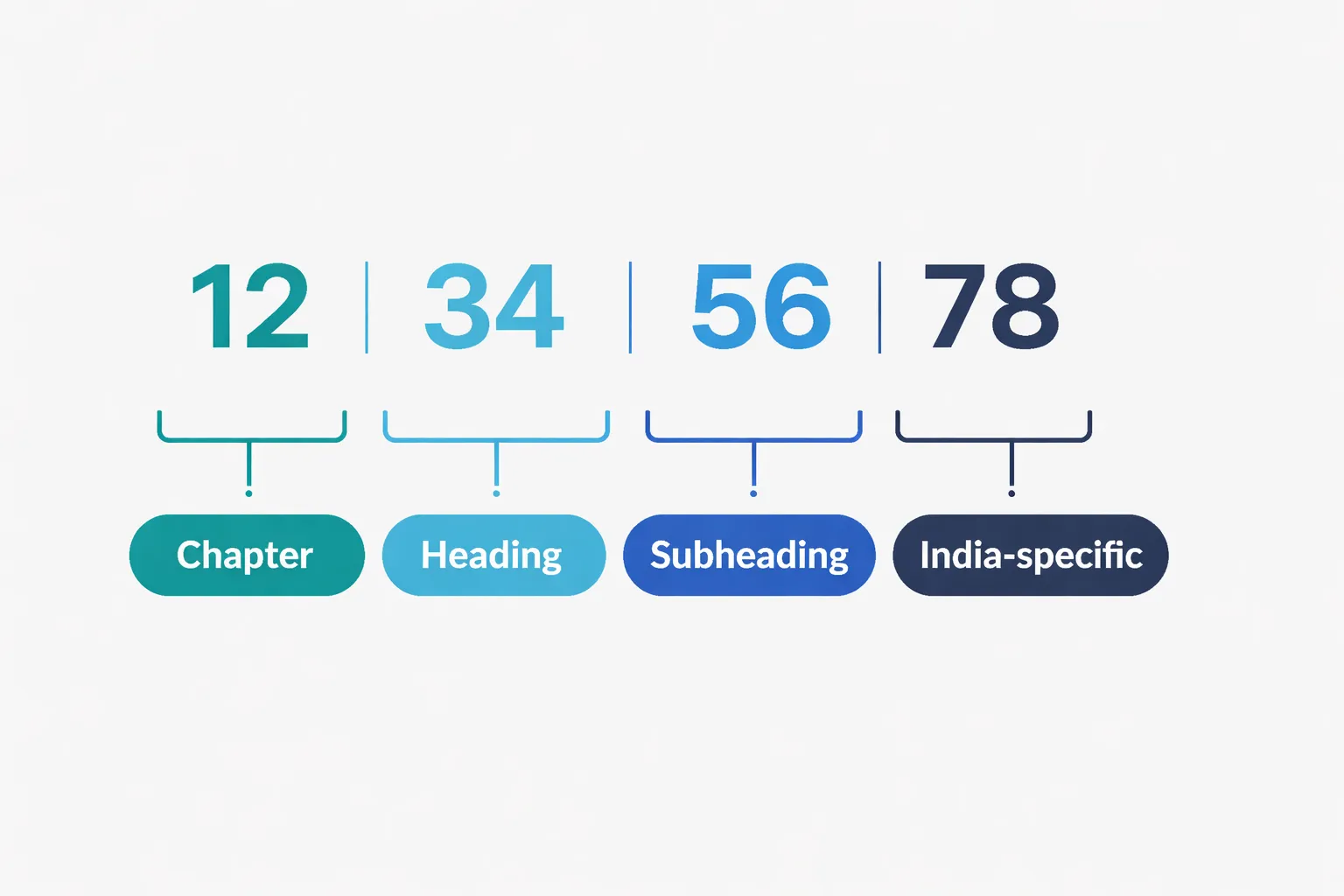
Every product follows this same logic. You start at the chapter level — the broad category your product belongs to — and work inward toward the specific code that matches your exact product.
Once you understand the hierarchy, you are no longer looking at a random 8-digit number. You are reading a structured description of exactly what your product is.
Why Does the Correct HS Code Matter?
Using the wrong HS Code is not a minor documentation error. It has real financial and compliance consequences at multiple points in the export process.
Wrong duty calculation at destination. Your buyer’s import duty is calculated based on the HS Code declared on your documents. An incorrect code means they pay the wrong duty — either more than they should, or less, which can trigger penalties during their customs assessment.
Customs hold or rejection. If the declared HS Code does not match the actual product — either at the Indian port during export or at the destination country during import — customs can hold the shipment for examination or reject the documentation entirely.
Missed export incentives. RoDTEP rates and Duty Drawback rates are published HS Code wise. Filing with the wrong code means you either miss the incentive entirely or claim at the wrong rate — both of which create compliance issues when audited.
GST refund delays. Your GST refund claim is linked to the HS Code on your Shipping Bill. A mismatch between the code used in your invoice and the code in your GST filing causes the refund to fail at the matching stage.
HS Code Examples for Common Indian Export Products
These are starting points to help you understand which chapter your product falls under. Always verify the exact 8-digit ITC-HS Code on the DGFT portal before using it on any document.
Garments and Apparel
HS code for clothing, t-shirts, shirts, and jackets broadly falls under Chapters 61 and 62. Chapter 61 covers knitted or crocheted garments. Chapter 62 covers woven garments. The distinction between the two depends on how the fabric is constructed — not what the finished garment looks like. A knitted t-shirt and a woven shirt look similar on a hanger but fall under different chapters.
Footwear
Footwear hs code and shoes hs code fall under Chapter 64. The specific subheading depends on the outer sole material and the upper material — leather upper, rubber sole, textile upper, and so on. Each combination has its own subheading, so verify at the material level rather than just product level.
Jewellery
Jewellery hs code falls under Chapter 71, which covers natural and cultured pearls, precious stones, precious metals, and articles thereof. Imitation jewellery hs code falls under a separate subheading within the same chapter — fine jewellery and fashion jewellery are classified differently even though both are “jewellery.”
Electronics and Laptops
Laptop hs code and general electronics hs code fall across Chapters 84 and 85. Laptops, computers, and automatic data processing machines are typically Chapter 84. Consumer electronics, electrical apparatus, and components fall under Chapter 85. If you export both finished electronics and components, verify each category separately.
Printed Circuit Boards
PCB hs code and printed circuit board hs code fall under Chapter 85, specifically under electronic integrated circuits and electronic components. The exact subheading depends on whether the PCB is bare (unpopulated), assembled (populated), or integrated into a finished product assembly.
Automobile and Auto Parts
Auto parts hs code falls under Chapter 87, which covers vehicles and their parts and accessories. The specific heading depends on what you are exporting — complete vehicles, engines, body parts, braking systems, electrical components, or general mechanical parts each have different classifications within the chapter.
Toys
Toys hs code falls under Chapter 95, which covers toys, games, and sports equipment. Within Chapter 95, classification depends on the type of toy — electronic, mechanical, stuffed, wheeled — so read the subheading descriptions carefully before confirming your code.
Plastic and Polythene Bags
HS code for polythene bags and hs code of plastic bags fall under Chapter 39, which covers plastics and plastic articles. The specific subheading depends on the type of plastic used, the thickness, and the intended use — retail packaging bags, industrial bags, and waste disposal bags can fall under different subheadings.
These are starting points — always verify the exact 8-digit ITC-HS Code on the DGFT portal before using it on your documents.
Where to Find Your HS Code — 3 Reliable Methods
Method 1 — DGFT Website
The most direct and official source for Indian exporters. Go to dgft.gov.in and use the ITC-HS Code search tool. Type your product name using simple keywords and the system returns matching codes with descriptions.
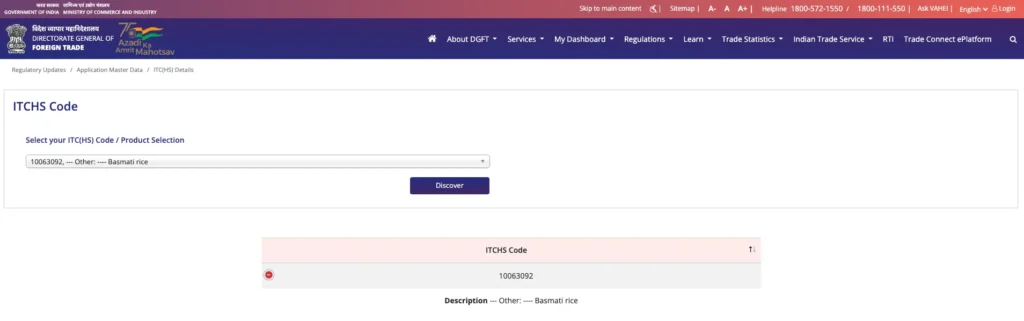
This is free, always current, and directly relevant to Indian export documentation. For confirming the exact 8-digit ITC-HS Code that belongs on your Shipping Bill, DGFT is the primary reference.
Method 2 — CBIC Customs Tariff
Go to cbic.gov.in and access the Customs Tariff section. You can browse by chapter or search by product. The key advantage here is that the CBIC tariff shows duty rates alongside the codes — so you can see not just the classification but the applicable import duty and any exemptions or conditions.
This is particularly useful for checking the hs tariff code against duty schedules — confirming what duty your buyer will pay and whether any export restrictions apply to your product.
Method 3 — Export Promotion Councils
Sector-specific Export Promotion Councils publish HS Code lists and guidance for their product categories. APEDA covers agricultural and processed food products. The Spices Board covers spices. EEPC covers engineering goods. EPCH covers handicrafts.
These sector-specific guides are particularly useful for products where classification can be complex — where a single product might plausibly fall under two or three different headings depending on how it is processed or presented.
Practical tip: if you have gone through all three methods and are still unsure — ask your CHA. They classify products daily across dozens of shipments and can confirm your code quickly.
Step-by-Step: How to Search Your HS Code on DGFT
- Go to dgft.gov.in
- Click on Services → ITC HS Code in the top navigation
- Type your product name using simple, basic keywords — “shirt,” “turmeric,” “auto parts”
- Review the list of matching codes returned by the search
- Click on the most relevant result to view the full product description
- Read the complete description carefully — confirm it matches your exact product including any exclusions
- Note the 8-digit code and use it consistently across all your export documents
Practical tip: search using the simplest possible keyword. The system works better with basic words than with detailed product descriptions. Search “shirt” — not “premium cotton formal shirt for men with full sleeves.” Once you find the relevant chapter, you can drill down from there.
How to Confirm You Have the Right HS Code
Finding a code that looks right is not the same as confirming it is right. This verification step is commonly skipped — and skipping it is where errors originate.
Read the full description of the code — not just the heading. Many headings sound like they match a product but the detailed description specifically excludes it. The exclusions matter as much as the inclusions.
Check for specific exclusions. Some HS Code entries include notes that explicitly exclude certain product types. These notes appear at the chapter and heading level in the tariff schedule.
Cross-check with your buyer. Ask your buyer what HTS Code they use for the same product when importing into their country. The first 6 digits should match your ITC-HS Code. If they don’t, someone has the wrong classification — and it is worth resolving before the shipment.
Check for export restrictions or licensing requirements linked to your code on the DGFT portal. Some codes require an export licence, are subject to export quotas, or are restricted entirely.
If in doubt — get written confirmation from your CHA before filing the Shipping Bill. A CHA’s written confirmation gives you a defensible position if the classification is ever questioned by customs.
Where to Use the HS Code in Export Documents
Once you have confirmed your ITC-HS Code, it needs to appear on every major export document:
- Commercial Invoice — mention it next to your product description
- Packing List — include it for each product line
- Shipping Bill — mandatory field on ICEGATE, directly linked to duty and incentive calculations
- Certificate of Origin — required for preferential trade agreement benefits
- Proforma Invoice — good practice to include from the very first quote to your buyer
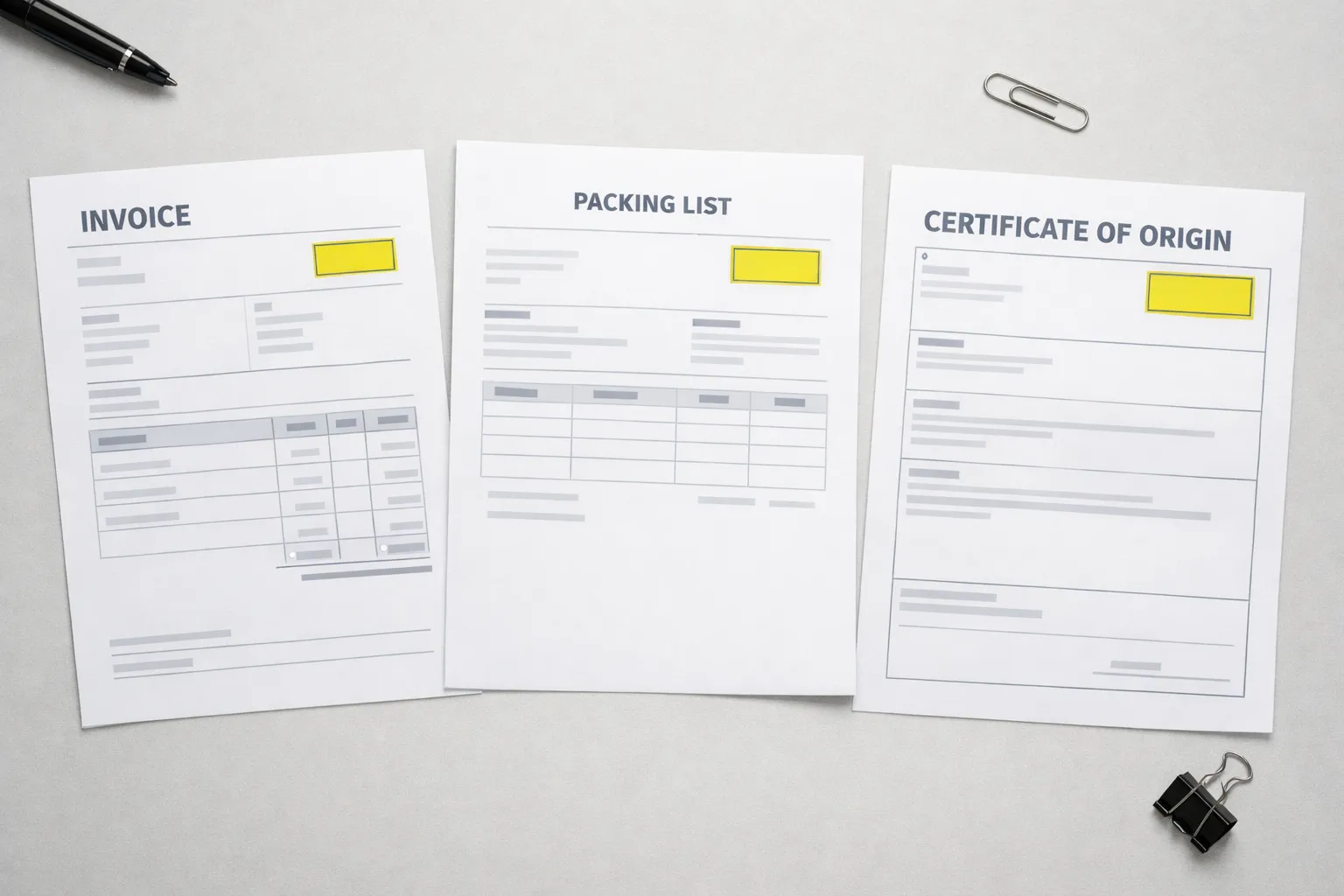
Consistency matters. The same 8-digit code must appear on all documents. A different code on the invoice versus the Shipping Bill creates a mismatch that customs will flag.
You can read our detailed guide on: “Complete List of Export Documents (With Simple Explanations)”
Common HS Code Mistakes Exporters Make
Using a 6-digit international code instead of the 8-digit ITC-HS Code. Indian export documents require 8 digits. A 6-digit code is incomplete and will cause errors during Shipping Bill filing on ICEGATE.
Picking a code based on the heading alone without reading the full description. The heading is a summary. The full description — including notes and exclusions — determines whether a product genuinely falls under that code.
Using the same HS Code for different product variants. A plain cotton t-shirt and a printed cotton t-shirt may fall under different subheadings. A raw spice and a processed spice may have different codes. Verify each variant separately.
Not checking for export restrictions linked to the code. Some codes have export licensing requirements or are subject to restrictions under the Foreign Trade Policy. Check before your first shipment.
Not updating the HS Code when product specification changes. If you change your product’s composition, processing method, or packaging format, the HS Code may change. Verify it again when your product changes.
You can read our detailed guide on: “How to Fill a Shipping Bill in India (ICEGATE Guide)”
HS Code and Export Incentives — The Connection
This is a section most beginner guides skip entirely — and it is financially important.
RoDTEP rates — the Remission of Duties and Taxes on Exported Products scheme — are published product by product, based on HS Code. The incentive amount you are eligible for is determined by your specific 8-digit code. File with the wrong code and you either claim the wrong rate or miss the benefit entirely.
Duty Drawback rates are also published HS Code wise. The drawback you receive on customs duty paid on imported inputs is calculated against your specific product code.
Both of these incentives can represent meaningful amounts of money — particularly at scale. Filing with the correct HS Code from the beginning ensures you are capturing the full benefit you are entitled to.
You can read our detailed guide on: “Duty Drawback in India: How Exporters Get Their Taxes Back”
Conclusion
The HS Code system felt impenetrable to me when I first encountered it. Once I understood that it was simply a structured hierarchy — chapter to heading to subheading to India-specific code — it became a lookup process rather than a guessing game.
Find your chapter first. Drill down from there. Verify the full description. Cross-check with your buyer. Confirm with your CHA if needed.
The 8-digit ITC-HS Code you land on is then used consistently across every document, every shipment, every incentive claim. Getting it right once means getting it right every time.
Key Takeaways
- HS Code is an internationally standardised number that classifies your product for customs — in India the correct version to use is the 8-digit ITC-HS Code available on the DGFT portal.
- HS Code and HTS Code are different — HTS is the 10-digit US-specific extension; Indian exporters use ITC-HS Code, not HTS Code, on their documents.
- The correct HS Code affects export duty, import duty at the destination, incentive eligibility under RoDTEP and Duty Drawback, and customs clearance at both ends.
- Always read the full description of a code — not just the heading — before using it, and check for any exclusions or export restrictions attached to it.
- Your ITC-HS Code must appear consistently on your commercial invoice, packing list, Shipping Bill, and Certificate of Origin.
Frequently Asked Questions
Q1: What is the difference between HS Code and HTS Code for Indian exporters?
For Indian exporters, the practical difference is straightforward. You use the 8-digit ITC-HS Code on all your Indian export documents — commercial invoice, Shipping Bill, packing list, and Certificate of Origin. This code is based on the international 6-digit HS Code with 2 India-specific digits added.
Your buyer in the United States uses the 10-digit HTS Code — Harmonised Tariff Schedule — for their import clearance. The first 6 digits of their HTS Code will match the first 6 digits of your ITC-HS Code. The extra 4 digits are US-specific and are the buyer’s responsibility.
For exports to countries other than the USA, the same principle applies — their local extension of the HS Code is their customs responsibility. Your job is to get the 8-digit ITC-HS Code right on your end.
Q2: What happens if I use the wrong HS Code on my Shipping Bill?
If discovered before the shipment departs — your CHA can file an amendment on ICEGATE to correct the code. This is the easiest outcome and causes minimal delay.
If discovered after departure — correcting the Shipping Bill becomes more complicated. An amendment needs to be filed with customs with supporting documentation explaining the error. Depending on the duty implications, this can involve extended back-and-forth with customs authorities.
Beyond the documentation hassle, a wrong HS Code means your incentive claims — RoDTEP, Duty Drawback — are filed against the wrong code. Claims filed against an incorrect code can be rejected during audit or flagged for recovery. Verify your code before the Shipping Bill is filed, not after.
Q3: Is the HS Code the same for all countries or does it change by destination?
The first 6 digits of the HS Code are internationally standardised and are the same across all 200+ countries that use the World Customs Organisation’s Harmonised System. So the base classification for your product is globally consistent.
However, individual countries add their own digits beyond the 6-digit base. India uses 8 digits. The USA uses 10 digits. The EU uses 8 digits. Other countries have their own extensions.
As an Indian exporter, you use the 8-digit ITC-HS Code on your documents. Your buyer uses their country’s extended version on their import documents. The first 6 digits will align — the country-specific extensions beyond that are each party’s own responsibility.
What can differ by destination is the duty rate applied to the same HS Code — different countries charge different import duties on the same product classification. That is relevant for your buyer’s import cost planning, though useful for you to understand when discussing landed costs during negotiation.
Q4: How do I find the HS Code for a product not listed on DGFT?
If your product doesn’t appear in a straightforward DGFT keyword search, the first step is to try different search terms. The DGFT database uses standardised trade terminology — your product may be listed under a different name than how you describe it internally. Try searching by material, function, or the broader category rather than the brand name or colloquial name.
If keyword searches return nothing useful, go to the CBIC customs tariff at cbic.gov.in and browse by chapter. Identify the chapter that most logically covers your product’s material or function — plastics in Chapter 39, textiles in Chapters 50 to 63, machinery in Chapters 84 and 85 — and read through the headings and subheadings manually. The full tariff descriptions are more detailed than the DGFT search results.
If you are still unable to determine the correct classification after both approaches, the most reliable solution is to ask your CHA for a written classification opinion. CHAs are trained in tariff classification and deal with complex or unusual products regularly. For a product with genuinely ambiguous classification — where it could plausibly fall under two or more codes — a CHA’s written opinion gives you a defensible basis for your filing.