

When I first heard the words LUT, zero rating, and IGST refund in the same sentence, I had no idea what any of it meant. GST for exports felt like a completely different subject from regular GST — and nobody was explaining it in a way that actually made sense.
The truth is, it’s not complicated once you understand three things in the right order: what zero-rated supply means, what LUT is and why you need it, and how the GST refund process works for exporters in India.
This article covers exactly those three things. Nothing more, nothing less.
How GST Works for Exports in India — Zero-Rated Supply Explained
The first thing to understand is that exports are treated differently from domestic sales under Indian GST law.
When you sell goods or services within India, GST applies at the standard rate — 5%, 12%, 18%, or 28% depending on the product. When you export the same goods or services, the GST treatment changes completely.
Exports are classified as zero-rated supply under GST. This means the effective GST rate on your export transaction is zero — you do not charge GST to your foreign buyer.
As an exporter, you have two options for how you handle this:
Option 1 — Export under LUT: You file a Letter of Undertaking on the GST portal and export without paying any IGST upfront. This is the cleaner, cash-flow-friendly route.
Option 2 — Export with payment of IGST: You pay IGST on your export transaction upfront and then claim a refund from the government after shipment.
Both are legal. But for most regular exporters, Option 1 is the smarter choice — and this article explains both so you can decide.
What is Zero-Rated Supply in GST? Why It Matters for Exporters
Zero-rated supply is a specific category under Indian GST law. It means the supply is taxable — but at a rate of 0%.
Both exports of goods and exports of services qualify as zero-rated supply under GST in India.
Here’s why this matters practically: even though you don’t charge GST on your export, you still paid GST on the raw materials, packaging, and inputs that went into making your product. Under zero-rated supply rules, you are entitled to claim back that GST — called Input Tax Credit or ITC.
This is different from GST-exempt supplies, where ITC cannot be claimed. For zero-rated supplies, the ITC is fully available to you.
In simple terms: you don’t collect GST from your foreign buyer, but you can still recover the GST you paid on your inputs. That’s the benefit the government builds in to keep Indian exports price-competitive internationally.
What is LUT in GST? Why Every Exporter in India Needs to File It
LUT stands for Letter of Undertaking.
LUT filing for export in India is a declaration you submit on the GST portal that says: “I am an exporter, and I undertake to follow all export-related GST compliance rules. Please allow me to export without paying IGST upfront.”
Once your LUT is filed and approved, you can export goods and services without paying IGST at the time of shipment. No upfront payment. No waiting for a refund. Your working capital stays with you.
Without LUT, here’s what happens: You export your goods, pay IGST on the transaction upfront from your own pocket, and then apply for a refund from the government after the shipment. That refund can take weeks. Meanwhile, your money is stuck — and if you’re doing multiple shipments, that locked-up capital adds up quickly.
With LUT, here’s what happens: You export, pay zero IGST at the time of shipment, and move on. Clean, simple, and cash-flow friendly.
Who can file LUT: Any GST-registered exporter can file LUT — provided they have no prosecution history for tax evasion above ₹2.5 crore. For a new exporter, this condition is almost never an issue.
When to file: LUT must be filed at the beginning of every financial year — ideally before April 1. It is valid for the entire financial year from April to March.
Cost: LUT filing is completely free. No government fee. No renewal charge.
How to File LUT on the GST Portal: Step-by-Step for Exporters
The process is straightforward and takes about 10 minutes.\
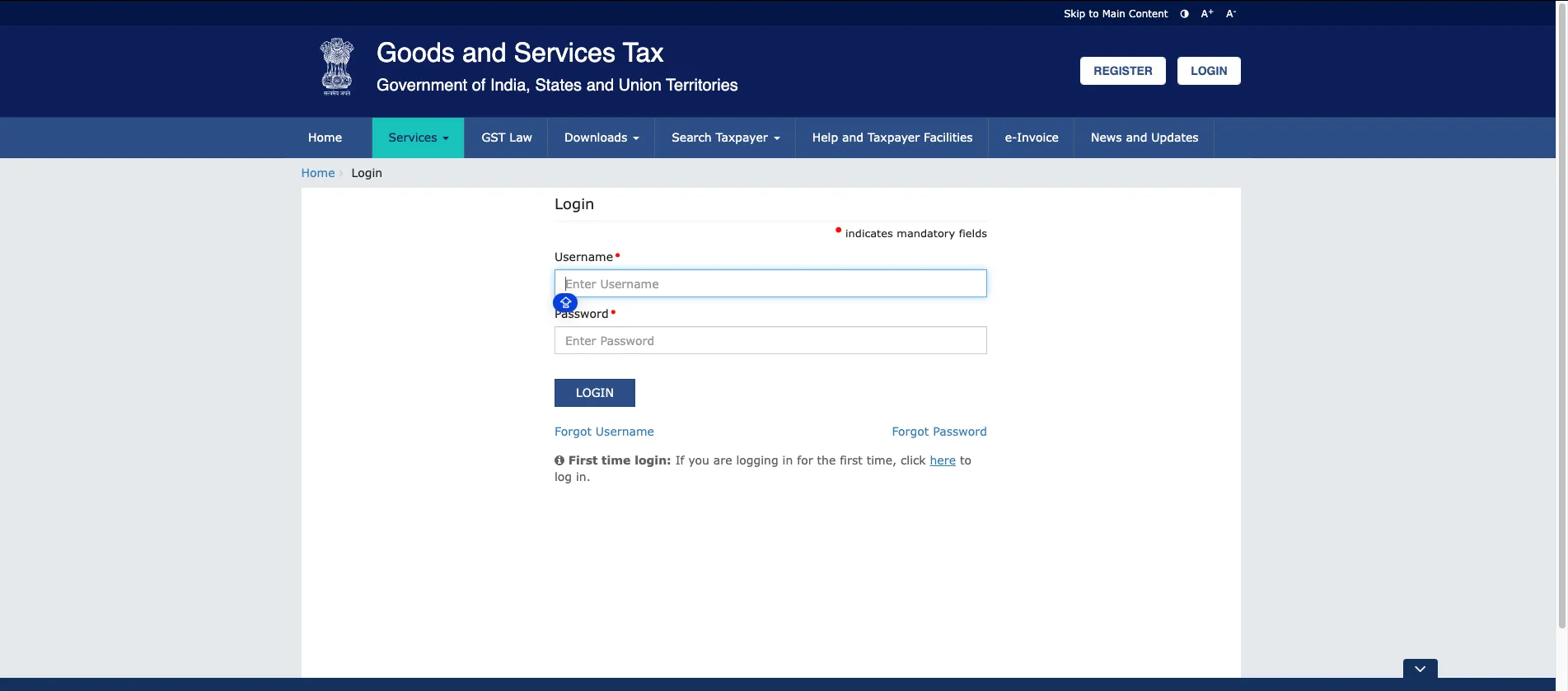
- Log in to the GST portal at gst.gov.in
- Go to Services → User Services → Furnish Letter of Undertaking (LUT)
- Select the current financial year from the dropdown
- Fill in the LUT application form — if you filed a LUT last year, enter the previous ARN (Application Reference Number) where asked
- Verify and submit using either DSC (Digital Signature Certificate) or EVC (Electronic Verification Code sent to your registered mobile)
- LUT is approved instantly in most cases — you’ll see the acknowledgement on screen
- Download and save your LUT acknowledgement — you’ll need the LUT reference number for your export invoices
Free, fast, and done directly on the government portal.
You can read our detailed guide on: “How to Get IEC Code in India: Step-by-Step Guide“
Exporting Without LUT — IGST Payment and Refund Process
If you missed the LUT filing window or chose not to file one, you can still export legally — but you’ll need to pay IGST upfront and claim a refund afterward.
Here’s how that works:
You pay IGST on your export invoice at the time of shipment. The IGST amount is reflected in your GSTR-1 return. After your shipment leaves India and the Shipping Bill is processed, the customs data is automatically shared with the GST system.
The GST system matches your Shipping Bill data with your GSTR-1 data. If everything matches correctly, the IGST refund for exporters in India is processed and credited directly to your bank account — typically within two to three weeks.
The downside: Your money is locked until the refund arrives. For small exporters with limited working capital, this can create genuine cash flow pressure — especially across multiple shipments.
The honest advice: File your LUT every year before April 1. It takes 10 minutes and costs nothing. There is almost no reason for a regular exporter to use the IGST payment route unless they have missed the LUT window and need to ship urgently.
How to Claim GST Refund on Input Tax Credit for Exporters in India
This is a separate refund from the IGST refund — and many exporters don’t realise it exists.
When you export under LUT, you pay zero IGST on the export itself. But you still paid GST on the raw materials, packaging, and other inputs that went into your export product. That paid GST accumulates as Input Tax Credit in India for exporters — sitting in your GST account unused.
Since you’re exporting under LUT and not charging GST to anyone, you cannot use that ITC against any outward tax liability. So it accumulates — and the government allows you to claim a refund of it.
The application is filed through Form RFD-01 on the GST portal. You’ll need supporting documents — shipping bills, GST returns, and purchase invoices showing the ITC you paid.
The process takes a few weeks and involves some document coordination — but the refund is real and worth claiming, especially if your input costs are significant.
Common GST Mistakes Exporters Make in India
These come up repeatedly — worth knowing before you run into them.
Forgetting to file LUT at the start of the financial year. This is the most common mistake among new exporters. If you export without a valid LUT, your export is treated as a taxable supply with IGST applicable — triggering the refund route whether you planned for it or not.
Mismatch between shipping bill data and GSTR-1 data. The GST refund system works by matching your export invoice details in GSTR-1 with the Shipping Bill data at customs. Even a small difference — in invoice number, amount, or GSTIN — can hold up your refund for weeks.
Not mentioning the LUT number on your export invoice. Your export invoice must reference your LUT acknowledgement number. Many first-time exporters miss this and face compliance questions later.
Claiming ITC refund without proper supporting documents. The RFD-01 refund application requires specific documents. Going in without complete paperwork leads to rejection and resubmission — adding weeks to the process.
Not reconciling GST returns with export data regularly. Errors caught early are easy to fix. Errors discovered six months later — when you’re trying to claim a large refund — are much harder to resolve.
GST Compliance Checklist for Exporters in India
Use this before every export shipment and at the start of every financial year:
- GST registration is active and details are current
- LUT filed for the current financial year before first shipment
- LUT acknowledgement number noted and available for invoices
- LUT reference number mentioned on all export invoices
- GSTR-1 filed with correct export invoice details — invoice number, value, and buyer details
- Shipping bill data verified to match GSTR-1 entries
- ITC refund application filed if accumulated ITC is significant

You can read our detailed guide on: “What is AD Code? How to Register It with Your Bank”
Where to Get Help With GST Compliance for Exports
GST compliance for exports can sometimes throw up specific situations that aren’t covered by general guides.
GST portal helpdesk — the gst.gov.in portal has a helpdesk and ticketing system for filing-related issues. Use it for portal errors or refund processing delays.
GST Seva Kendra — government-operated help centres where you can get in-person assistance with GST compliance questions.
Export Promotion Councils — many EPCs provide guidance on GST compliance specific to their product categories. If you’re a spice exporter, the Spices Board. If you’re in handicrafts, EPCH. These organisations have seen the common problems their members face and can guide you effectively.
A CA with export experience — for complex situations involving large ITC refunds, disputed assessments, or multi-year compliance gaps, a CA who specifically handles export clients is worth the cost. General CAs sometimes miss export-specific GST nuances.
You can read our detailed guide on: “Complete List of Export Documents (With Simple Explanations)”
Conclusion
GST for exports is not as complicated as it first appears. The core logic is simple: your exports are zero-rated, which means no GST on the transaction itself — and you can recover the GST you paid on inputs.
LUT is the tool that makes this practical. File it once a year, mention the number on your invoices, and export without any upfront GST payment.
The mistakes happen when exporters skip the LUT, ignore the data matching requirement, or don’t track their accumulated ITC. Stay on top of those three things and GST compliance for exports becomes a manageable part of your business — not a source of confusion.
Key Takeaways
- Exports are zero-rated under GST in India — the effective GST on your export transaction is zero, making Indian goods price-competitive internationally.
- LUT — Letter of Undertaking — allows you to export without paying IGST upfront. File it free on the GST portal before April 1 every financial year.
- Without LUT, you must pay IGST first and claim a refund later — which unnecessarily locks up your working capital during the refund period.
- You can also claim a refund of accumulated Input Tax Credit on inputs used for your exported goods — filed through Form RFD-01 on the GST portal.
- Always ensure your GSTR-1 invoice data matches your Shipping Bill data exactly — mismatches are the single biggest cause of GST refund delays for exporters.
Frequently Asked Questions
Q1: Is LUT filing mandatory for every exporter in India?
LUT is not technically mandatory — you can export without filing one by paying IGST upfront and claiming a refund. But for any exporter who ships regularly, filing LUT is strongly recommended and effectively the standard practice.
The reason is purely practical: paying IGST upfront ties up your working capital every time you ship, and you spend time and effort chasing refunds afterward. LUT eliminates both problems at zero cost. It takes 10 minutes to file once a year and makes a real difference to your cash flow across the year.
The only exporters who might reasonably skip LUT are those making very occasional, one-off shipments where the IGST amount is small. For anyone exporting consistently, LUT is the right move.
Q2: What happens if I forget to file LUT before exporting?
If you export without a valid LUT for the current financial year, your export is treated as a taxable supply with IGST applicable. You will need to pay IGST on that transaction and then apply for a refund through the GST portal after the shipment is complete.
This doesn’t mean your export is invalid — it just means you’ve taken the longer, more capital-intensive route. File your LUT as soon as you realise the oversight so future shipments in the same year are covered.
If you’re in the middle of preparing a shipment and realise your LUT hasn’t been filed yet — file it immediately. LUT approval is typically instant on the GST portal, so you may be able to get it done before the shipment documents are finalised.
Q3: How long does the GST refund take for exporters?
For IGST refunds — where your shipping bill data and GSTR-1 data match correctly — the refund is typically processed within two to three weeks. The system is largely automated, and when data matches cleanly, refunds move quickly.
For ITC refunds filed through RFD-01, the timeline is longer — typically four to eight weeks depending on the processing officer and whether additional documents are requested.
The most common reason refunds take longer than expected is a data mismatch between the Shipping Bill and GSTR-1. Verify your export invoice details in both systems before filing — it’s the single most effective way to avoid delays.
Q4: Can I claim Input Tax Credit if I export under LUT?
Yes — and this is one of the most underutilised benefits for exporters in India.
When you export under LUT, you pay zero IGST on the export transaction. But you still paid GST on the raw materials, packaging, and inputs used to produce or procure your export goods. That GST accumulates as Input Tax Credit in your GST account.
Since you’re not charging GST to your foreign buyer, you have no outward tax liability to offset this ITC against. So it sits unused — until you file a refund claim.
You can claim this accumulated ITC as a cash refund through Form RFD-01 on the GST portal. It requires supporting documents — shipping bills, purchase invoices, and GST returns — but the refund is real and worth claiming regularly.
Q5: What is the difference between IGST refund and ITC refund for exporters?
Both are GST refunds available to exporters — but they arise from different situations and are claimed through different processes.
IGST refund applies when you exported without filing LUT and paid IGST upfront on your export transaction. After the shipment, the GST system automatically matches your Shipping Bill with your GSTR-1 and processes the refund. No separate application is needed in most cases — the refund is triggered automatically when the data matches.
ITC refund applies when you exported under LUT and paid zero IGST on the export. You still paid GST on your inputs — raw materials, packaging, services used in production. That accumulated Input Tax Credit cannot be used against any outward liability since your export has zero GST. So you apply for a cash refund of that accumulated ITC through Form RFD-01 manually on the GST portal.
In short: IGST refund is for what you paid on the export transaction itself. ITC refund is for what you paid on your inputs. Both can be claimed — and for regular exporters under LUT, the ITC refund is the one that matters most.