The most common question I see from beginners is: “What product to export from India?” And the most common answers online are useless — generic lists of trending products with no explanation of how to actually choose one for your specific situation.
When I was going through this myself, I kept finding the same recycled content. Nobody was explaining the decision-making process. Just lists.
This article is different. There is no single right answer to which product you should export from India — but there is a right process for finding it. That process is what this article covers.
Why Choosing the Right Export Product Matters
Everything in export flows from your product. Your target market, your compliance requirements, your pricing, your buyer search — all of it depends on what you’re selling.
Get the product wrong and you waste months going in the wrong direction. A product that sells well domestically may have zero international demand. A product with high demand may already be dominated by large, established exporters you can’t compete with on price.
Spend real time on this step. It’s not where you rush.
The 3 Types of Exporters in India — Which One Are You?
Before choosing a product, you need to know your starting point. Your situation determines which products are actually available to you.
Manufacturer Exporter — You make the product yourself. You control production, quality, and cost. Your product selection is largely defined by what you produce, but you still need to validate that international demand exists and that you can price competitively after adding export costs.
Merchant Exporter — You don’t manufacture anything. You source products from manufacturers or suppliers and sell them to foreign buyers. Your product selection is more flexible, but your edge comes from sourcing reliability, quality control, and supplier relationships. You can enter almost any category — as long as you can source it consistently.
Service Exporter — You export a skill or service. IT development, design, consulting, content, engineering services — if the work crosses a border digitally, it’s a service export. Product selection here means deciding which service you’re positioning internationally and to which type of client.
Know which type you are before you start researching products. It changes everything about how you approach the decision.
You can read our detailed guide on: “How Export Actually Works: The Full Process Explained Simply“
5 Questions to Ask Before Choosing a Product to Export from India
Knowing how to choose an export product in India comes down to asking the right questions before you commit. Run any product you’re considering through these five before moving forward.
1. Do I already have access to this product or can I source it reliably? Access and reliability are not the same thing. You might be able to source something once — but can you do it consistently, at the same quality, at the same price, every time a buyer orders? Export relationships are built on consistency. If your supply is uncertain, your export business will be too.
2. Is there proven international demand for this product? Your instinct about what might sell abroad is not enough. You need data. Countries import billions of dollars of goods every year — and that data is publicly available. Before choosing a product, verify that real buyers in real countries are actively importing it. The tools to check this are covered further in this article.
3. Is this product allowed to be exported from India? India maintains a list of export-restricted and export-prohibited items. Certain agricultural commodities have export quotas or bans during specific periods. Some chemicals, defence-related items, and antiquities have strict controls. Before going further with any product, check the current export policy on the DGFT website under the Foreign Trade Policy schedule.
4. Can I compete on price or quality in the international market? India has a natural price advantage in several categories — labour-intensive goods, agricultural products, handmade items. But in categories where other countries produce more cheaply or at better quality, competing is harder. Be honest about where you stand. Winning on price alone is difficult. Winning on price plus quality plus reliability is a real position.
5. Does this product have any special compliance requirements? Different products carry different regulatory requirements — both for export from India and for import into the destination country. Food products need FSSAI certification. Organic products need APEDA certification. Some goods require BIS certification. Certain markets have their own import standards — the EU’s food safety regulations, for example, are strict. Know what’s required before you commit to a product, not after.
Best Product Categories to Export from India
These are not random suggestions. These are the best products to export from India based on documented, consistent international demand — categories where Indian exporters have established real credibility over time.
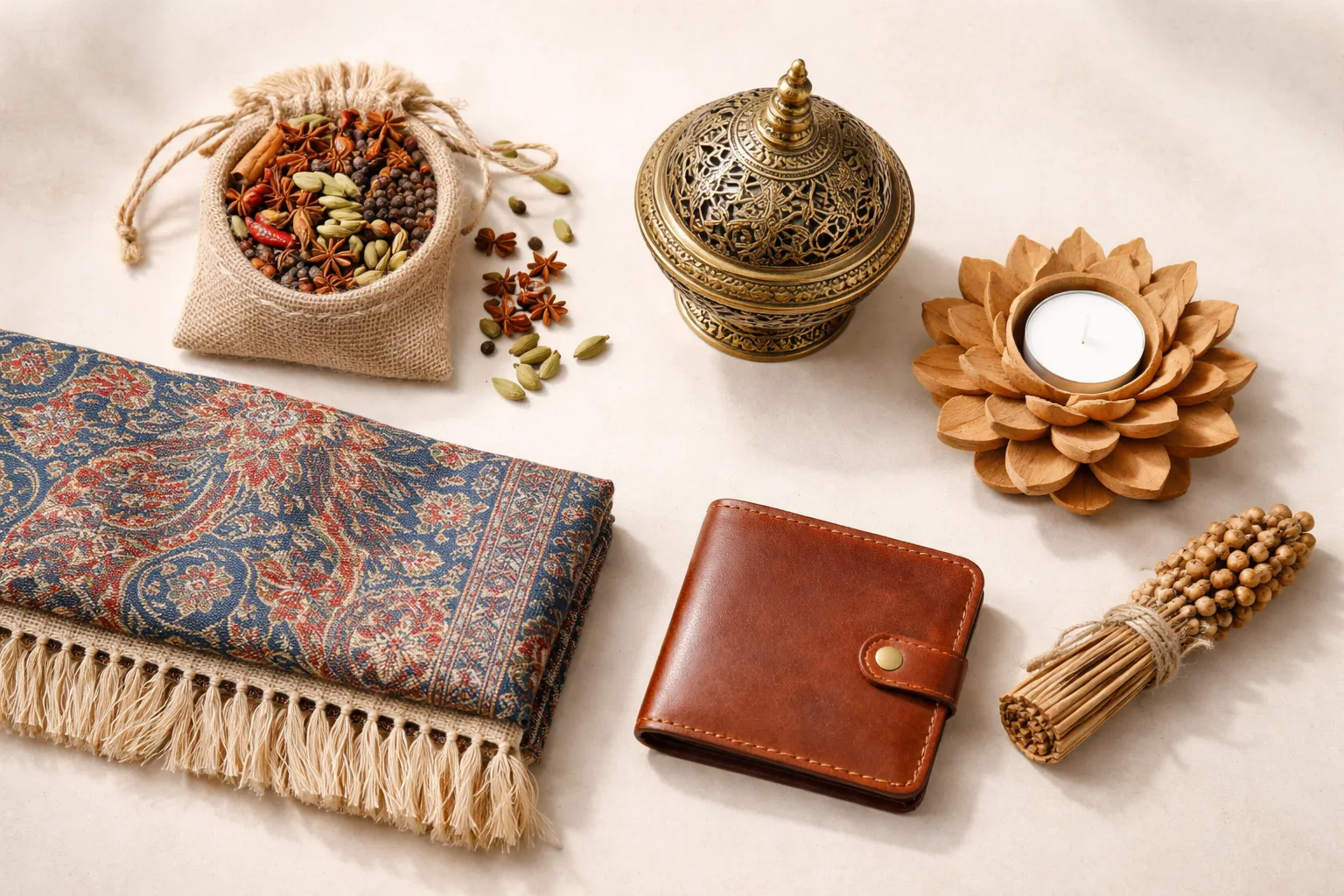
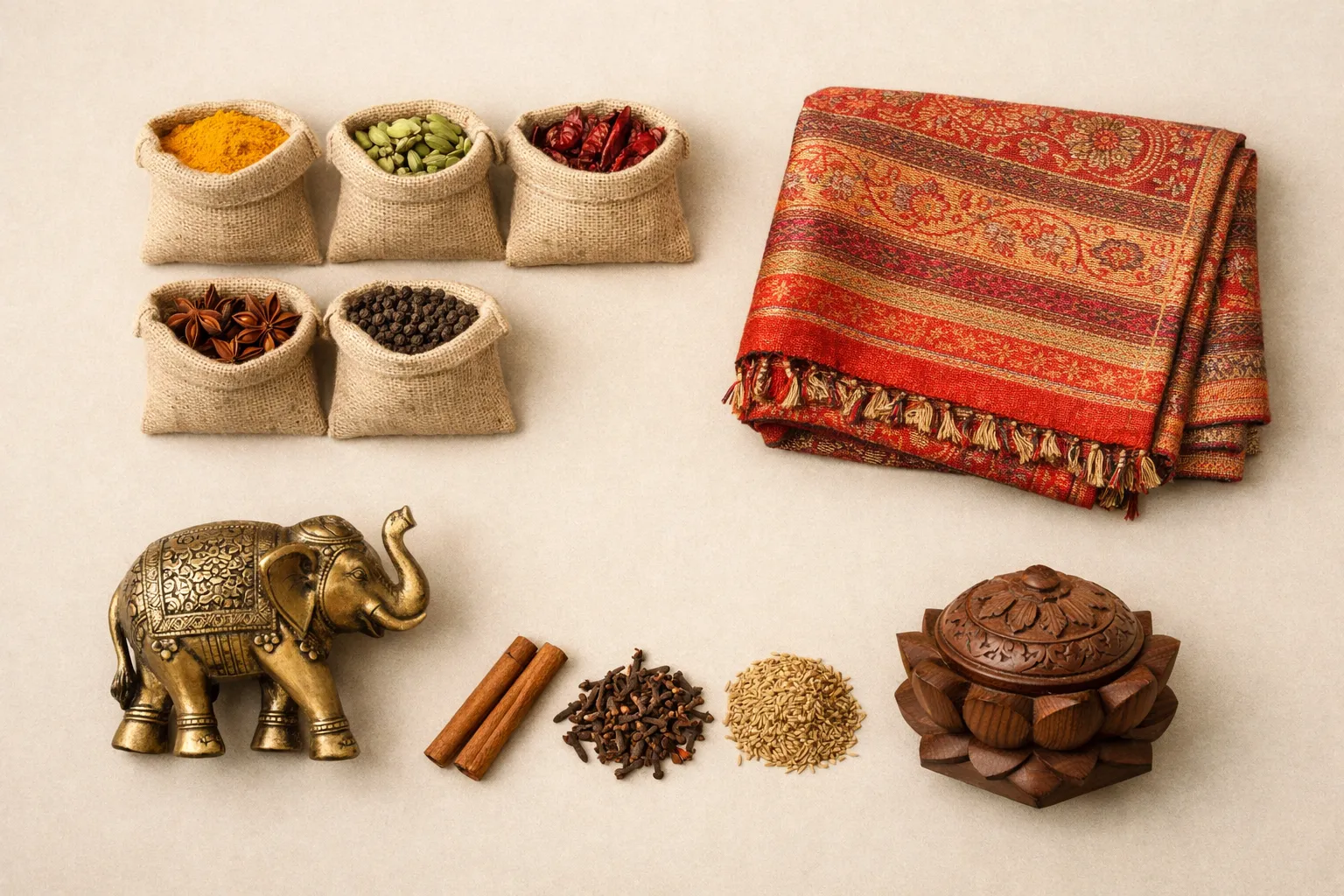
Spices and agricultural products — India is one of the world’s largest exporters of spices. Turmeric, cumin, chilli, cardamom, rice, and other agricultural commodities have buyers across the Middle East, Europe, and the US. Entry barriers are relatively low for genuine producers and traders.
Textiles and garments — Cotton fabric, readymade garments, home textiles, and sarees have strong demand globally. India’s textile industry has deep supply chains, making sourcing accessible even for merchant exporters.
Handicrafts and home décor — Wooden items, brassware, pottery, handwoven rugs, and decorative goods command premium prices in Western markets. Buyers in the US, UK, and Europe actively look for Indian artisan products.
Engineering goods and auto components — Castings, forgings, auto parts, and industrial components are among India’s fastest-growing export categories. Requires more technical knowledge but margins can be stronger.
Pharmaceuticals and chemicals — India is a global leader in generic medicines. This category has high compliance requirements but established export infrastructure and strong international demand.
Gems and jewellery — Gold, silver, and studded jewellery have significant export volumes from India, particularly to the UAE and US. High value per shipment but requires specific knowledge of the sector.
Organic and natural products — Organic food, Ayurvedic products, natural cosmetics, and herbal supplements are growing categories with premium pricing potential in health-conscious markets.
IT and software services — India’s largest service export. If you have technical skills or run a digital services business, international clients are accessible through platforms and outreach without any physical shipment involved.
Being in one of these categories gives you a head start — but it is not mandatory. Niche products with the right buyer can work just as well.
How to Check International Demand for Your Export Product

Don’t guess. Use data. Here’s where to look:
ITC Trade Map (trademap.org) — The most useful free tool for export market research. Enter your product’s HS Code and it shows you which countries are importing it, in what volumes, and from which origins. Start here.
DGFT export data — India’s own export statistics, available on the DGFT portal. Shows how much of a product India already exports and to which countries.
Amazon Global and eBay international — Search your product on these platforms to see if it’s being actively listed and sold internationally, at what price points, and what the competition looks like.
Google Trends — Search your product name with country filters to understand whether online interest is growing, declining, or stable in your target market.
Export Promotion Council data — Most EPCs publish sector-specific trade data and market reports. If your product has a relevant council — APEDA for agriculture, EPCH for handicrafts, FIEO for general trade — check their resources.
Using two or three of these together gives you a much clearer picture than any single source alone.
Products to Avoid When Starting Export Business in India
These are not absolute rules — but they are honest warnings based on what creates problems for new exporters.
- Products with heavy compliance requirements — Certain chemicals, defence-adjacent items, and heavily regulated goods involve licensing, inspections, and approvals that add significant complexity and cost. Not the right starting point when you’re still learning the basics.
- Highly perishable goods without cold chain infrastructure — Fresh produce, dairy, and certain seafood require temperature-controlled logistics throughout the entire journey. Without that infrastructure in place from day one, losses and rejections are common.
- Products where India has no price or quality advantage — If your product is available cheaper or at better quality from China, Vietnam, or another origin, winning buyers will be an uphill task from the start.
- Categories already dominated by massive established exporters — Some product categories have a handful of large players who have locked up the major buyers. Breaking in without significant differentiation is very difficult as a new entrant.
- Products with margins that disappear after freight and compliance costs — Low-value, high-weight products often look profitable until you add international freight, packaging, documentation, and compliance costs. Always calculate the full landed cost before deciding.
Export Product Selection Checklist for Beginners

Before moving forward with any product, run through this checklist. If you can check every box honestly, you have a viable starting point for your export product selection in India.
- I have access to this product or a verified, reliable supplier
- I have checked international demand using ITC Trade Map or DGFT data
- The product is not on India’s restricted or prohibited export list
- I understand the compliance and certification requirements for this product
- I can price it competitively after including all export costs
- I have identified at least one target country with confirmed import demand
If any box is unchecked, that’s the gap to address before moving forward — not after.
You can read our detailed guide on: “How to Start an Export Business in India: 10 Clear Steps“
What to Do After Choosing Your Export Product
Product chosen. Checklist cleared. Here’s what comes next:
Find the correct HS Code for your product. This classification number is needed for every document, every duty calculation, and every piece of market research going forward. The DGFT website and ITC Trade Map both allow HS Code lookup by product description.
Research your target market in detail. Now that you have a product and a shortlisted market, go deeper — import regulations, labelling requirements, local competition, and buyer profiles in that country.
Get your registrations in place. IEC Code, GST registration, LUT filing, AD Code — these need to be done before your first shipment. Start early so they don’t delay you when a buyer is ready to order.
Start looking for buyers. With a product, an HS Code, and basic registrations in place, you’re ready to set up on buyer platforms, reach out to importers, and begin the buyer search in a structured way.
You can read our detailed guide on: “How Much Money Do You Need to Start Exporting?”
Key Takeaways
- Choosing the right product to export from India is the single most important decision you’ll make — everything else in your export business flows from it.
- Know which type of exporter you are — manufacturer, merchant, or service — before evaluating any product.
- Use real data tools like ITC Trade Map and DGFT export statistics to validate international demand before committing to any product.
- Avoid products with heavy compliance requirements, no price advantage, or margins that disappear after export costs when you’re just starting out.
- Once your product is chosen, find its HS Code immediately — you’ll need it for every document, every registration, and every market research step that follows.
Frequently Asked Questions
Q1: Can I export a product I don’t manufacture myself?
Yes — and many successful exporters in India have never manufactured anything.
This model is called merchant exporting. You source the product from a manufacturer or supplier in India and sell it to a foreign buyer. Your role is finding the buyer, managing the relationship, ensuring quality at the sourcing end, and handling the export process.
You don’t need to make the product. You need to source it reliably, maintain consistent quality, and deliver on time. That’s what buyers care about.
Q2: How do I know if my product is allowed to be exported from India?
Check the Foreign Trade Policy on the DGFT website before committing to any product.
Every exportable product in India falls into one of three categories:
- Freely exportable — no special permission needed, you can export directly
- Restricted — requires a licence or government approval before export
- Prohibited — cannot be exported under any circumstances
One important thing to note: these classifications can change based on government policy. Certain food commodities get temporarily restricted during domestic shortages. What was freely exportable last year may be restricted today.
Always verify the current status on DGFT — not after you’ve already committed to a buyer.
Q3: What is the easiest product to start exporting for a beginner?
The honest answer is: the easiest product is the one you already have reliable access to.
That said, spices and dry agricultural products consistently come up as beginner-friendly. Sourcing is accessible across most Indian states, compliance through FSSAI and APEDA is manageable, and international demand — especially in the Middle East, Europe, and the US — is well established.
Handicrafts and home décor are similarly accessible if you have existing connections to artisan clusters or craft manufacturing regions.
Starting from a product you know and can source confidently will always give you a better foundation than chasing whatever appears on a trending export products list.
Q4: How do I find the HS Code for my export product?
There are three reliable ways to find it:
- Search by product description on the DGFT website — it has a built-in HS Code search tool
- Use ITC Trade Map (trademap.org) — enter your product and it returns the relevant HS Code
- Ask your freight forwarder or CHA — they work with HS Codes on every shipment and can confirm the right classification quickly
Getting this right matters more than most beginners realise. A wrong HS Code leads to incorrect duty calculations, potential compliance issues, and delays at customs clearance. If you have any doubt about the correct code for your product, confirm it with a CHA before filing any export documents.
Q5: Which Indian products have the highest demand in the Middle East?
The UAE, Saudi Arabia, and Oman are among India’s most consistent export destinations, and demand is concentrated in clear categories.
Food products lead the list — basmati rice, spices, fresh vegetables, processed food, and tea all have strong and consistent demand, driven largely by the large South Asian diaspora and local population across the Gulf.
Textiles and garments — particularly cotton fabric and readymade clothes — also move in significant volumes. Pharmaceuticals, engineering goods, and building materials follow, driven by the Gulf’s healthcare and construction sectors.
For a first-time exporter targeting the Middle East, food and agricultural products are the most practical starting point. The demand is proven, the buyer community is large and active, and Indian exporters already have strong credibility in that market.